Would you like to explore specific policy areas where this public shift is creating the most political pressure, or look at recent commentary on how governance is adapting?
WHEN I tell Indians that we have immense stamina for useless issues, no one asks me to explain ‘useless.’ Even people who disagree that the issues are useless know what they are.
India’s immense stamina for useless issues is declining
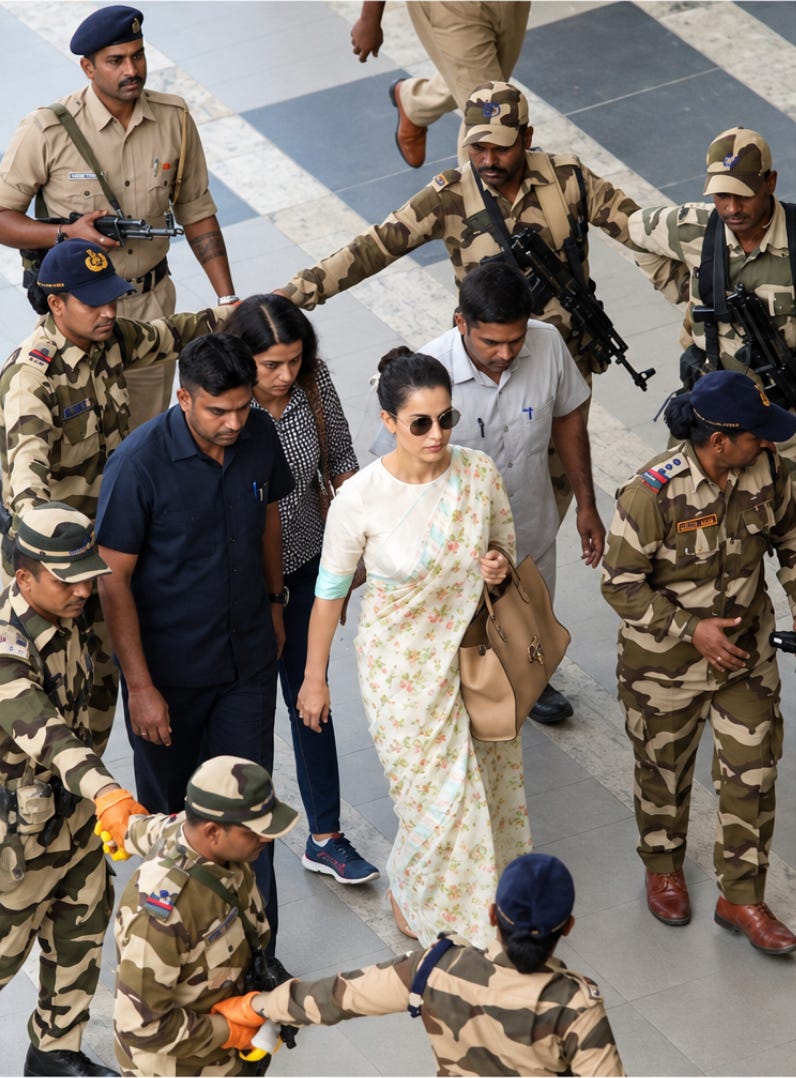
Politician Kangana Ranaut has an eye for useless issues
WHEN I tell Indians that we have immense stamina for useless issues, no one asks me to explain ‘useless.’ Even people who disagree that the issues are useless know what they are. Including the fountainhead of useless issues, the politician Subramanian Swamy, who began to smile when I asked him why Indians spend so much emotion on “useless things”. He told me, correctly, that identity was not useless, religion was not useless, the past was not useless. This helps us frame the meaning of useless issues—things that matter to Subramanian Swamy but will not alter the lives of most Indians.
Thanks for reading By Manu Joseph! Subscribe for free to receive new posts and support my work.
Now, something extraordinary is going on. The issues consuming the country are schools, roads, exam leaks and unemployment. The young, including school children, are hitting the streets. Roadblocks are stirring anger. Recently, a woman went on a protest for being terminated from work because she took sick leave. And even the affluent are asking for clean air. A woman falls off a train in Mumbai and that is news. The chief minister of Tamil Nadu laments the way his people commute every day and has declared he will air-condition all buses.
Of course, the old abstract issues are still around—politicians are debating how many stanzas of Vande Mataram we should sing; the Supreme Court, which is a very busy place, recently heard a complaint against a comedian who offended the disabled; all offended people continue to be heard; and, yes, some people say there are mosques that were temples once. But the emotional force of abstract cultural issues, even if they are important, has reduced; instead, what stirs all classes are their prospects for a better life.
In a nation that is lucky not to be in the grip of war or to be ruined by terrorism, and whose electoral democracy has become stronger, India somehow still has a poor quality of life for almost everyone. Until now those problems were subordinate to useless issues, which are broadly of four kinds.
The first kind is pure farce. For instance, thugs who can barely write in their mother tongue claiming to be offended by English name boards, or assaulting women in pubs, or tourists-in-shorts in the precincts of a fort, on behalf of culture. The second is cultural issues that are important to a small elite, still habituated to a world where what enraged them could enrage others too. The third issue is not innately useless; rather, it is important, but it would not have surfaced in a mature society. For instance, Congress President Mallikarjun Kharge’s anguish at a ‘purification’ ceremony by an upper-caste group for a stage in Haldwani, Uttarakhand, after he addressed a rally there. The fourth kind of useless issue is any important issue hijacked by politicians who have no credibility, nor the intent or the capacity to solve those problems.
What has changed now, especially in the past few months, is that the most captivating issues in India today are raised by people directly affected by what they are raging against. They don’t look like politicians, or the thuggish ‘youth-wing’ of any political party, nor are they the posh do-gooders who speak “on behalf” of victims.
At different points in my career as a journalist, I have written about how Indians protest. It is a public behaviour that was once only a farce but has now transformed into a proper force of democracy. In the Madras of my childhood, people travelled in overcrowded buses, spilling onto the footboard from which some of them dangled. In places, cops would charge at moving buses and hit the legs of danglers to make them retreat deep into a bus where there was no space. Yet, there were no street protests for better public transport. Or for schools or roads. There were protests against Hindi, or against death itself when a giant public figure died. These protests were not serious; people were paid to break and burn things by those who required a spectacle.
Until recently most of the big protests in India were over “hurt sentiments” where people who claimed to be offended marched in a festive way laughing and waving at cameras. The first time I saw India’s refined crowd protest was around 2005, after an art exhibition was attacked by culture goons, and art lovers of south Mumbai stood with English placards. I wondered who they were talking to. The first time I saw actual middle-class rage on the streets (outside of Kerala and West Bengal) was after the Mumbai terror attack of November 2008. It sparked an anti-politician movement that peaked two years later when Anna Hazare went on a fast in Delhi. After the rape and murder of a young woman in the capital, there were spontaneous protests as an enraged middle class demanded safety for women. But it was brief.
All along, the affluent too were slowly stepping out of their homes to demonstrate. The act of protesting in public is an oddly humble thing to do— walking with others, accepting your ordinariness, demanding something from someone more powerful. People don’t realize how much humility you need to protest, especially if you have been programmed to believe you are better than most. In any case, the affluent of India have been humbled by global forces—India is their best bet in a changing world and they need to make it a better place.
Last year, I noticed incontrovertible evidence that the upper class of Delhi had entered public protests. There were English placards, which were not unusual, but they had commas.
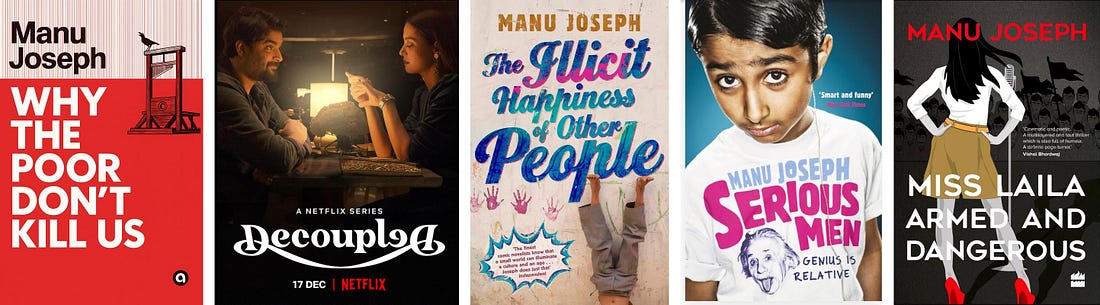
(Manu Joseph’s latest book is ‘Why the Poor Don’t Kill Us’)
Thanks for reading By Manu Joseph! Subscribe for free to receive new posts and support my work.
By Manu Joseph is free today. But if you enjoyed this post, you can tell By Manu Joseph that their writing is valuable by pledging a future subscription. You won't be charged unless they enable payments.
Creates, proofreads, and polishes specialized text about cars, trucks, motorcycles, vehicle All news is taken from a reliable source taken from or from wikipedia, and the motor industry.




 Posts








0 Comments