

Gulf Crisis Coverage and; Regional Intelligence Report

By Jack RiversMonday 7th - Wednesday 9th September, 2026Part of the “Dispatches From Tehran” SeriesIntroduction:There is a particular silence that falls over a region when the superpower that has policed it for decades begins to lose. It is not the silence of peace. It is the silence of a room in which the person who has been shouting for so long that everyone has stopped listening, suddenly stops, and the others, who have been waiting for exactly this moment, lean in. What follows is a forensic account of that silence, as it has been filling the corridors of the Pentagon, the boardrooms of the Gulf, the rubble of southern Lebanon, and the aquifer beneath Gaza over the past four days. It is drawn from the sources that the Western press cycle has not yet reached: the Iranian, the Lebanese, the Yemeni, the Jordanian, the Saudi. Not as “propaganda.” As genuine testimony. The other side of the story is not a counter-narrative. It is the story. The one that was happening while the wire services were filing their “deep concern” communiqués and scheduling the next round of negotiations. The Strait is closed. The carrier is in Thailand. The trucks are still running. The doctors are still on planes. And the arithmetic, as ever, does not require a superpower to do. It requires only a napkin, and the willingness to look. And in this crammed full, action packed episode of “Dispatches From Tehran”—we have a lot to look at. You have been reading about this war for six months. You have read the laughable CENTCOM statements that consistently “deny” verified satellite imagery and photographic evidence of extensive damage. The State Department briefings, the “deep concern” from Brussels, the “grave miscalculation” from Jerusalem, the “liftoff phase” from the Treasury. You have read the tired, delusional western version of events, time and again. But, have you read the other one? The one that is being written in the same hours, in the same region, by the people whose homes are being struck, whose tankers are being sunk, whose hospitals are being flattened, whose water is being poisoned, whose doctors are leaving, whose rubble full of war crimes evidence is being moved at a hundred trucks a day, while the trucks are not being officially counted. This dossier is that other account. It is not a rebuttal. A rebuttal implies that the first account was the baseline and this is a correction to it. It is not a correction. It is the account that was there all along, in the same room, at the same table, written in a language that the wire services do not translate, because translating it would require admitting that the first account was not the true story, and the architecture of Western reporting is not structurally equipped to make that admission. So you will read it here, in the language it was written in, from the perspective it was written from, and you will decide for yourself which account was the one that required the correction. We have much to cover. Let’s dive in.
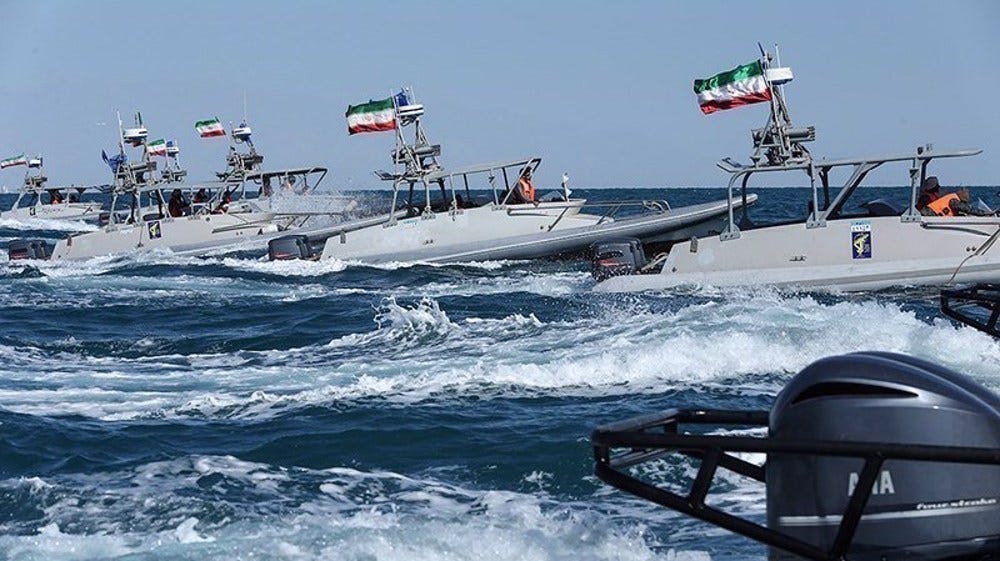
I. The Strait Remembers: When the Blockade Met Its MatchThe Strait of Hormuz has a memory. It is the memory of every empire that has attempted to strangle a littoral state through naval coercion and found, in the end, that the waterway belongs to those who live beside it. On the morning of 5th September, that memory was invoked again, and this time the invocation came in the form of ballistic fire. The IRGC struck an American aircraft carrier and a destroyer operating in the Strait, both of which had been participating in what Tehran characterised as an “economic blockade” against Iranian shipping. Here’s the thing: International Law disagrees. It classifies a naval blockade as a Military Action. And is therefore subject to a legal defensive military response. The operation was not ambiguous in its intent. The IRGC’s statement was equally unambiguous in its framing: the targeted vessels belonged to “the child-killing, aggressor US military that had been harassing Iranian vessels and participating in the blockade.” What followed was not a skirmish. It was a recalibration. CENTCOM’s incredibly rare actual acknowledgment of the strikes speaks volumes, issued with the particular lag that denotes a command structure processing an event it had not modelled, confirmed what the IRGC had already declared: two US Navy warships had come under fire and had been forced to withdraw. The statement’s own language—the careful, hedged phrasing of a military press office managing domestic expectations, was, as the IRGC noted, “living evidence of the enemy’s strategic defeat.” The admission itself was the more telling document. For years, the American naval presence in the Gulf had swaggered with what Tehran described as “false pride and hollow claims.” The carrier group’s retreat from the strike zone was not a tactical repositioning. It was a concession rendered in the only language that admiral’s flags have ever understood.
The escalation that followed over the next forty-eight hours was, in its own way, a study in strategic incoherence. Admiral Brad Cooper, commanding CENTCOM, threatened that if Iran struck two more American ships, Washington would “impose an even higher economic cost—taking out three of yours.” The IRGC’s response, delivered by Lieutenant Colonel Ebrahim Zolfaghari, was characteristically terse. Iranian forces would target American military in the region “more severely than before.” The threat was not matched. It was answered. On 6th September, the IRGC Naval Forces struck and captured a second target: an American remotely operated surface vessel, described as incorporating “some of the world's most advanced underwater technology,” attempting to enter what Tehran now designated as a protected area within the Strait. The vessel was unmanned, which is to say the risk calculus had already shifted to the point where even the crewed ships were no longer deemed expendable by the callous Washington regime. The capture was the product of “a complex intelligence and operational action,” and the submersible is now in Iranian hands. The technology it carries is in Iranian hands. 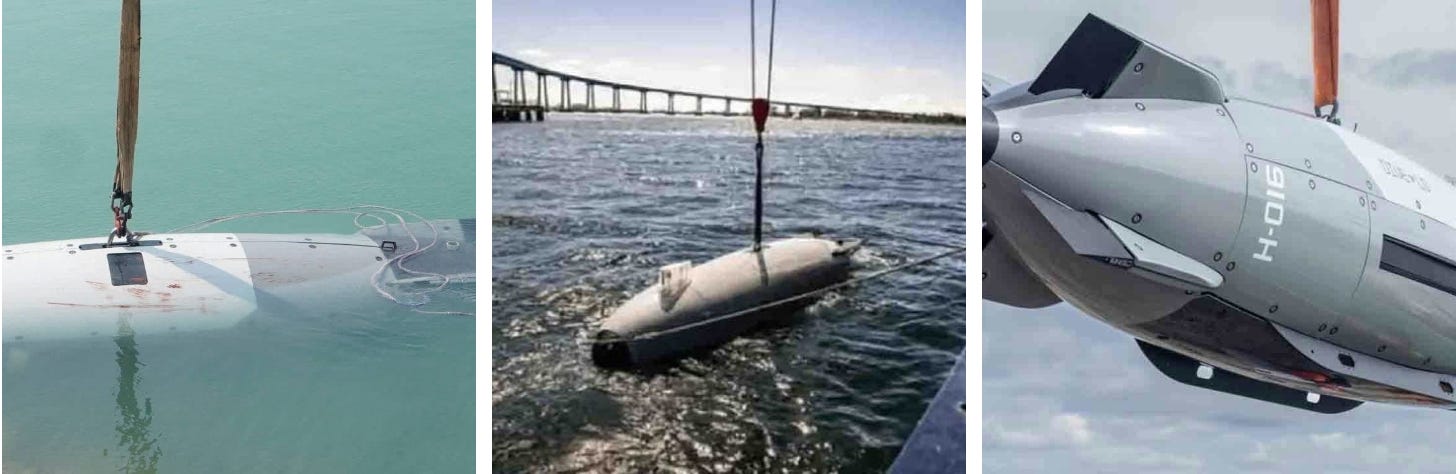
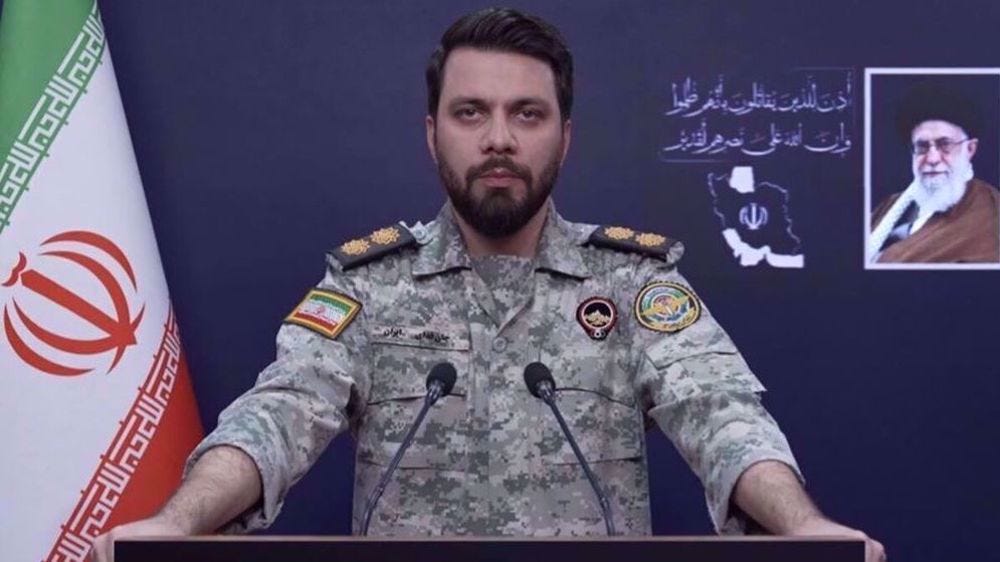
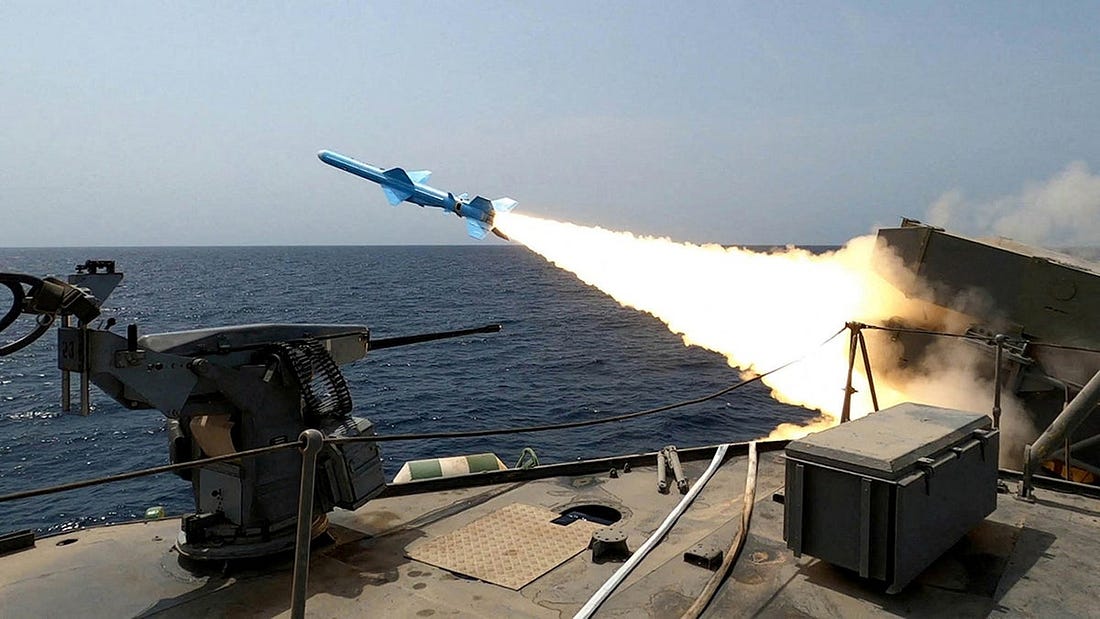
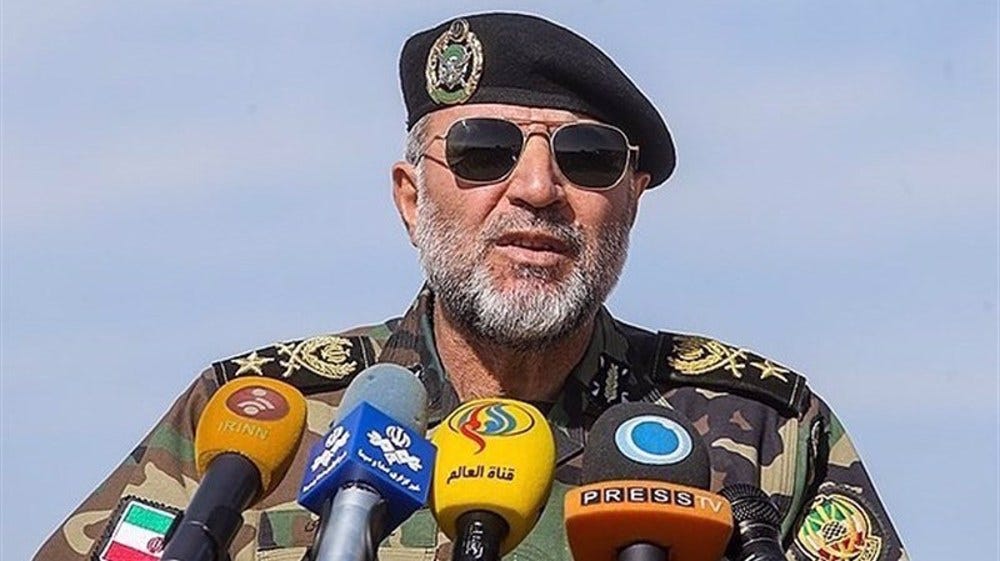
The IRGC’s statement carried a line that should be read slowly by anyone still maintaining the fiction that this is a limited engagement: “With the grace and favour of Almighty God, every desperate move by the enemy is being closely monitored by brave, self-sacrificing IRGC Navy forces and will be met with a decisive attack.” The word “desperate” did not appear by accident. It was a diagnostic, not an insult. That same day, Major General Mohsen Rezaei, Secretary of the Supreme National Security Council, declared a new restricted zone outside the Strait, extending from the US Navy’s blockade line into the broader Persian Gulf. The Strait of Hormuz, he made clear, was “completely closed and under the control of the armed forces.” Trump’s assertion that the waterway remained open was dismissed as a “big lie.” The phrasing was deliberate. In the architecture of deterrence, the declaration of a restricted zone is not a threat. It is a fact, announced in advance so that the moment of enforcement carries no ambiguity. The zone exists. The question is no longer whether it will be enforced but by what instrument. Hassan Ghashghavi, spokesman for the Parliament’s National Security Commission, framed the operation in terms that left no room for misreading: the strikes were part of “an existential war with America.” The blockade, in his assessment, “should never have existed” in the first place. This was not rhetorical inflation. The language of existential war in Iranian strategic discourse is the language of a state that has already exhausted the diplomatic register and is now operating in the lexicon of survival. The following day, Acting Defence Minister Brigadier General Majid Ibn Reza addressed the question of capability with the particular economy of a man who knows his audience is listening for doubt. The American assumption, he noted, was that Iran lacked the technology to target warships participating in the blockade. His response: “God willing, you will see, you will see the results.” When pressed for certainty, he reiterated: “You will definitely see the results, God willing.” The repetition was not redundancy. It was the cadence of a man who has said this sentence before, in other rooms, to other audiences, and has watched the results arrive. By 8th September, Major General Mohsen Rezaei, had confirmed what the strikes had already demonstrated. “In recent days, Washington has received a clear warning from Iran’s new missiles,” he stated. “The operational posture towards US warships and bases has been fundamentally recalibrated.” Then, in a televised interview, the line that will be quoted in strategy seminars for the next decade: “For the first time, we tested our anti-ship missile above an American warship. This special missile created hell for the Americans, and they fled the area of engagement.” The word “fled” did the work that no amount of strategic analysis could. It collapsed the entire edifice of American naval deterrence in the Gulf into a single verb, and in that verb was the entire history of every carrier group that had anchored off the Iranian coast with the assumption that its presence was itself the argument.
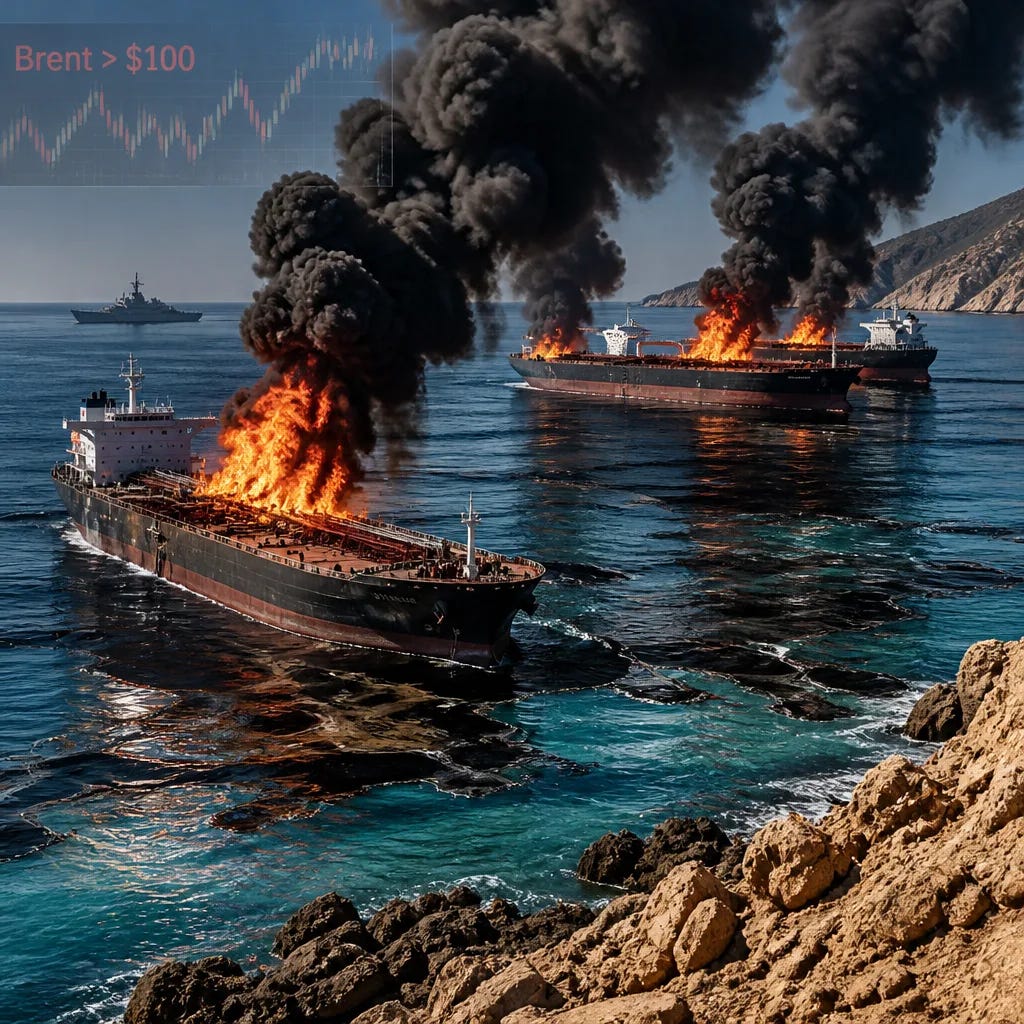
By dawn on Wednesday, the restricted zone had ceased to be a declaration and become a practice. The IRGC Navy, in a statement issued at first light, confirmed that it had targeted two American vessels and eight oil tankers in the region, “inflicting heavy damage,” and had separately struck ten ships that had attempted to transit what Tehran had designated as a prohibited and unsafe area of the Strait, doing so with the “provocation and support” of the United States. The trigger was the US destruction of five Iranian oil tankers the previous day. The distinction between military and commercial, which Washington insisted on for six months to keep the conflict “contained” and “proportionate,” has been dissolved by the side that drew the line. The line was never a legal boundary. It was a negotiating position, and the negotiating position has been struck from the table. CENTCOM’s response was the standard denial: all attacks had failed, no warship struck. The denial is for the domestic audience. The Strait, the IRGC statement concluded, “remains firmly under the surveillance and management of the capable and valiant IRGC Navy.” The sentence is not a claim. It is a description. The surveillance is happening. The management is happening. The question is no longer whether the zone will be enforced. It is being enforced. The only remaining variable is the instrument. Ali Nikzad, Deputy Speaker of Parliament, delivered the final assessment with the dispassionate thoroughness of a man settling accounts. The targeting of US warships and the destruction of their command deployment centres, he stated, “was only a fraction of our capabilities.” Then, addressing Washington directly: “You harassed Iranian ships and were then confronted with ballistic missiles striking your warships. Leaving a war that is no place for flies is the best choice for you.” Flies. Not lions. Not tigers. Flies. The image is precise, and it is the image that should be haunting the corridors of the Pentagon at this hour. The American naval presence in the Persian Gulf, which for decades has allegedly functioned as the physical guarantee of regional order, has been reduced, in the language of the state it was deployed to contain, to an insect problem. The carrier has withdrawn. The destroyer has withdrawn. The remotely operated vessel has been struck and captured. The restricted zone is declared. The Strait is still closed. And the flies take evasive action, in full retreat.
II. The Arithmetic of Desperation: What a Dying Superpower Does When the Math Stops WorkingThe sequence of events on 5th September was, in its structure, a confession. The IRGC launched ballistic missiles at an American aircraft carrier and a destroyer operating in the Strait. The American response revealed the true hierarchy of targets. Within hours, US forces struck three Iranian oil tankers. The selection of the target, commercial vessels, not military infrastructure, was the signature of a command structure that had run out of credible options and was now lashing out at whatever moved, on the theory that the accumulation of damage would produce a political result. Iran, as the littoral state responsible for designating authorised channels through the Strait under the MoU, had no obligation to route its own shipping through the American blockade line in the Arabian Sea. The tankers were conducting the ordinary commerce of a nation whose ports have been strangled for months. The IRGC’s retaliation that evening was calibrated with the precision of those who has been waiting for exactly this provocation. Three oil tankers transiting a route through the Strait that had not been sanctioned, and three vessels affiliated with the United States in other areas. The Quranic verse cited in the statement: “And if you attack us, then attack us in the same way as we attacked you”—was not a theological aside. It was a proportional response doctrine. And the warning to complicit shipping still routing illegally through the waterway—“you will be targeted”—was not a threat. It was a schedule. Mohammad Molaei, writing for Press TV, identified the strategic error with the clarity it deserved: the tanker gambit was “a strategic miscalculation of considerable scale, one rooted in a fundamental misreading of the asymmetric dynamics that govern the Persian Gulf.” His central argument is that the American approach of repeatedly striking Iranian vessels, what they term the “mowing the lawn” doctrine, treats a deeply embedded strategic capability as a recurring nuisance; rather than “a resilient system that regenerates, adapts, and rebuilds after each American strike.” The result, he notes, is that what was intended as a projection of American resolve in the maritime domain “has instead exposed the fragility of that projection.” The phrase he uses for the cumulative effect is “a graveyard of American military assumptions.” It is not hyperbole. It is bookkeeping.
The numbers confirm the diagnosis. Senator Mark Warner, Vice Chairman of the Senate Intelligence Committee, posted a video on 8th September that should be required viewing in every congressional briefing room. “The Iran war of choice that Donald Trump started cost Americans $100bn,” he stated. “Every two minutes, it goes up by another $1m.” The pause before the next line did the rhetorical work: “And where are we? Nowhere—in terms of any of the goals Trump laid out for this war of choice.” The regime change did not happen. The enriched uranium was not eliminated. The missiles were not destroyed. The Strait of Hormuz is not open. “This is what happens,” Warner concluded, “when you start a war of choice with no plan, no strategy, no allies, and no way to get out.” The economic fallout has escaped the Gulf entirely. American consumers have absorbed an estimated $100 billion in additional energy costs since the illegal imposed war of terror began in late February. The average household has paid more than $760. The 30-year bond yield has climbed to 5.22%, the highest borrowing cost since 2001, and the national debt is on course to cross $40 trillion. The World Bank estimates the conflict could push overall commodity prices up by approximately 16% and energy prices by 24%. Fertiliser costs have risen 31%. Nitrogen prices have nearly doubled. Coffee is up 35%. Gasoline 34%. Ground beef 23%. These are not abstract figures. They are the price of a war of choice, paid by people who did not vote for it and will not see the exit. The domestic political toll is equally instructive. A Gallup poll released on 2nd September found that 89% of Americans believe government corruption is widespread—the highest reading in the twenty-year history of the measure, and the worst score of any highly developed nation. The finding cuts both ways: it erodes the moral authority Washington invokes when it insists that its model must be followed worldwide, and it provides the domestic political cover that makes a “war of choice” easier to sustain when the public has already decided that no one in charge is telling the truth.
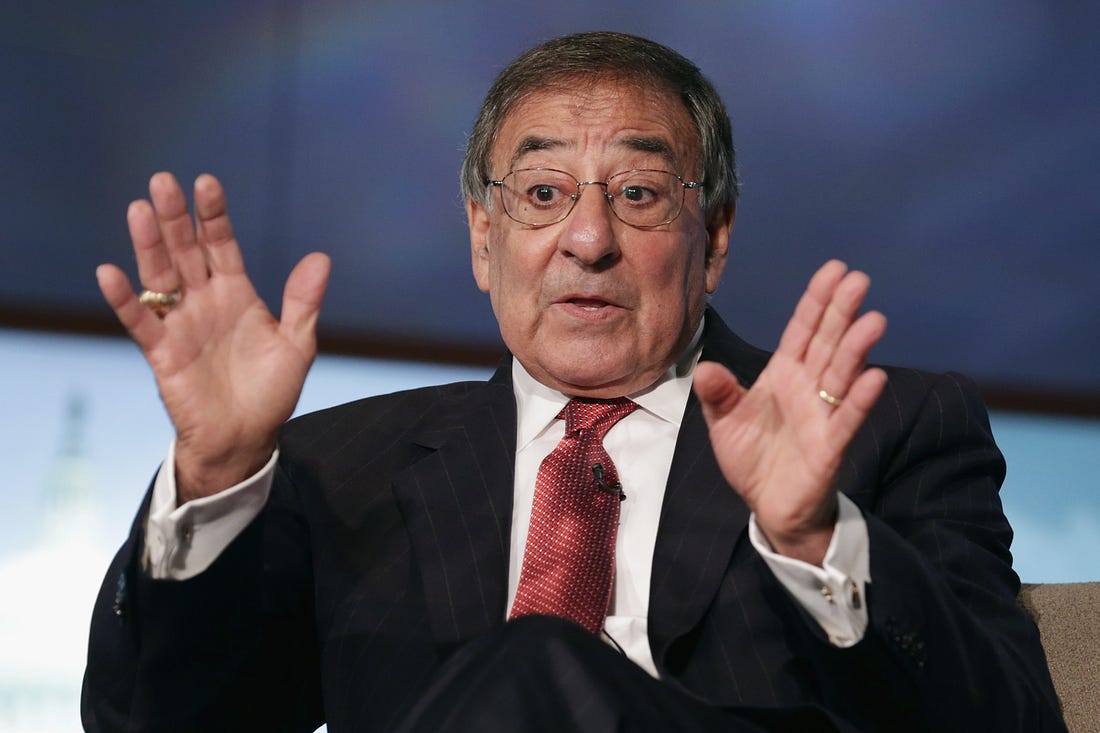
Leon Panetta, former Secretary of Defense and former CIA Director, offered an assessment in an interview with The Guardian that was remarkable less for its content than for its source. A former Republican who served under Obama, who has spent his post-military career as a centrist institutional voice, described the conflict as “another failed war” in West Asia, “like Iraq and Afghanistan.” He identified three paths: walk away and admit defeat; maintain the stalemate with periodic tit-for-tat exchanges; or make clear that the primary objective is to reopen the Strait of Hormuz, which would produce “what all parties feared”—a protracted war. His verdict on the man making the decision: “Not only does he not have credibility, but any threats he makes are totally ignored.” He added that Trump had “boxed himself in” and was “stuck between a rock and a hard place.” The USS Abraham Lincoln, he noted, had recently arrived in Thailand after spending more than 260 days supporting the war without a port visit. Two hundred and sixty days. The heavily rusting ship that anchors the narrative of American naval invincibility is running on fumes and a ‘goodwill’ we are all well aware expired some time ago. Tony Gosling, the geopolitical commentator, put the broader strategic picture in terms that should trouble anyone who still treats Washington as a reliable actor in regional affairs. The United States, he argued, “has become too driven by financial interests and elite power to be regarded as a responsible or predictable international actor.” The dominance of financial capitalism, in his assessment, has made money the overriding priority in Western societies, and Washington’s actions toward Tehran reflect “not only America’s pursuit of money and power but also a willingness to advance the agenda of genocidal ‘Israeli’ Prime War Criminal Benjamin Netanyahu.” The result is “a reinforcing perception that the United States can no longer be treated as a predictable or responsible actor on the world stage.” When an adversary cannot predict your next move, deterrence collapses. You are no longer a deterrent. You are a weather event.
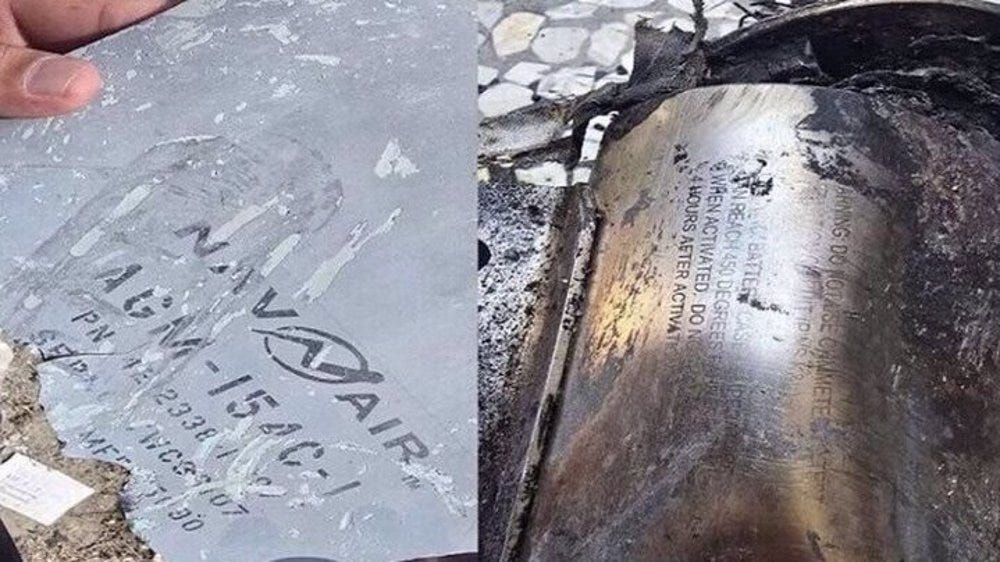
The final data point belongs to the legal arena. The Iranian judiciary’s findings on the US missile strike that turned a wedding ceremony into a funeral, confirmed what Deputy Speaker Nikzad had already stated in Parliament: “This crime was by no means a technical error. The type of missile used, as well as the distance between the ceremony and the telecommunications tower, also demonstrates that this was a war crime.” The finding is not a political statement. It is a judicial one. And it will be in the files. It will be in the tribunals. It will be in the record that outlasts every press release, every strategic reassessment, every “we stand with” communiqué that has been issued since the first missile fell. And it will be accompanied by the physical evidence of the clearly identifiable remains of the US missile itself. The arithmetic is simple. A hundred billion dollars. Two hundred and sixty days at sea. Ninety-one per cent of Democrats, ninety per cent of independents, and eighty-three per cent of Republicans telling you the government is corrupt. A former Secretary of Defense calling it a failed war before it has even ended. A carrier in Thailand. A wedding in the rubble. Three tankers struck because they were Iranian and they were moving. The math does not work. It has not worked for months. The question is not whether the Americans will recognise this. The question is how many more two-minute intervals of a million dollars each it will take before they do.
The final confirmation that the arithmetic has failed came not from Tehran but from inside the Pentagon. CNN reported on 8th September, citing six sources across the military and intelligence community, that quiet discussions are underway about reducing the American footprint in West Asia once the conflict ends. The war, the report noted, has “laid bare deep vulnerabilities” in American infrastructure across the region. The CIA’s outpost in Riyadh was effectively destroyed. Installations in Bahrain, Qatar, Saudi Arabia, and Kuwait have all been struck, inflicting severe operational devastation. More than two hundred US military facilities have been damaged or destroyed. Over one thousand advanced air-defence interceptors have been expended. The Pentagon’s own estimate puts the war’s cost at $37.5 billion through the end of September, before a single dollar of reconstruction. Pentagon Comptroller Jules W. Hurst, asked in April about the repair bill, offered the most honest sentence a bureaucrat has produced in this conflict: it depends “on how we decide to rebuild those, or if we do.” The question embedded in that clause is not a budgetary one. It is a strategic one. The answer to “if we do” is the answer to “if we stay.” Chief of Naval Operations Admiral Daryl Caudle, asked about the return of personnel to Bahrain, the traditional home of the Fifth Fleet, delivered the sentence that should be underlined in every Gulf security briefing: “We’re not getting back in there anytime soon.” The “anytime soon” is doing the work. It is not a permanent departure. It is not a withdrawal. It is a pause. And a pause, in the architecture of military posture, is the first word of a sentence that ends in a period. The vulnerabilities, as one US official told CNN, “were always known.” The US “never acted on it with urgency.” The urgency arrived. It arrived in the form of a missile. And the missile, as ever, was the only memo that got read.
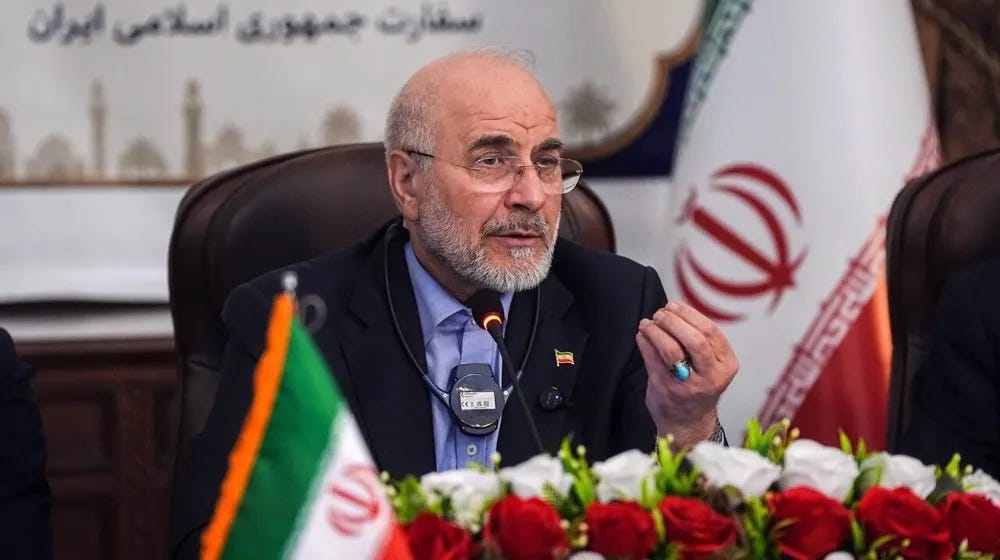
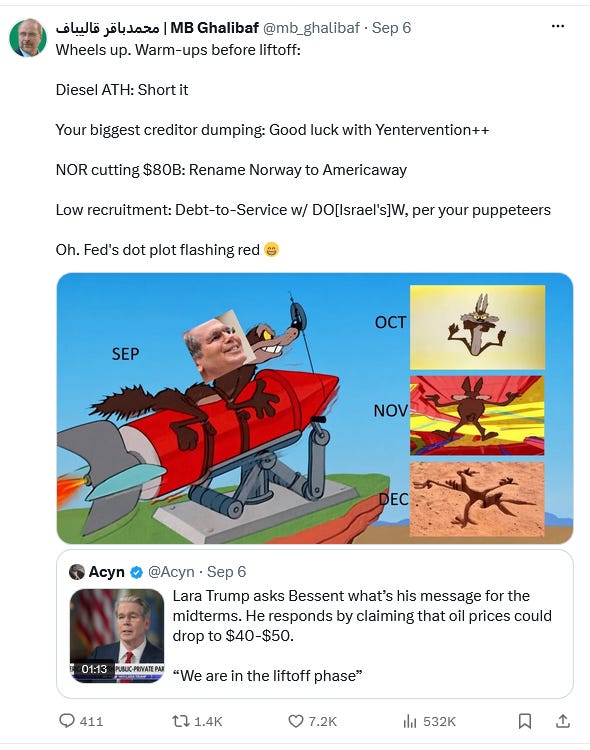
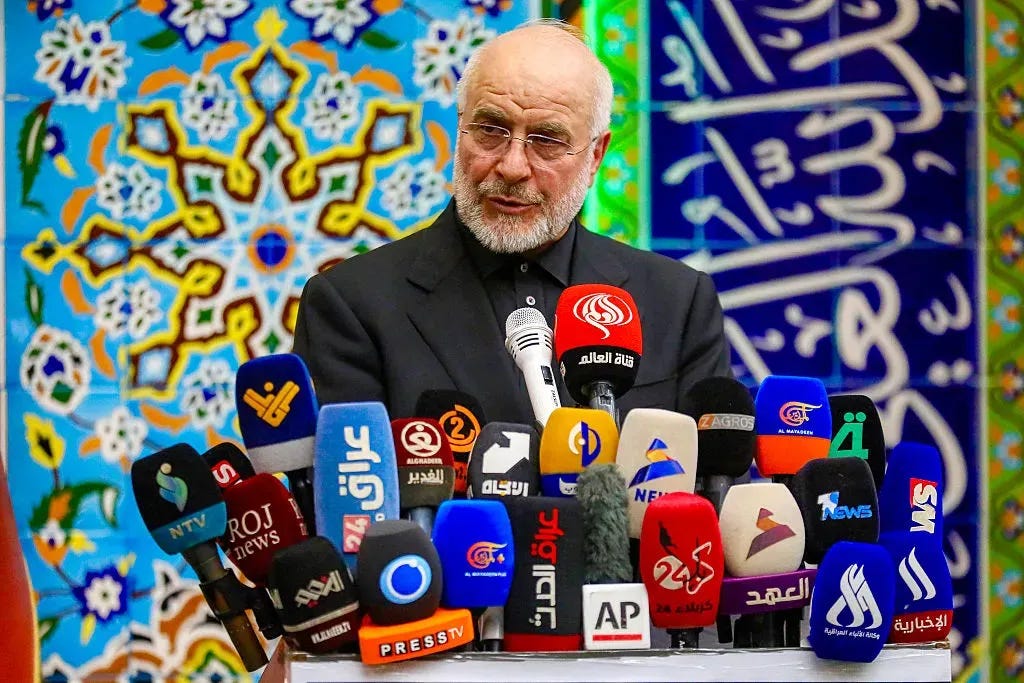
III. The Interior of the Storm: Diplomacy, Resilience, and the Quiet Work of SurvivalMohammad Bagher Qalibaf, the mighty Speaker of Parliament, does not tweet. He posts. There is a difference. A tweet is a reflex; a post is a document. On 6th September, in response to Defence Secretary Hegseth’s public threat to sink Iranian oil tankers, Qalibaf’s X post read: “If you attack our assets, you will be attacked; we have previously demonstrated this capability. Ask your military bases that have been rendered non-operational.” The sentence structure is worth examining. It does not threaten. It informs. The capability has already been demonstrated. The bases are already non-operational. The question is not whether the response will come but whether the recipient will survive it long enough to receive the invoice. The same day, Qalibaf turned his attention to Treasury Secretary Scott Bessent, who had appeared on Fox News to describe the American economy as being in its “liftoff phase” ahead of the midterms, and to predict that oil prices would fall from their current range of $80 to $90 down to $40 or $50. Qalibaf’s response was characteristically surgical. The US economy, he observed, would need some serious “warm-ups” before it actually lifted off. On diesel prices, which had reached their highest level in the period, he suggested it was the right time for Bessent to think about it and “short it.” On the Federal Reserve, he noted that the Monetary Policy Committee “had already turned on red warning lights.” The post was not a rebuttal. It was a correction delivered by a man who reads balance sheets for a living, to a man who apparently does not.
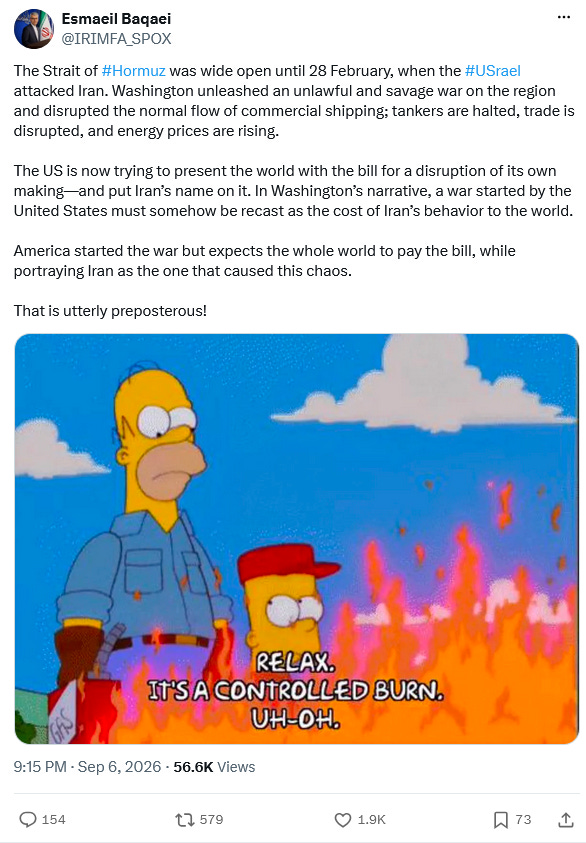
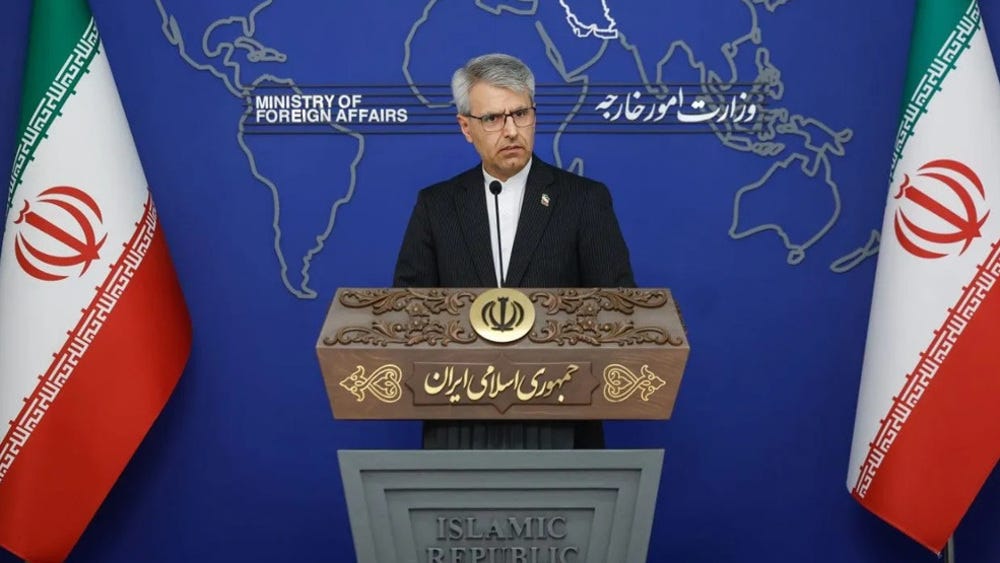
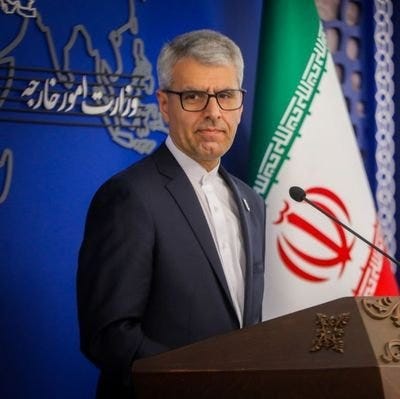
The broader economic narrative was addressed the following day by eloquent Foreign Ministry spokesman Esmaeil Baghaei, in a statement that should be framed and hung in every State Department briefing room. The strategic waterway, he noted, was “wide open until 28 February, when the USrael attacked Iran.” The framing is deliberate. The Strait did not close. It was closed, and the agent of closure was identified with the precision of a forensic report. Washington, he continued, “unleashed an unlawful and savage war on the region and disrupted the normal flow of commercial shipping; tankers are halted, trade is disrupted, and energy prices are rising.” The sentence that follows is the one that will be quoted in every subsequent diplomatic exchange: “The US is now trying to present the world with the bill for a disruption of its own making—and put Iran’s name on it.” In Washington’s narrative, he observed, a war started by the United States must somehow be recast as “the cost of Iran’s behavior to the world.” America “started the war but expects the whole world to pay the bill, while portraying Iran as the one that caused this chaos.” The final word was “utterly preposterous.” It is a mild word. It is also, in diplomatic terms, the mildest word available that still carries the weight of a gavel.
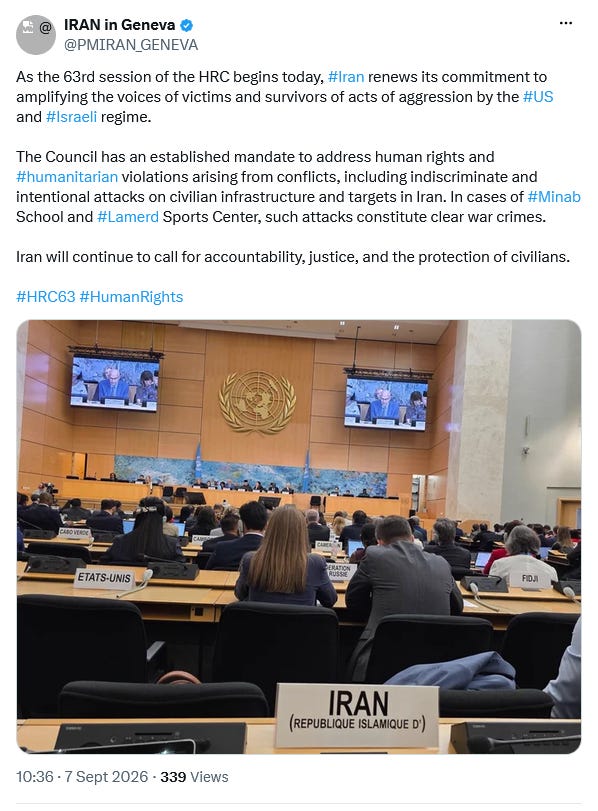
On 7th September, Iran’s UN mission formally urged the Human Rights Council to hold the United States and the rogue ‘Israeli’ terrorist accountable for war crimes. The statement on X was brief: “such attacks constitute clear war crimes.” Tehran “will continue to call for accountability, justice, and the protection of civilians.”
The same day, Esmaeil Baqaei, at his weekly press briefing, went further. US attacks on civilians, he stated, are “deliberate” aggression, not “collateral damage.” A review of American attacks over the preceding six months, he said, “indicates that the United States has adopted ‘Israel’s’ model to repeatedly and systematically target civilians.” The word “adopted” is doing enormous work in that sentence. It implies a teacher and a student, a model and a copy, and it places the copy in a position of moral subordination to the original. It is a line that will be in every tribunal brief for the next decade. The physical infrastructure of the war’s cost was quantified the same day by Morteza Dehghan, CEO of the Iran Airports and Air Navigation Company, who confirmed that 27 airports sustained varying degrees of damage: aircraft operating surfaces, runways, taxiways, aircraft parking areas, safety and firefighting buildings, navigational aids, and passenger terminals. “Despite the extent of the damage inflicted, we had to immediately resume providing services,” he stated. “Flights are impossible without airport and air-navigation infrastructure. Therefore, the reconstruction of airports and navigation systems was placed on the agenda simultaneously.” The reconstruction is being financed through asset monetisation and private-sector funding, with updated ICAO standards being adopted as part of the process. Despite further damage to Shiraz, Konarak, and Khuzestan airports, Arbaeen pilgrim flights operated from 26 airports. The detail matters. The Arbaeen pilgrimage is not a commercial operation. It is a logistical feat of a scale that would challenge any continental state. The fact that it continued, from damaged runways, with reconstructed navigation systems, financed by a private sector that the sanctions regime has been trying to strangle for four decades, is not a footnote. It is the entire argument.
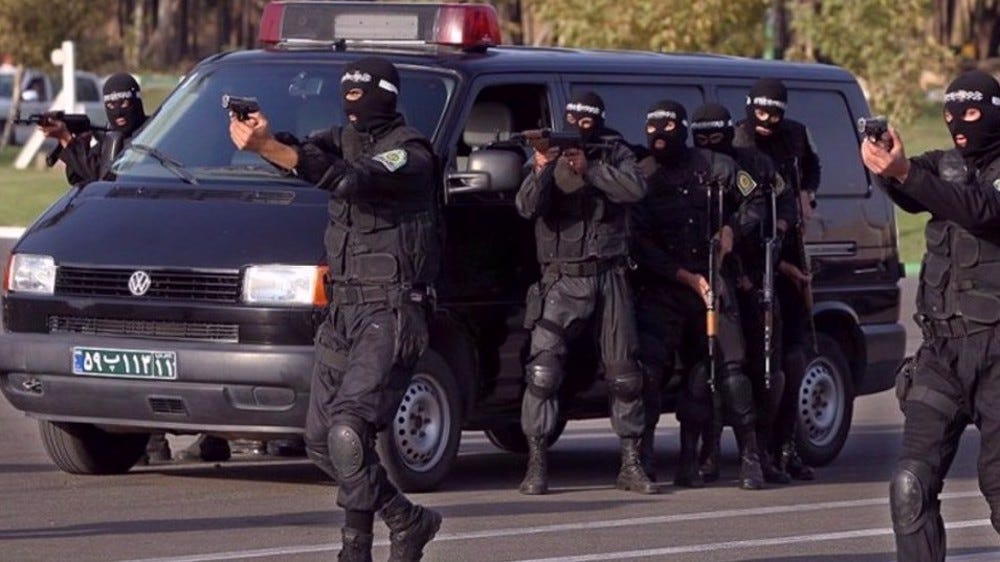
The interior security dimension was addressed in two separate operations announced over the same period. On 5th September, the IRGC’s Quds Base confirmed the elimination of a terror team that had infiltrated Saravan County in southeastern Iran, in a joint operation involving the Ministry of Intelligence, IRGC intelligence forces, and provincial police. Two terrorists were killed. The statement noted that the team had “received a decisive blow upon infiltration,” and referenced the August 29th operation in which a prior team affiliated with “the spy agencies of ‘Israel’ and the United States” had been eliminated. The pattern is not incidental. It is a rhythm. On 7th September, the Intelligence Ministry announced the dismantling of three more operational cells, belonging to Takfiri terrorist groups in Sistan and Baluchestan Province, with nine terrorists arrested and three killed in clashes with security forces. The cells were identified as “organized and operationally poised” and “affiliated with the American-Zionist enemy.” The arrested individuals had undergone military, bomb-making, and assassination training outside Iran before entering the country. A considerable quantity of weapons and military ammunition was seized. Separately, Isfahan’s Provincial Police Commander Brigadier General Abdolvahhab Hassanvand announced the seizure of 75 military pistols, their corresponding magazines, and 74 additional magazines in Na’in County, following a pursuit of a pickup truck whose driver had ignored a stop order. The pattern across both operations is consistent with a state that is under sustained external pressure and has chosen, in response, to tighten the interior. The cells are not spontaneous. The training is not local. The weapons are not civilian. And the timing—within days of the carrier strikes, within days of the tanker attacks, within days of the HRC accountability push, is not coincidence. It is the interior response to an exterior that is trying to do what missiles cannot: make the state look unstable from the inside. They are failing miserably on both counts, and the reflection cast upon the adversary is another damning indictment of the strategic and operational clusterfuck it is presiding over. The airports are flying. The cells are broken. The bill is being sent back. And the Speaker of Parliament is telling the Treasury Secretary to short his own diesel. This is what the interior of a storm looks like from the centre. Not chaos. Bookkeeping.
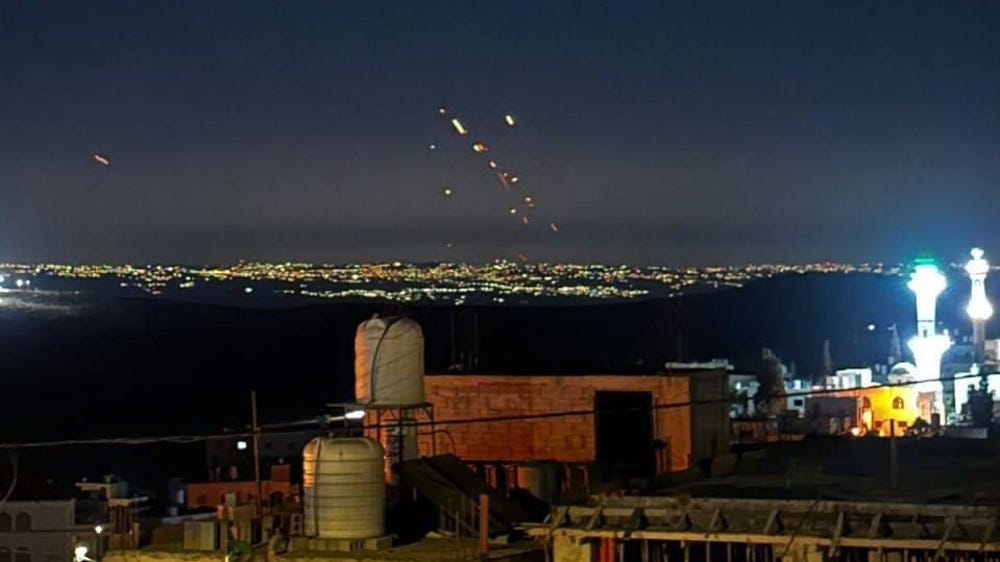
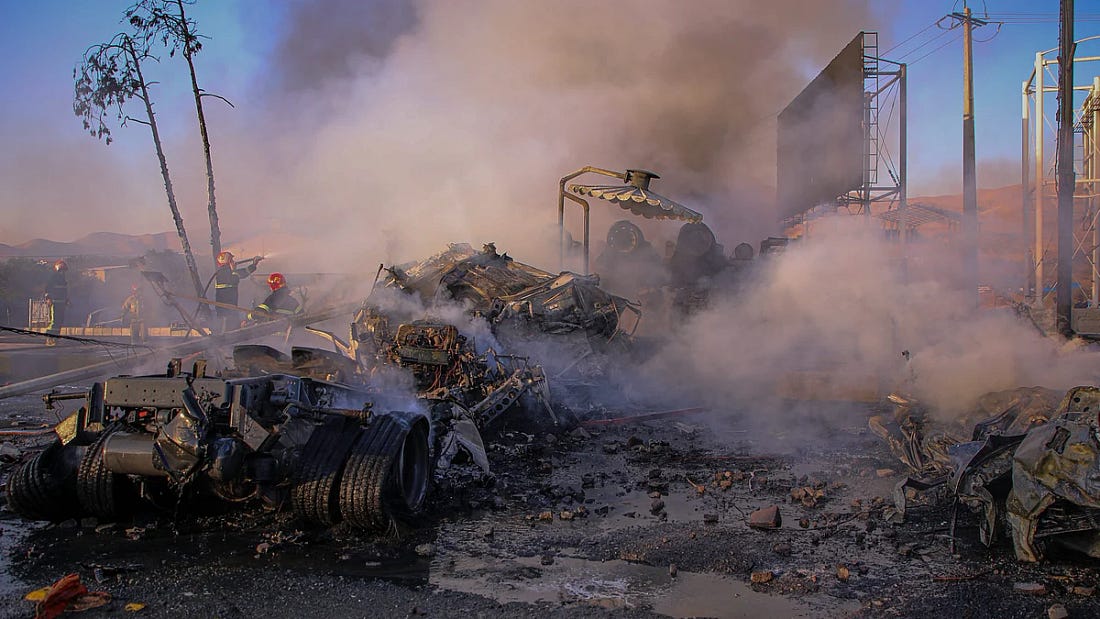
IV. The Equation Rewritten: When the Underground Answers the SkyOn the night of 7th September, the IRGC launched a barrage of twenty ballistic missiles at the Al-Azraq base in Jordan, where American F-35s, F-16s, and F-15s are housed in hardened hangars and shelters. Jordanian air defence operators announced, with the particular confidence of a state that has learned to narrate its own defeats as victories, that eighteen of the twenty missiles had been intercepted. The evidence, as usual, tells a different story. OSINT footage showed the missiles rain down, with sporadic interceptions, and more munitions successfully hitting their mark. The impacts are visible on satellite imagery. The hangar roofs are not roofs anymore. The shelters are not shelters.
Many of the aircraft that were parked inside them are now a collection of twisted aluminium and scattered avionics spread across a tarmac that will need to be excavated before it can hold another landing. Reports from the ground confirm airframes with “missing wings” an A-10 Thunderbolt, and eight F-15 fighter jets suffering extensive damage. The interception claim is the standard Jordanian assertion, repeated with the fidelity of a liturgy, and it will appear in every Western wire report for the next forty-eight hours before the footage makes it irrelevant. They did actually manage to hit some of their targets for a change, but there is a reason for this: it was an Iranian warning shot, demonstrating that American bases are still within the target bank, even though the US is attempting to draw fire away from them into the naval domain. When Iran is serious about its strike packages, it lights up the sky with hundreds of Arash and Shahed-136 drones to engage and deplete the air defences. It saturates the night sky with a massive array of ballistic firepower, and then sends its Fortress Breakers to finish the job. It doesn’t simply send a volley of 20 missiles. The message is clear: We see you. Don’t think your bases will escape just because you’re only hitting our ships.
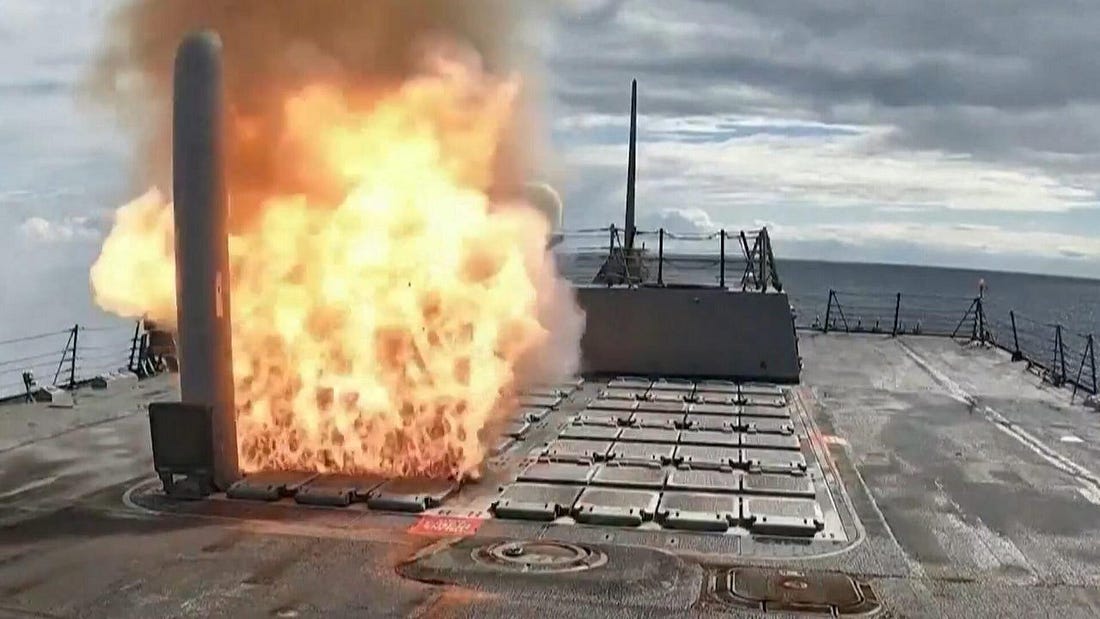
Simultaneously, the IRGC struck two more American destroyers: DDG-119 and DDG-53, both Aegis-equipped, both carrying Tomahawk cruise missiles, both operating in the region as the physical guarantee that the blockade line in the Arabian Sea would hold. The IRGC claims significant damage. CENTCOM has not confirmed or denied. The absence of confirmation is itself a data point. Iran displayed the complexities of their latest Qassem-e-Basir, a solid-fuel, road-mobile missile, modified for anti-ship capabilities, with a range of 1,400 to 1,700 kilometres. The missile carries a 500-kilogram warhead equipped with a maneuverable re-entry vehicle (MaRV) that can change course mid-flight to evade interception. Its airframe is constructed from carbon-fiber composites to reduce its radar cross-section. Its distinguishing feature is not its range but its flight profile: rather than following the high-arcing trajectory of a conventional ballistic missile, it flies a depressed, quasi-ballistic path that keeps it lower and flatter through mid-course. The implication is structural. The SM-3, the US Navy's outer-layer interceptor, is designed around exo-atmospheric engagement during the predictable, unpowered midcourse phase of a standard ballistic arc. A missile that never climbs into that envelope denies the SM-3 its shot entirely, regardless of the interceptor's sophistication. The guidance package—inertial navigation with a terminal-phase electro-optical seeker, renders it largely immune to the GPS jamming and electronic countermeasures on which layered defence architectures increasingly rely. The engagement problem is thus pushed down to the SM-6, the terminal-layer interceptor, where a deliberate reduction in speed during final approach, allows the seeker to acquire a moving naval target, compressing an already narrow window further. The George Washington strike group was compelled to execute a significant evasive manoeuvre. That fact is the entire argument. A carrier breaking from its operating pattern to avoid a missile has already absorbed a cost, independent of whether the warhead detonated or the interceptor fired. The shot does not need to land to have hit. The context for the strikes is not incidental. CENTCOM confirmed on Tuesday the destruction of five Iranian tankers. Secretary of State Rubio had threatened that “Iran will lose tankers.” The IRGC’s response was not a statement. It was an invoice, delivered in the only currency that admirals understand. US military casualties in the conflict now stand “officially” at 838. As we have already seen over our previous reports, the reality is much higher.
In a parliamentary session on 6th September, Mohammad Bagher Qalibaf delivered the strategic assessment that should be read aloud in every Pentagon war room: “The Americans must have realized by now that the days of ‘proportionate responses’ are over. The strikes we carried out in recent operations against the aggressor’s bases were only the beginning.” The rules, he stated, have changed. “From now on, any aggression against Iran’s interests and security will be met with a response that is faster, heavier, and more painful.” He noted that American leaders, following the devastating strikes on their bases, had been “driven into a state of desperation while resorting to empty rhetoric and slogans, and using artificial intelligence to create images and videos of the battlefield.” The detail about the AI-generated battlefield footage is the one that should trouble Washington most. A superpower that must fabricate its own combat imagery to maintain domestic morale is not projecting strength. It is projecting a deficit, and extraordinary weakness. Qalibaf added that maintaining “internal cohesion” and “external deterrent power” were the two essential tools for confronting the adversary, and that at a time when the enemy was seeking to paralyse the supply chain through intensified sanctions, Iran would build a barrier through “smart import management, encouraging domestic production, and drawing on the capabilities of our talented experts.” The language is economic, but the subtext is military. A state that can feed itself, arm itself, and replace what is struck is a state that cannot be strangled.
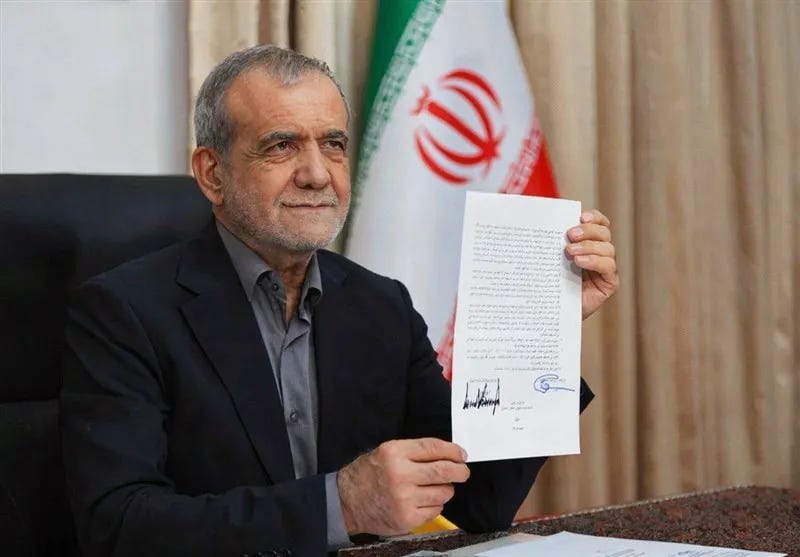
President Pezeshkian, responding to Trump’s Truth Social claims of “an impending American victory and plummeting oil prices,” posted on 8th September that the Islamic Republic had always opposed war and considered the region’s security to lie in refraining from warmongering. But the second sentence carried the weight: “Just as it has bravely stood up in defense against aggression until today, it will continue this resistance with strength until the complete regret of the aggressors.” The phrase “complete regret” is not a threat. It is a timeline.
The tactical dimension was illustrated on 6th September by the IRGC’s destruction of a US surveillance balloon over Erbil, northern Iraq. The platform was 35 metres long, capable of carrying up to 500 kg of payload, operating at approximately 750 metres, with a sustained airborne capability of one month. Its functions included electronic eavesdropping, communication relay, and electronic warfare. The strategic framing, as reported by Tasnim, was explicit: the destruction of the balloon “should not be viewed as a merely tactical operation, but rather as part of a broader strategy pursued by Iran’s armed forces, including the IRGC, to clear regional airspace of reconnaissance and early-warning assets.” The implication is that the balloon was not the last one. It was the first of a series that will all suffer the same fate. Brigadier General Kioumars Heidari, Deputy Chief of the General Staff, provided the macro assessment on 7th September. The enemy, he stated, “did not expect the Islamic Republic of Iran to be able to change the equations of the war and expand the battlefield to a regional level.” Iran’s adversaries, he observed, have “repeatedly failed to properly assess the capabilities, determination and potential of the Iranian nation.” The strength, he said, stems from “coherence among the armed forces and the nation, who stood together and thwarted the enemy’s efforts to achieve its objectives.”
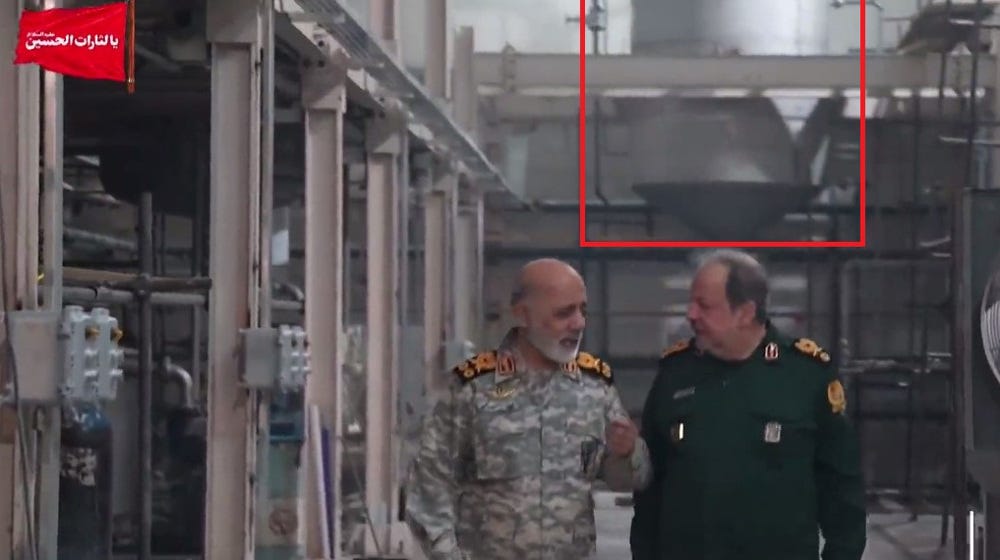
Brigadier General Alireza Elhami, Commander of the Khatam al-Anbiya Joint Air Defence Force, addressed the question of industrial capacity on the same day. “The equipment produced inside Iran passed a successful test during that conflict, and now they are being rapidly mass-produced to be deployed across the entire expanse of the Islamic Republic,” he stated. The process, he noted, is “much faster and more easily” achieved for systems whose software and hardware are “completely under our own control than for foreign equipment.” The systems are designed to suit the country’s geography, climatic conditions, and the real needs of the battlefield. The foreign equipment that Washington assumed would be the bottleneck is no longer in the equation. The piece that ties the military dimension together is Mohammad Molaei’s analysis of Iran’s underground military facilities, published on Press TV. His central argument is that Iran’s underground network should be assessed as a distributed production system, not merely a distributed storage and launch system. The distinction changes what success means for the ‘Israeli’-American aerial campaign. If production has been dispersed into hardened, geographically distributed sites, then strikes on known surface facilities inflict recoverable damage while leaving the production base largely intact.
The evidence he cites—the mixer footage from a hardened underground facility, the accelerated construction at Shahroud with a third tunnel entrance carved into a 150-metre ridgeline, the continued production and firing of solid-fuel ballistic missiles through and after both prior imposed wars, contradicts every ‘Israeli’ and American assessment that framed those strikes as having meaningfully degraded the programme. The mountains, as Molaei puts it, act as a force multiplier, turning invasion into a slower, more expensive undertaking in which a smaller, determined defending force can bleed a much larger one. The equation has been rewritten. The sky is no longer the enemy’s domain. The underground is. And the underground does not negotiate.
V. The Southern Front: When the Oil Flows the Wrong WayThe $5 billion arms package approved by Washington for Saudi Arabia on 5th September, over ten thousand JDAM-ER guidance kits, five thousand 2,000-pound bombs, and a separate $750 million contract for AGT-1500 tank engines, should be read as a single sentence. The United States, which is losing a war of choice against Iran, is simultaneously arming the Gulf states that host the remains of its bases, on the theory that the bases’ survival depends on the host’s ability to shoot back. The State Department’s justification—“strengthen Saudi Arabia’s airborne and homeland defence capabilities, help it counter current and future regional threats,” is the language of a burnt-out superpower that has decided the best defence against an adversary you cannot defeat is to make your neighbours expensive enough to attack. The arithmetic is transparent. The strategy is not. The Yemeni response to the package was not diplomatic. It was ballistic.
On 6th September, Yemeni forces advanced towards al-Bireen in the al-Maafer district of Ta’izz, a position that sits at the crossroads connecting Ta’izz to Aden. Its capture would sever the supply lines of the Saudi-backed mercenaries and prevent the dispatch of reinforcements. At least 105 Saudi-backed mercenaries were killed in the preceding twenty-four hours, with dozens more wounded. Full control was established over al-Makazemah and al-Ikad. Brigadier General Yahya Saree confirmed a Yemeni-made precision ballistic missile strike on a meeting of Saudi-backed mercenary commanders, and the shootdown of a Saudi Wing Loong II drone over the city. The ground war in Ta’izz is not a stalemate. It is a slow exsanguination, and the Saudis are the ones bleeding. 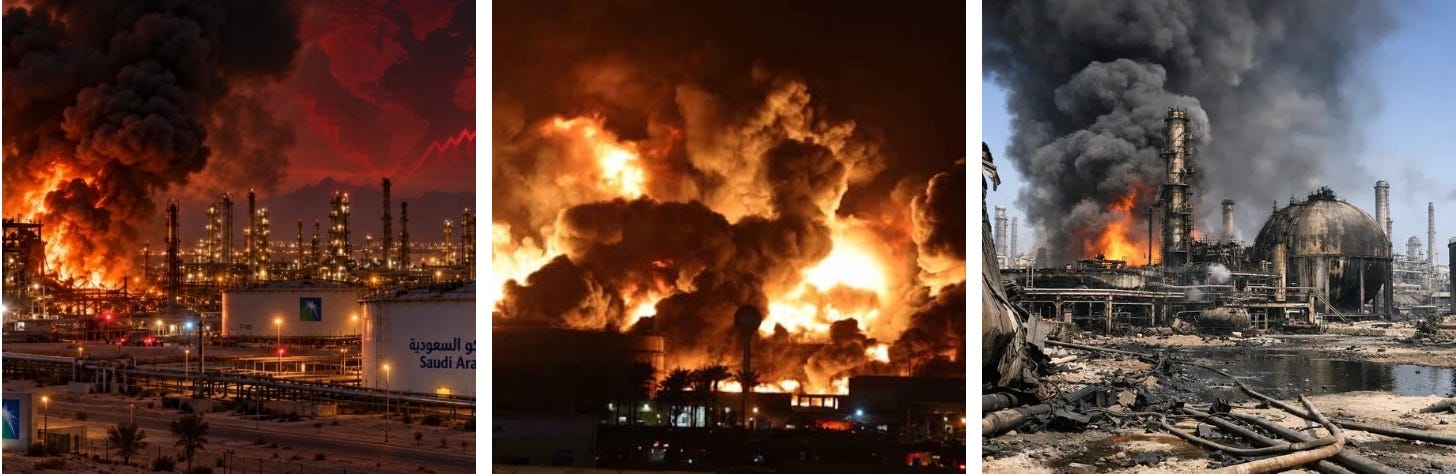
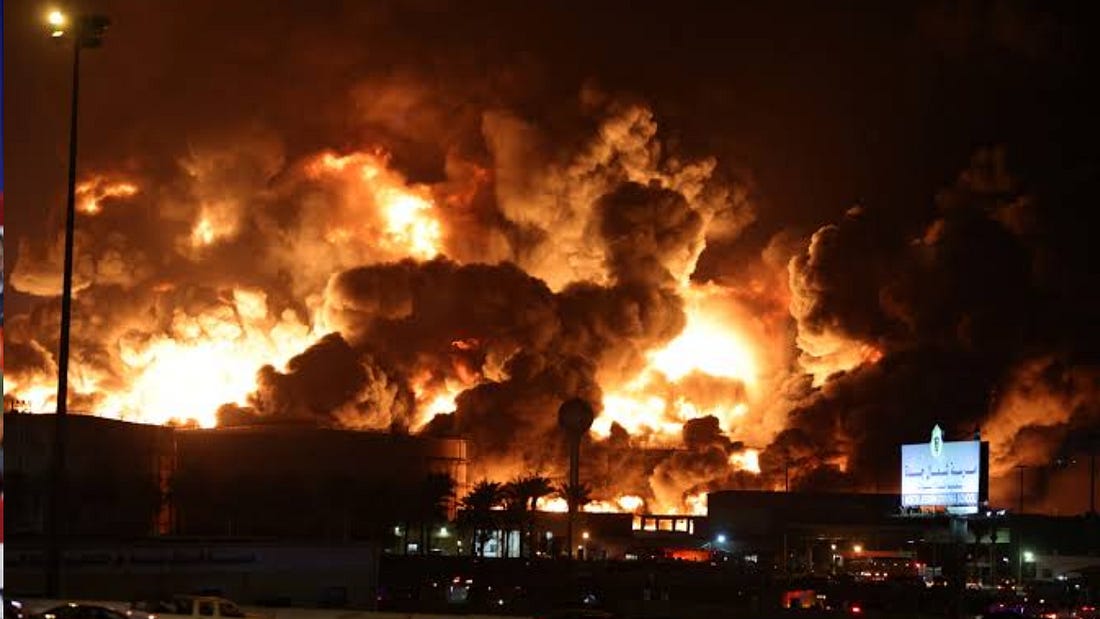
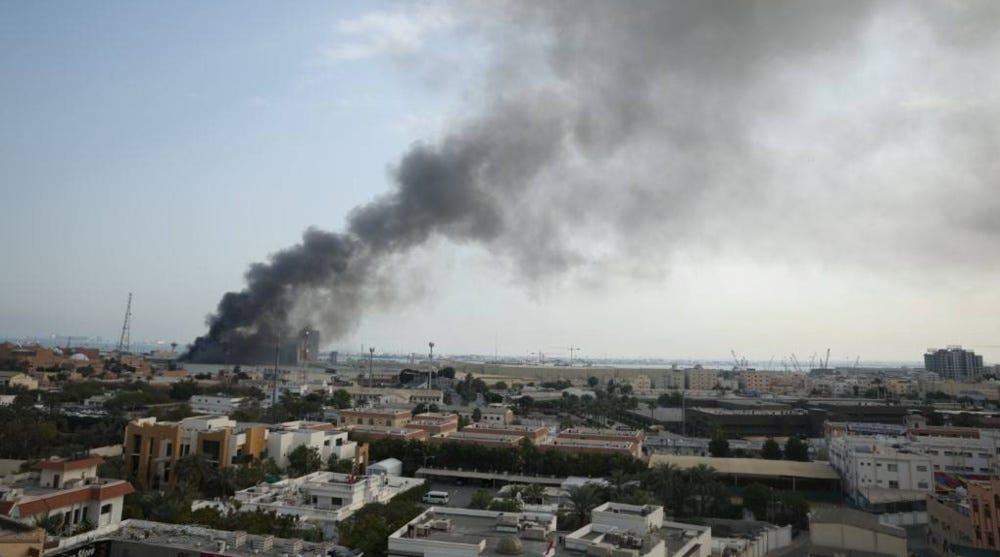
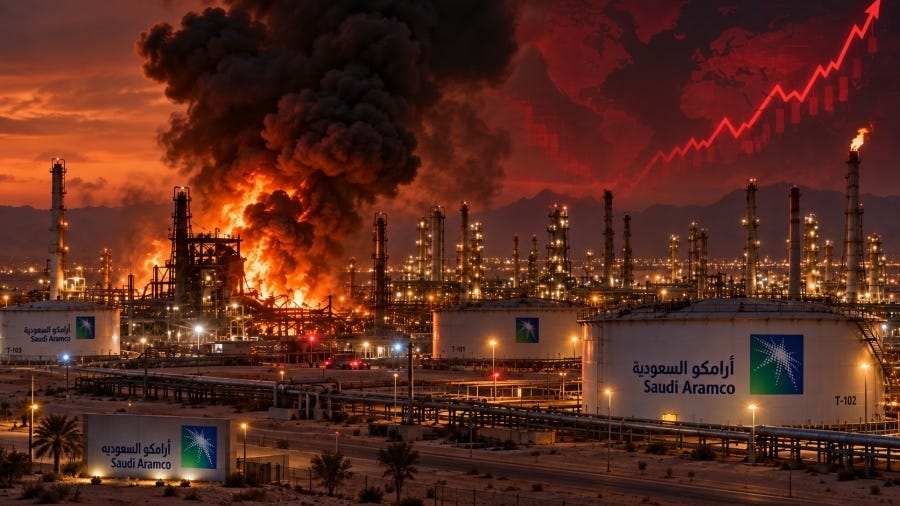
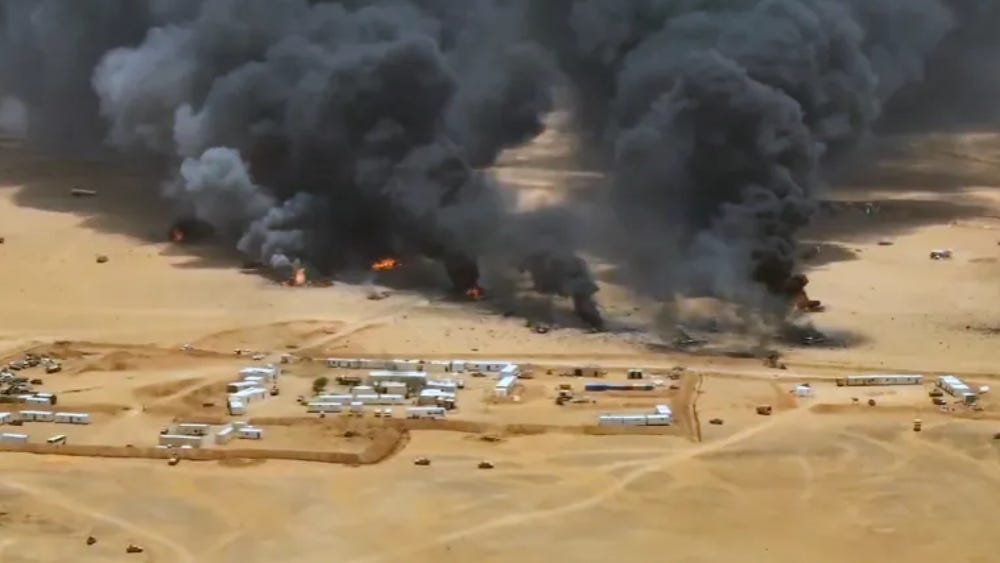
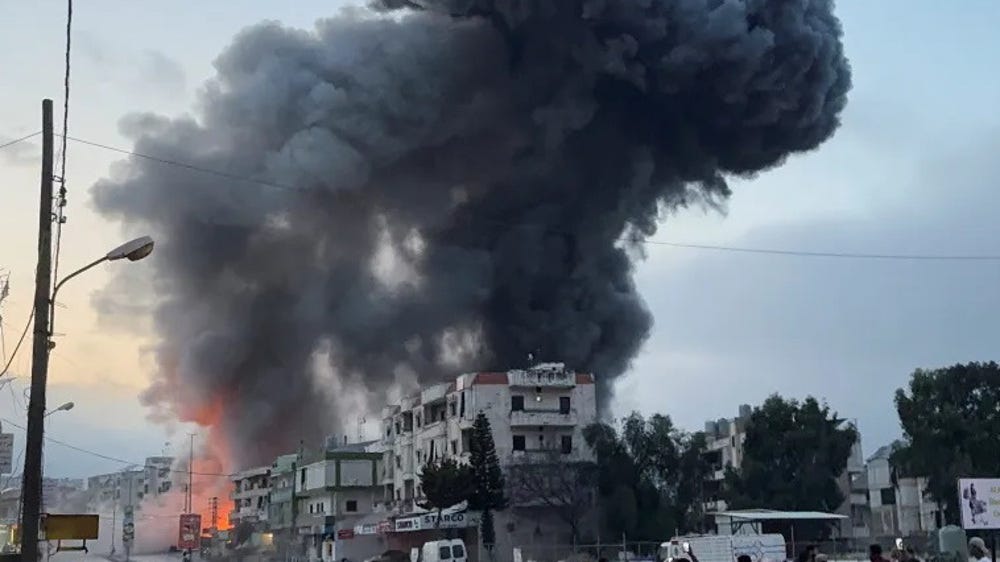
The strikes on Aramco infrastructure began again on 7th September. The Financial Times reported that energy facilities in Jizan had been hit, with damage being assessed. One source described the attack as “similar in scale to last month’s strike, which temporarily knocked out some production at the refinery.” The Jizan refinery processes 400,000 barrels per day. NASA satellite imagery confirmed multiple fire hotspots at the site. The Saudi response was the predictable invocation of the damage-limitation handbook that every US-aligned Gulf state has internalised to the level of reflex: the attacks had “no material operational or financial impact.” This is the same sentence that Aramco CEO Amin Nasser delivered after last month’s strike, the same sentence that was contradicted within forty-eight hours by verified imagery of the site ablaze. Once again, we see the standard US and allies blatant lies in the face of proven facts. It has become absolutely laughable, and a parody of themselves. The denial is not a reporting choice. It is a genre. The Gulf states sing from the same sheet music, and the melody is always the same: nothing happened, the damage is cosmetic, the economy is unaffected. The fire hotspots in the satellite imagery do not appear in the press release. Nor do the verified images of blazing oil refineries. They are not required to.
On 8th September, the genre ended. Brigadier General Saree announced that dozens of ballistic missiles and UAVs had struck Aramco infrastructure in Abha, Najran, and Jizan, as well as the King Khalid Air Base in Khamis Mushait. The strikes, he stated, were “precise and direct,” causing “significant damage to the targeted facilities.” The Saudi Energy Ministry, via SPA, conceded that “several energy sector facilities and installations” in the south had been targeted, that the attacks “caused fires at several locations, leading to a temporary halt in some operations,” and that 73 people had been injured across four cities. The concession is notable precisely because it is a concession. The damage-limitation handbook has a page for this, but the page is thin, and the fires are too large to fit within it. The stated cause was the Al-Jawf massacre. A Saudi airstrike on a prison facility had killed seven—six inmates and a visiting child, and wounded seven others, including a female visitor. Saree’s words were not measured: “The criminal Saudi enemy launched a brutal and unjust aggression… committing grave crimes, the latest of which is the Al-Jawf massacre.” The retaliation was not proportional. It was not supposed to be. Proportionality is a doctrine for states that possess a monopoly on legitimate violence and wish to preserve the fiction that their violence is lawful. The Yemeni armed forces do not operate under that fiction. They operate under a simpler one: you kill children in a prison, and the oil stops flowing.
The strategic declaration that followed, issued by Hizam al-Assad of the Ansarullah political bureau, was the sentence that should be underlined in every energy ministry briefing room from Riyadh to Houston: “Oil-producing areas, industrial sites and vital facilities across Saudi Arabia are no longer safe.” The future of investment in Saudi Arabia, he added, “is at risk of being destroyed.” Mohammed al-Farah, also of the political bureau, confirmed that Yemeni forces had repelled a Saudi-backed advance towards the Al-Banat Mountains in eastern Al-Jawf, and that reinforcements and military equipment in the region had been targeted by several ballistic missiles. The $5 billion package was approved on 5th September. The first Aramco strike landed on 7th. The barrage that made the Saudi Energy Ministry admit to fires and injuries arrived on 8th. The timeline is not a coincidence. It is a response. The United States armed the kingdom, and the kingdom’s oil infrastructure became the target. The JDAMs that are now being loaded onto Saudi aircraft will, in the next exchange, be aimed at Yemeni positions that are already firing missiles at the refineries those bombs are meant to protect. The arms package is not a shield. It is a target designation, delivered in the form of a purchase order. The southern front has always been the variable that Western analysts underestimate, not because it is small, but because it is inconvenient. A war with Iran is a war with a state that can be sanctioned, bombed, and blockaded. A war with Yemen is a war with a country that shares a border with the world’s largest oil exporter and has no interest in the rules that govern the conduct of civilised warfare. The $5 billion will not change this. It will only ensure that the next barrage is met with more bombs, and the bomb sites become the next targets, and the cycle continues until the oil is no longer worth the cost of its own protection. The Jizan refinery is on fire. The King Khalid Air Base is on fire. The investment is at risk of being destroyed. And the Saudis are telling the world that nothing happened. The fire hotspots do not require a press release. They require only a satellite, and a willingness to look.
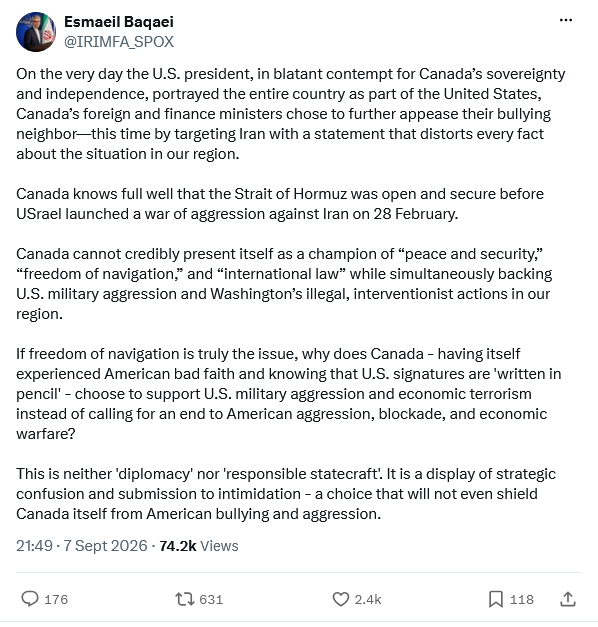
VI. The Periphery Folds: When the Empire’s Allies Discover They Are the TerritoryThe joint statement issued on 6th September by Canadian Foreign Minister Anita Anand and Finance Minister François-Philippe Champagne, condemning Iran’s “destabilising activities” and voicing support for US-led efforts to “reopen” the Strait of Hormuz, arrived on the very day that the American president, in a post that required no translation, portrayed the entire Canadian state as an administrative subdivision of the United States. Esmaeil Baghaei’s response, posted in English on X, did not dignify the statement with a direct quotation. He paraphrased it, which is the diplomatic equivalent of not touching something with your bare hands. Canada, he observed, knows full well that the Strait was open and secure before the ‘USraeli’ war of aggression began on 28th February. Canada cannot credibly present itself as a champion of “freedom of navigation” and “international law” while simultaneously backing the military aggression that closed the waterway. The final characterisation was the one that will circulate in diplomatic circles for weeks: a display of “strategic confusion and submission to intimidation.” The word “confusion” is doing the work. A state that is confused about its own sovereignty is not a partner. It is a vassal that has not yet read the contract.
The IAEA dimension was addressed on 7th September by Iran’s mission in Vienna, which stated that calls for Tehran to unconditionally comply with Safeguards are “meaningless” under the current “hazardous” circumstances. The agency, the mission continued, “must stop unprofessional, unobjective, semi-technical, and politically influenced reporting.” The context is not lost on anyone: the IAEA itself suspended Safeguards implementation and withdrew inspectors from Iran “for safety reasons” following the inconceivably reckless US-‘Israeli’ terrorist strikes on nuclear facilities. A draft resolution now proposes referring Tehran to the Security Council. The institution that was supposed to be the referee has been removed from the pitch, and the players are now being told to resume play. Grossi, at the quarterly Board of Governors meeting, offered the standard formulation: “The best, shortest way for a positive outcome is for Iran to engage with us.” The sentence is structurally identical to every previous iteration of the same sentence, and it carries the same implicit assumption: that the party which bombed the facilities is the one entitled to demand access to them. The irony is simply breathtaking. Baghaei’s warning to Europe, issued the same day, was more specific in its target and more severe in its diagnosis. “Europe has already tried this path,” he stated, “keeping the United States satisfied and complying with its demands, both at the UN Security Council and at the IAEA Board of Governors. The result has been the further marginalisation of Europe’s role.” The Blocking Statute, he reminded his audience, already prohibits European companies from complying with US sanctions, and requires European governments to protect their companies against them. The statute exists. It is being ignored. The question is not whether Europe has the legal framework to resist. The question is whether it has the political will to invoke it, which is a question that has been answered, repeatedly, in the negative. The answer was confirmed on 5th September by Bessent’s X post claiming that the EU had “officially joined” the sanctions push against Iran. The European Commission’s actual statement of 31th August, as Euronews clarified, does not specify any such joining. The bloc “remains ready to take further measures, where necessary,” which is the language of a state that is not ready. “Officially joining” would require a unanimous vote among member states and would carry direct consequences for firms in Germany, Italy, and the Netherlands, which together account for around two-thirds of the bloc’s remaining trade with Iran. The gap between Bessent’s claim and the Commission’s statement is not a misreading. It is a deliberate fabrication, delivered with the confidence of a man who has never had to implement a policy he announced.
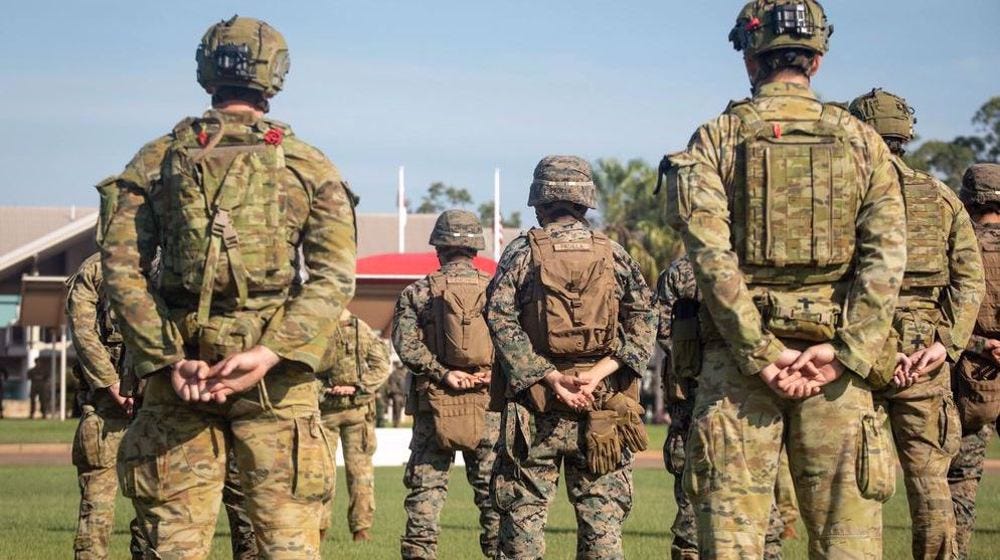
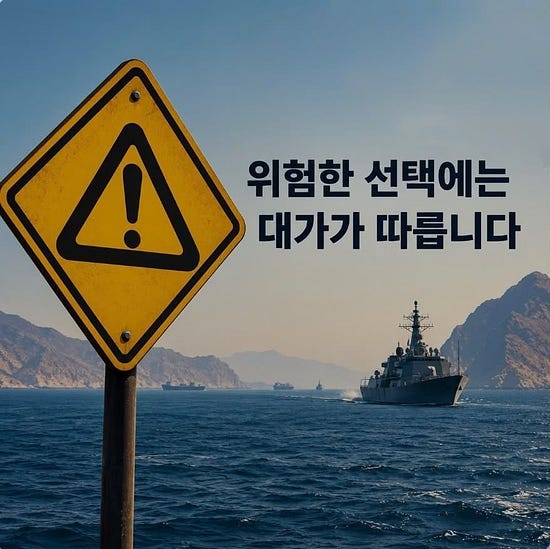
The Australian dimension, documented by the Nautilus Institute and reported by The Guardian on 7th September, provides the structural context for all of the above. The US military controls 17 facilities on the Australian mainland, has access to 75 Australian-run military installations, and US defence corporations have access to a further 18. The total is 110 facilities. More than half of all military installations in Australia. Richard Tanter, the study’s author, described it as “not a matter of penetration, it’s a matter of saturation.” Over half of the facilities have some level of American access: American personnel, American corporations, “some of the biggest armaments companies in the world.” Former defence minister Christopher Pyne, speaking at a public inquiry, noted that the AUKUS nuclear submarine agreement is “a lot more than the submarine procurement,” and that for the Americans, a submarine base in the Indian Ocean “is a massive strategic advantage.” Dr Vince Scappatura, author of The US Lobby and Australian Defense Policy, described the arrangement as a “second wave of colonisation.” “Today we are shaping up to be the ‘tip of the spear’ for US power projection into the region,” he said. “Each one of those dots on the map represents a point of leverage Washington has over Canberra.” The phrase he uses is “empire by invitation.” He adds a variant: “voluntary subordination.” The Australian government’s response is that the sites “are Australian bases under Australian control.” The sentence is true in the way that a tenant can say the apartment is theirs. The final data point, issued on Monday by Esmaeil Baghaei in a post written in Korean on his X account, was a warning to South Korea against any military participation in the Persian Gulf operations. Such involvement, he stated, would amount to “direct” support for the United States and would lead to serious consequences. The 64-year history of bilateral relations, he noted, has been built on mutual respect. Tehran, he added, attaches “great importance” to its friendly ties with Seoul. The Iranian nation, he observed, is currently defending itself against acts of aggression and responding decisively to US war crimes against women and children. The sentence that follows is the one that should be framed in every embassy in the region: “No sovereign and responsible country will submit to US pressure and blackmail to collude in committing acts of aggression and heinous crimes against the great Iranian nation.” A senior official in the South Korean presidential office responded on Friday that no final decision had been made, that Seoul was “still reviewing its available options.” The options, as the Australian data demonstrates, are not available. They are a menu from which one item has been pre-selected, and the rest are decorative. The periphery is folding. Canada is confused. Europe is marginalised. Australia is saturated. South Korea is reviewing. The IAEA is compromised. And the one union that has the legal framework to resist, the Blocking Statute, is watching its own companies be strangled while the statute gathers dust in a drawer in Brussels. The empire does not need to invade. It needs only to invite. And the invitation, as Scappatura puts it, is accepted voluntarily. The subordination is the point. The subordination is the product. And the product is being delivered, one joint statement at a time, one “we are reviewing our options” at a time, one “strategic confusion” at a time, to a buyer who has already signed the contract and is now simply waiting for the goods to arrive. That has been the way, right up until the Islamic Republic draw a big red line across the Strait of Hormuz, and began systematically dismantling the illusion of US power around the region. Their courage, dignity, and power, exhibited under terrorist fire, has finally placed an alternative option on the table. Notice has been served. It only remains to be seen, who will ultimately demonstrate the courage and morality to abandon the sinking American ship.
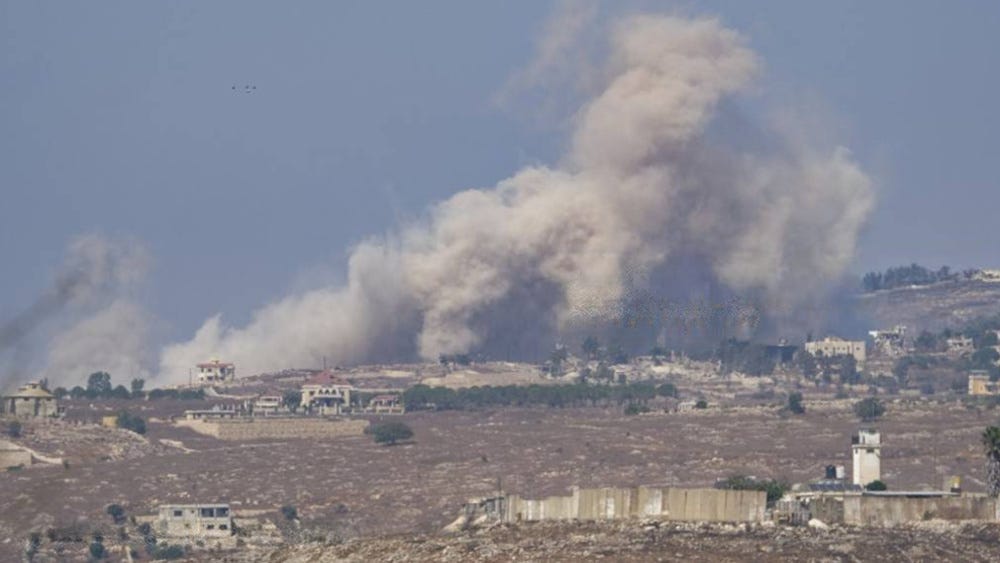
VII. The Erasure of the South: A Chronicle in Rubble and SilenceHezbollah’s statement on 5th September was not a military communiqué. It was a diagnosis. ‘Israel,’ it stated, is carrying out a campaign of “killing, shelling, destruction, and systematic blowing up of homes and villages,” seeking to “erase the features of affected areas and destroy the conditions necessary for life there under ‘flimsy pretexts.’” The word “erase” is the operative one. It is not destruction. Destruction implies a before and an after. Erasure implies that the before is being made to disappear from the record, from the map, from the memory of the terrain itself. The group noted that the continuation of occupation and the spilling of Lebanese blood had undermined every claim of progress through negotiations. The government’s negotiation framework, in its assessment, had brought “nothing but disgrace and humiliation.” The call that followed was not for war. It was for the Lebanese authorities to “reassess their calculations” and abandon “obstinacy and internal disputes.” The US, the statement noted, is “providing political and other support for ‘Israel’,” while the Lebanese state is in “total absence from assuming its responsibilities.” The silence of the international community, in the statement’s framing, is not neutrality. It is complicity by inaction, and it is the condition that makes the next strike possible.
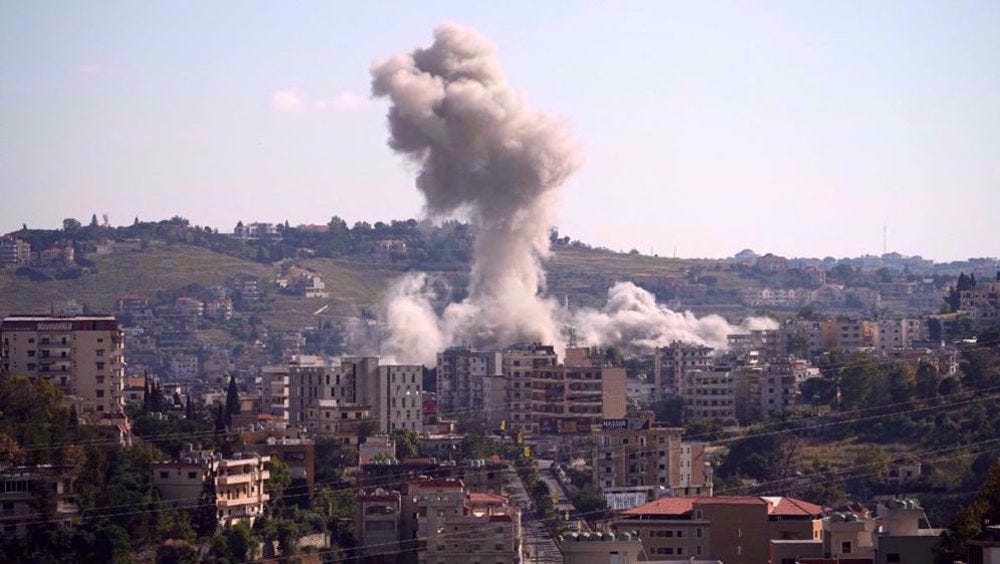
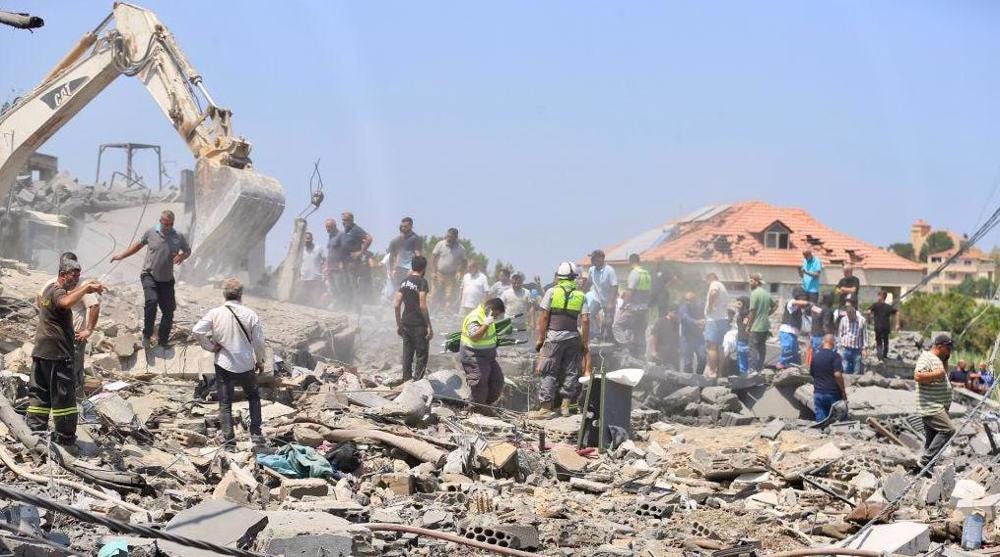
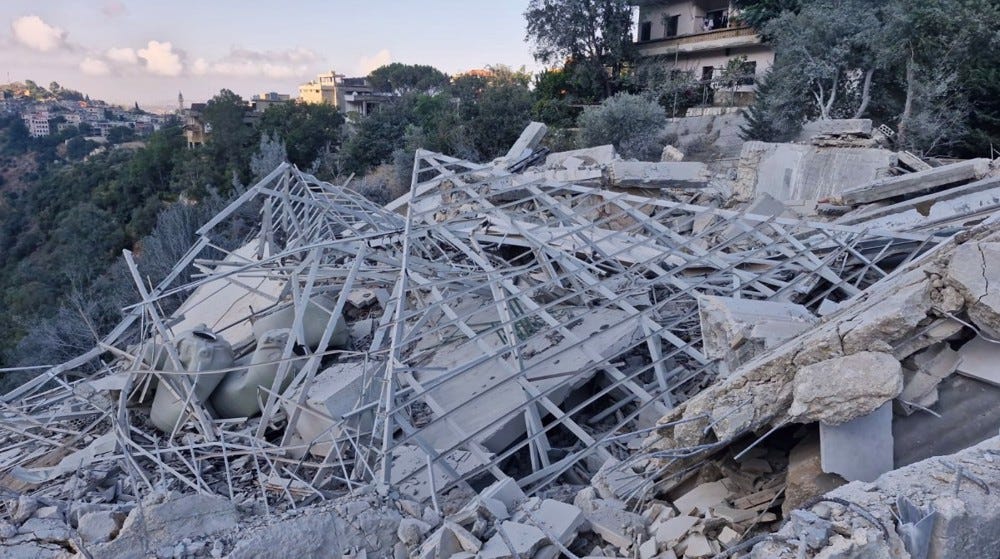
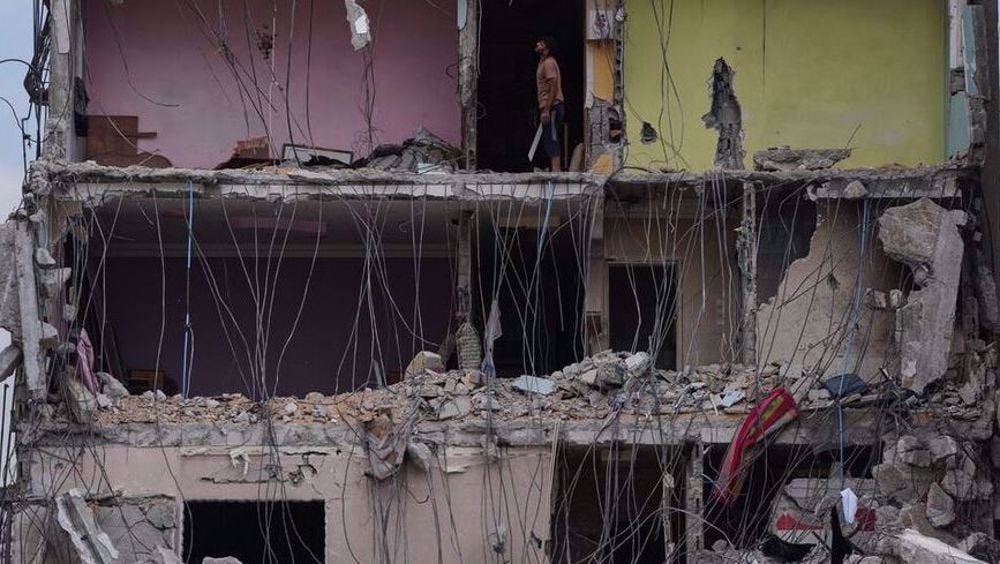
The condition was demonstrated on 6th September. The Lebanese Health Ministry confirmed that ‘Israeli’ terrorist air strikes carried out that morning “completely destroyed Ghandour Hospital in Nabatieh al-Fawqa.” The attack, the ministry stated, marked “another violation of the protection afforded to medical facilities under international humanitarian law.” The hospital had ceased active operations approximately two months prior as the attacks intensified, but it had continued to serve, for a prolonged period, as a shelter for people displaced by the fighting. The strike followed a series of attacks across Nabatieh district that had already killed four and wounded twenty. Since 2nd March, seventeen hospitals across Lebanon have been either damaged or destroyed by ‘Israeli’ terrorism. Three in the south have been forced entirely out of service. The pattern keeps on repeating. The West remains silent. The hospital is gone. The people who were sheltering in it are not. They are in the rubble, or they are in the next village, or they are in the statistics that the Health Ministry will file for the monthly report that no one in Geneva will even bother to read.
The same day, in Nabatieh, a house that had stood for more than one hundred and twenty years was flattened. Obviously, by ‘Israel’—but it still bears mentioning, purely because the usual reporting fails to name the aggressor in its reports. Buildings just collapse. People just die. Yet the cause of the death and destruction is conveniently omitted. It was a historic structure, part of the architectural memory of a city overlooked by the Ali al-Taher hill, which holds a strategic position that the ‘Israeli’ terrorist occupation has made its own. The report’s language was precise: “The ‘Israelis’ launched war on the history of Nabatieh.” One hundred and twenty years. A house is not a military target. A house is a family’s archive, its walls holding the particular quality of light from a particular decade, the doorframe marked with the heights of children who are now adults or dead. The demolition is not incidental to the military operation. It is the military operation. The objective is not the hill. The objective is the house. The hill can be held. The house, once gone, cannot be rebuilt. It can only be mourned, and the mourning is the point.
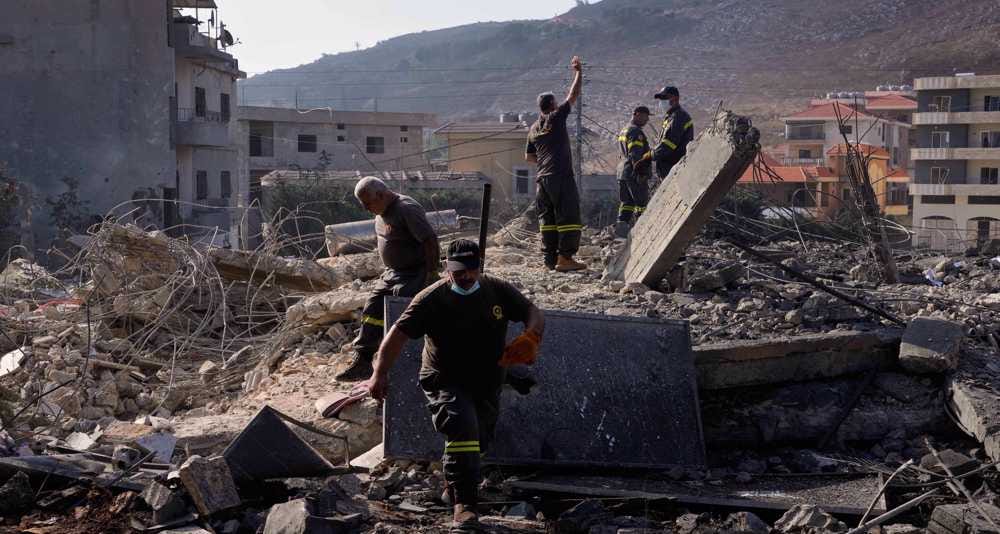
On 7th September, the ‘Israeli’ terrorist attacks reached their most concentrated expression. Seventeen people were killed across southern Lebanon in a single day, including two infants. In Kfar Rumman, a residential building was struck. Eleven people died inside it: two children, four women, and five others. A paramedic was killed in a separate strike on a vehicle. The combined toll, including the preceding day’s seven killed in Arab Salim, reached seventeen. The mayor of Kfar Rumman, Abdullah Farhat, described the strikes as “a massacre in every sense of the word.” Then he added the sentence that should be the epitaph of the negotiation framework: “Lebanese leaders signed deals and we are paying the price here. There is an enemy that is not concerned about anything.” The deals. The signatures. The handshakes that were photographed and captioned and filed in the archives of diplomatic progress. The price is being paid in a building in Kfar Rumman, in the bodies of two infants whose names will appear in a Health Ministry report and nowhere else.
Al Jazeera’s Zeina Khodr, on scene, delivered the line that captures the entire moral architecture of the operation: “They’ve been here throughout the night, but it’s no longer a rescue operation. It’s a recovery operation.” The distinction is the entire story. A rescue operation assumes that there are people to rescue. A recovery operation assumes that there are only bodies to collect. The shift in vocabulary is not a change in practice. It is an admission, delivered in the field, by a journalist who has been doing this work long enough to know the difference between the two words. The final dimension was the evacuation order issued on Sunday by ‘Israeli’ military Ethnic Cleansing spokeswoman Ella Waweya, who “demanded” that residents of a building in Deir al-Zahrani “flee immediately,” claiming the site was near a Hezbollah facility. The strike followed shortly afterward. This was ‘Israel’s’ first reported evacuation order since June.
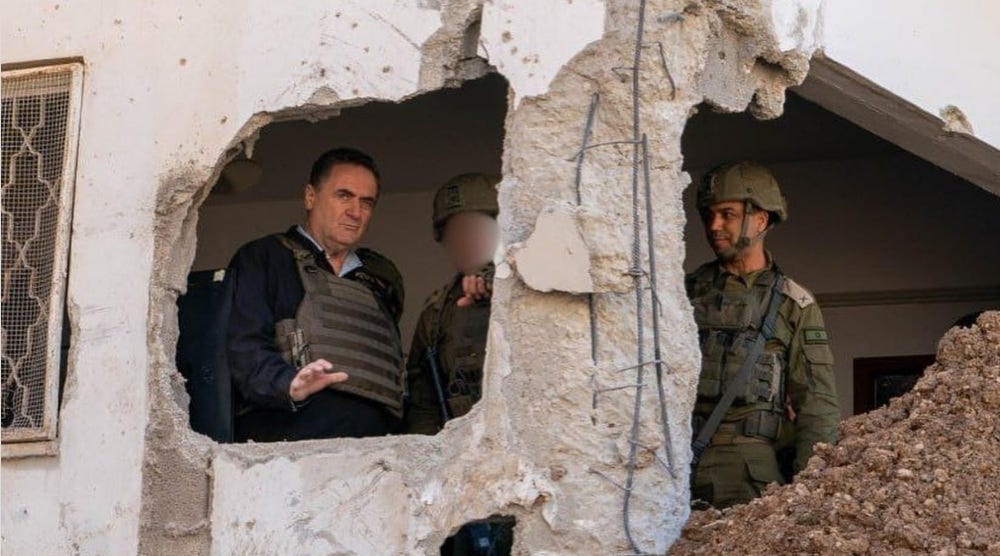
The order is not a warning. It is a confession. It admits that the military is about to strike a residential building, and that the only legal mechanism available to it to avoid the charge of targeting civilians is to instruct the civilians to leave first, and then, when they do not leave fast enough, to strike the building and report that it was empty. Israel Katz, the repulsive Terrorism Minister, has acknowledged that the military has “erased dozens of municipalities where there is nowhere to return.” The phrase is his. It is not a metaphor. It is a blatant description of the operational objective. Lebanese MP, in a statement on the cumulative toll, asked the question that no one in the international community is willing to answer: “How long will this aggression against the south and its people continue? How long will Lebanon and its nation have to pay the price?” He named the towns: Mayfadoun, Ramadiyeh, Nabatieh, Arab Salim. He named the hospital. “The height of the barbarity and vileness of the ‘Israeli’ military,” he stated, “was the strike on Salah Ghandour Hospital.” The cumulative toll since the conflict began: more than 4,350 killed. More than 12,300 wounded. The number is not a statistic. It is a list. Each number is a name. Each name is a human being, and house that will not be rebuilt. Each house is a century of light in a particular window, now gone. The south is being erased. Not destroyed. Erased. And the international community is watching, and filing reports, and noting its “deep concern,” and scheduling the next round of negotiations for a date that has not yet been killed.
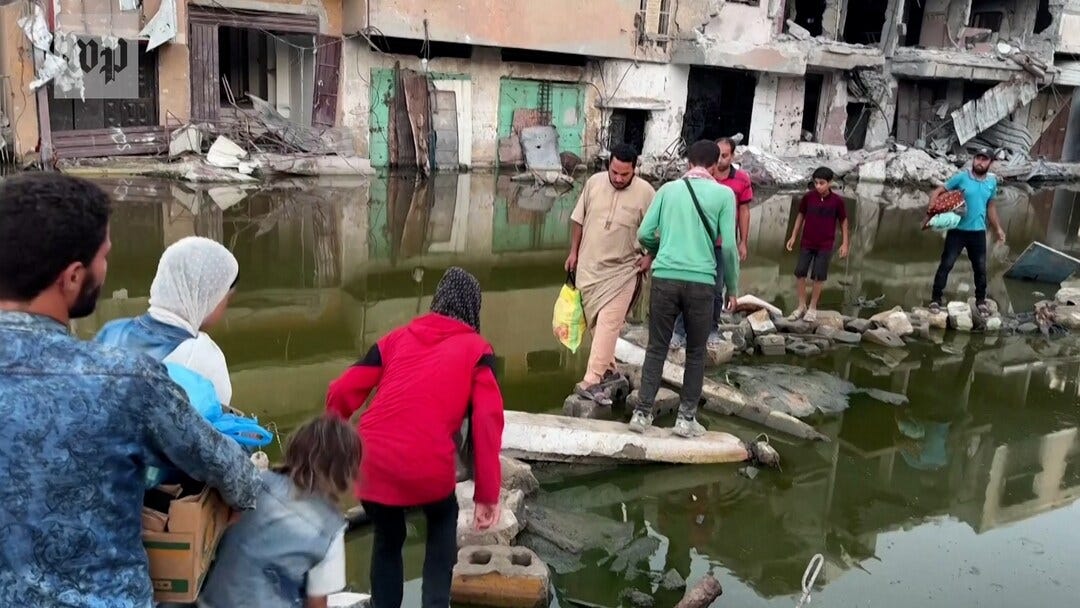
VIII. The Accounting: What Remains When the Rubble Is Moved and the Doctors LeaveThe rubble of Gaza is not just rubble. It is evidence. The Euro-Med Human Rights Monitor’s finding, reported on 6th September, is that approximately ten million tonnes of concrete, rebar, and human remains have been removed, crushed, and relocated from across the Strip at a rate of roughly one hundred trucks per day. The operation is not reconstruction. Reconstruction implies a before that you intend to return to. This is something else. The Palestinian Civil Defence’s spokesperson put it in terms that should be entered into the record of every tribunal that will eventually be convened: “Naturally, there are thousands of martyrs under this rubble, and moving this rubble with their remains means a deliberate destruction of the crime scene that contains the basic evidence that exposes the occupation’s commission of war crimes, crimes against humanity, and genocide.” The military is preventing rescue crews from accessing the sites, and is simultaneously tampering with the rubble areas, moving them from one place to another. The family of a missing person, speaking to Al Jazeera, described the double tragedy with a clarity that no legal brief could match: “We lost them, and the first tragedy was their martyrdom, and the second and daily tragedy is the absence of these graves and the absence of the evidence with which we will try this occupation for these crimes and atrocities.” Countless thousands of people are estimated to be missing under the rubble. Gaza is under the relentless grip of ‘Israeli’ military control. Seventy-three thousand have been “officially” been killed. Our previous report based on The Lancet’s findings, estimates at least 125,000. Many believe that total is far higher still. The rubble is being moved. The evidence is being destroyed. And the trucks are still running.
The sewage system tells the same story in a different register. Nearly ninety per cent of Gaza’s water and sanitation infrastructure has been damaged or destroyed. All six wastewater treatment plants are out of service. ‘Israel’ has been blocking the entry of repair equipment, classifying it as “dual-use.” The consequence, reported by Haaretz and EcoPeace, is that five of ‘Israel’s’ six desalination plants, which supply more than eighty per cent of the country’s drinking water, have been shut down after an algal bloom clogged their intake systems. Karma really is a fucking bitch, isn’t it?! The bloom is the direct result of untreated wastewater flowing into the coastal aquifer. Gidon Bromberg, director of EcoPeace’s ‘Israeli’ office, stated the obvious: “It’s a threat to Palestinian public health, and it’s a threat to ‘Israeli’ public health. No one can ignore the science and the fact that we all share the same environment.” The Haaretz editorial’s framing is the one that matters: the desalination crisis exposes the consequences of destroying Gaza’s sewage system, refusing to let it be rebuilt, and failing to prepare ‘Israel’s’ own water economy for a worsening climate. The authorities have imposed domestic water-use restrictions. The state that destroyed the sewage system is now rationing its own tap water. The science does not recognise borders. The algal bloom does not check its passport before clogging an intake pipe.
On 7th September, grotesque Terrorism Minister Israel Katz issued a statement that should be read in full, slowly, and then read again. “If the security apparatuses of the Palestinian Authority,” he stated, “launch, or we know for certain that they are about to launch, an October 7-style attack against forces and Jewish settlements, Prime Minister Benjamin Netanyahu and I instructed the army to prepare to launch an all-out war against senior officials and mechanisms of the Authority, the bodies associated with them, and against all infrastructure in Judea and Samaria—in order to quickly bring about their complete defeat.” The trigger for the threat was a single stabbing attack at a West Bank farming outpost, in which the assailant was subsequently killed. The response, as reported by The National, could include targeted killings and the forced evacuation of entire cities and villages, “just as we did” in Gaza and southern Lebanon. The sentence is not a conditional. It is a pre-authorization. The
The medical data, published the same day by Tel Aviv University researchers Prof. Itai Ater, Prof. Nittai Bergman, and PhD candidate Doron Zamir, using cross-referenced population registries, educational data, and medical licensing documents from the Central Bureau of Statistics, provides the quiet counterpoint to the loud one. One thousand three hundred and seventy physicians left ‘Israel’ for at least twelve months between 2023 and 2025. That is a ninety-four per cent increase over the comparable period a decade earlier. One in five of those who emigrated was at least forty-five years old. The rate of loss is now close to five times what it was ten years ago. The three-year departure total exceeds the entire medical staff of a large ‘Israeli’ hospital. Ater’s summary is the one that should be in every political briefing: “All of us have family members waiting for surgery or other medical care. The departure of nearly 1,400 doctors translates directly into longer wait times, less effective medical care, and ultimately severe harm to our quality of life.” The Haaretz editorial headline is the accurate one: Netanyahu is the greatest hazard to ‘Israelis’ health. Not the missile. Not the blockade. The policy. The policy is the hazard. The doctors have voted with their feet, and their feet are on a plane, and the plane is not coming back.
The final data point arrived on 8th September from London. Seemingly ‘reanimated’ Foreign Minister David Miliband, in Parliament, announced what he called a “comprehensive reset” of UK policy on ‘Israel.’ The measures: a ban on the import of all goods from illegal settlements; sanctions on organisations and individuals providing construction, infrastructure, financing, or real estate for settlement expansion; a total ban on UK advertising for the sale of settlement properties; sanctions against extremist settlers who incite violence; and a refusal of all new export licences for weapons that “materially contribute to the occupation.” He stated that “settler terrorists” had committed “ethnic cleansing” against Palestinians in the West Bank. The move was coordinated with France and Canada. The Palestinian Ambassador Husam Zomlot called it “a turning point in U.K.-Palestine relations.” ‘Israel’ condemned it as a “grave miscalculation.” The word “reset” is doing a great deal of work in that sentence. A reset implies a return to a previous state. There is no previous state to return to. The occupation did not begin in 2026. The settlements did not begin in 2024. The word is a diplomatic convenience, a way of describing a correction without naming the error it corrects. Let’s name it for him: The Balfour Declaration, of 1917. The rubble is moving. The sewage is in the aquifer. The ethnic cleansing and genocide is pre-authorized. The doctors are on planes. And the British are banning the import of settlement cement. That’ll teach them. The accounting is not finished. It is only just beginning. And the trucks are still running. Conclusion:The illegal unprovoked acts terrorism that started in late February as a “war of choice” has now run for six months, cost one hundred billion dollars, rendered over a thousand completely unnecessary American casualties, with far more killed than admitted, and produced no result that can be described in any language other than failure. The carrier is rusting in Thailand. The destroyers are fleeing. The blockade is failing in the Arabian Sea, the Strait is still closed, the restricted zone is declared, and the missiles are being mass-produced in tunnels carved into ridgelines that no airstrike will reach. The American “battlefield footage” is being generated by artificial intelligence because the actual footage is no longer available. The former Secretary of Defense calls it a failed war before it has ended. The Senator with the stopwatch says it costs a million dollars every two minutes. The poll says nearly ninety per cent of the population believes the government is corrupt. And the man who started it is posting delusions of “an impending American victory and plummeting oil prices” on a platform that his own Vice Chairman of the Senate Intelligence Committee has just described, on camera, as a man with no plan, no strategy, no allies, and no way out. The arithmetic is not close. It is not ambiguous. It is the kind of basic mathematics that a child could do on a napkin with a crayon, and the fact that it is being done by a There is a way out. But it involves the taking of responsibility. The ownership of the clusterfuck. The admission of the failure, both moral and military, of attempting to force American will onto a sovereign, six thousand year old civilisation that refused to break. Refused to bow. Refused to surrender. And in so doing, utterly humbled the “might” of one of the world’s now former military powerhouses. The way out is actually rather simple. The Islamabad Memorandum of Understanding. Already signed by both sides, and awaiting only American compliance. The moral ledger is separate, and it is longer. An American missile struck a wedding. The judiciary has ruled it a war crime. A hospital in Nabatieh al-Fawqa was destroyed, and the people sheltering in it are in the rubble, or in the next village, or in the statistics. Two dead infants in Kfar Rumman. A house in Nabatieh that had stood for one hundred and twenty years, destroyed. Ten million tonnes of rubble in Gaza, moved at a hundred trucks a day, with countless thousands of people buried underneath it. The trucks are still running, and the evidence is still being destroyed. The sewage is still in the aquifer, and the desalination plants are still clogged. The water is still being rationed, the doctors have left, and the genocide in the West Bank is pre-authorized. The only thing that has not been destroyed is the capacity to deny that any of it is happening. The denial is the product. The denial is what is being sold. And the buyers are still buying, because the alternative is to look at the rubble and admit what it is, and no one in the architecture of Western power is structurally equipped to do that. The periphery has folded. Canada is in strategic confusion. Europe is marginalised, its Blocking Statute gathering dust while its companies are strangled. Australia is saturated, more than half its military installations under American access, a “second wave of colonisation” delivered by invitation. The IAEA has withdrawn its inspectors for safety reasons (that’ll be American bombs!) and is now drafting a pointless resolution to refer the state it withdrew from to the Security Council; where it shall undoubtedly meet with the Veto Power of China and Russia. South Korea is reviewing its options, and the options are a menu from which one item has been pre-selected for it. The British are banning the import of settlement cement, which is a “comprehensive reset,” which is a correction, which is a turning point, which is a word that means nothing because there is no previous state to return to. The alliance is not broadly breaking. It is not exactly fracturing. It is doing something slower and more difficult to name. It is becoming irrelevant. Not defeated. Not overthrown. Simply irrelevant. The kind of irrelevant that a company becomes when it stops reading the market, stops adjusting its pricing, and keeps issuing press releases about its “liftoff phase” while the average household pays seven hundred and sixty dollars more for the privilege of watching. For two centuries, the world was told it needed a guarantor. The guarantor has spent its entire capital on the guarantee, violently torn it to shreds for ‘Israel’, and is now asking the world to extend the credit, and join its unprovoked terrorism. The world is reviewing its options. The options were always the same. One of them is “no”—and is becoming an increasingly popular word. The empire that made itself indispensable has now produced, in real time, the proof of its own dispensability. The press release is still running, but no one is reading it anymore. Middle East Report is free today. But if you enjoyed this post, you can tell Middle East Report that their writing is valuable by pledging a future subscription. You won't be charged unless they enable payments.
|








 Posts








0 Comments