


RELATED POSTS
The Machines The Bear Fears – Ukrainian Heavy Bomber Drones
The Russians call these machines ‘Baba Yaga’. The boogey man...
FPV drone pilots often get the glory in Ukraine’s war with Russia. Daily, their pilots post videos of the drones chasing Russian infantry and vehicles and destroying them. Similar videos appear of the likes of Ukraine’s ‘Hornet’ AI-enabled medium strike drones destroying Russian logistics and menacing Russian shadow fleet ships. The destruction they wreak is extensive, but they are far from the only airborne drone weapons in Ukraine’s arsenal. There is another type of drone that is often forgotten, but holds a particular place of fear in the minds of ordinary Russian soldiers. Heavy-duty bomber drones, that often operate at night. These larger drones have taken an extensive toll not only on Russian troops, equipment and vehicles, but also on the minds of the troops themselves. The Russians have specifically named these drones as ‘Baba Yaga’. The Russian word for boogeyman... The Genesis of the Boogey Man The concept of larger heavy-lift quadcopter drones has been around for a while, but just like the implementation of FPV drones, it has taken the war in Ukraine to massively expand their use. The overall concept is relatively simple. Take a standard quadcopter drone and massively increase its size to the extent where it can carry a considerable payload. These larger drones are already used extensively in the likes of filmmaking and sporting events to carry larger cameras. So there wasn’t much of a stretch to move them to military use.
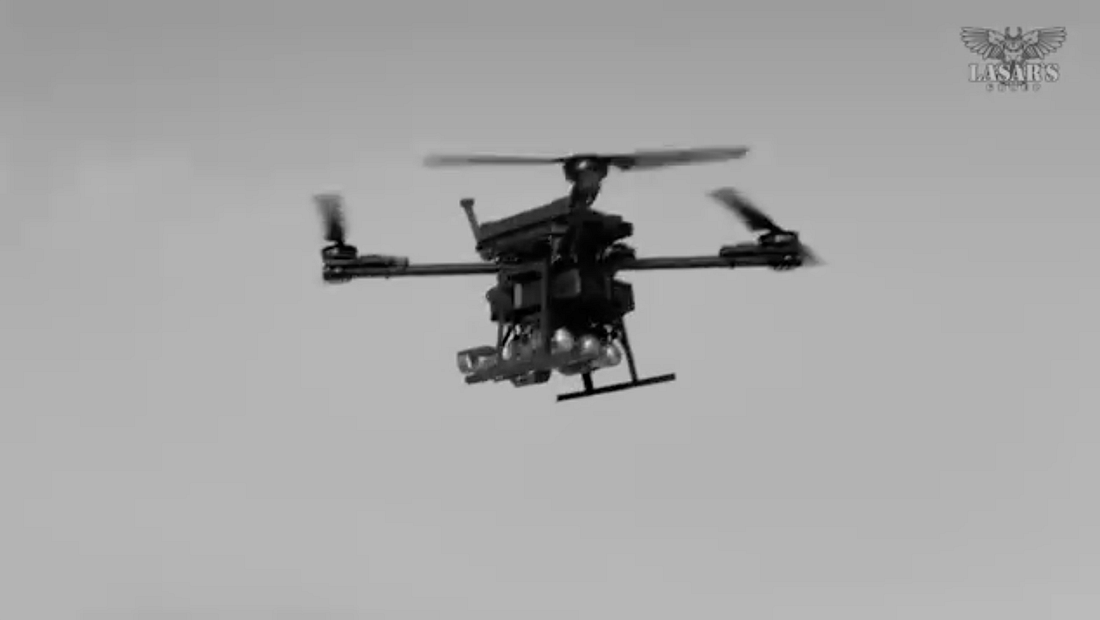
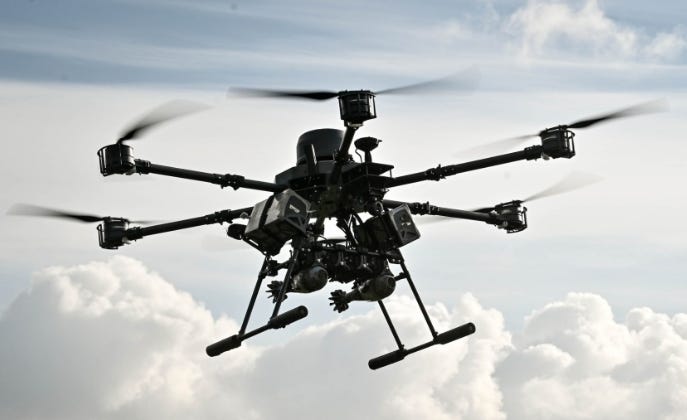
Of the vast numbers of different kinds of these heavy bomber drones used by Ukraine the most well known and recognisable are the ‘Vampire’ drones, though it should be noted these drones have 6 rotors as opposed to 4 (known as a hexacopter). These drones are thought to be particularly effective not only because of their extensive payload (thought to be around 15 kilogrammes or more in later variants) and range (originally 20 kilometres but newer variants can reach 60 kilometres) but also because of their excellent sighting systems and resistance to electronic warfare. These advantages make them deadly night-time predators... Bump in the night Operating at night makes detection of these drones hard. The standard tactic is to hover over the prospective target, be it a piece of equipment, a vehicle or a soldier, and drop a variety of ordnance. Vampire drones can be customised to drop multiple anti-personnel grenades, high-explosive payloads, anti-tank grenades, as well as mines for remote mine-laying. Pretty much anything can be rigged up effectively to be dropped from a Vampire drone, a useful capability as will be seen later. Russian soldiers complain that these drones can drop 82 mm mortar rounds directly into trenches, causing considerable damage. Which, of course, begs the question why haven’t the Russians deployed something similar?... The Russian Response When Ukraine upped the use of Mavic drones for reconnaissance, so did the Russians. When FPV and grenade dropper drones started to be used more extensively by Ukraine, so did Russia. So surely, as heavy-duty drones like the Vampire started bombing Russian positions, a similar response would come from Russia. After a fashion it did, if reports from Russia are to be believed, but it appears the plan did not go so well. Russian soldiers experimented with a heavy bomber drone of their own and were sent to assault battalions for their trouble. Clearly, if true, they annoyed the wrong commanders. You would think someone else would then take up the gauntlet, but it appears they have not. Whilst Russia deploys extensive numbers of drones, in a mirror image of Ukraine’s employment, bomber drones are absent from Russia’s standard selection; Russia having to use captured Vampire drones for its purposes. This also means Russia now lags behind in using these heavier drones for other purposes... Not Just Bombs Ukraine has been using its heavy drones in new ways as well. Logistics, for example. When a position is too dangerous to supply on the ground, and prehapes too isolated for UGV’s (Unmanned Ground Vehicles) to get to, bomber drones can quickly and easily switch from bombs to supplies, dropping or landing to offload them. According to many Ukrainian soldiers, this has kept positions in the fight; without said resupply, they would have to fall back. A change in battle tactics has also seen bomber drones transporting small UGV’s to front-line positions (not always successfully. Recent footage of this tactic was taken from a Russian interceptor drone. These are often explosive-laden ground drones, then used to move up on unsuspecting Russian positions and destroy them from unexpected angles. In a more forward-deployed variant of using the drones for logistics, heavy bomber drones delivered equipment and weapons to infiltrating Ukrainian assault teams, allowing them to spring surprises on unsuspecting Russian troops and attack using more and heavier weapons delivered by drone. The heavy bomber drone may not have the ‘star power’ of FPV drones, but it certainly is an exceedingly useful toolbox unit for Ukrainian ground troops… Conclusion Heavy bomber drones, such as Vampire, continue to be upgraded and adapted. They occasionally find themselves being used for some more unusual missions. They will continue to be a standard tool of the Ukrainian army going into the future. Whilst FPV drones might get the lion’s share of coverage, drones such as Vampire continue to contribute to Ukraine’s fight for survival… Additional sources Ukraine Arms Monitor here, here and here Ukraine: the under reported war
You're currently a free subscriber to Modern Warfare. For the full experience, upgrade your subscription.
|


 Posts








0 Comments