

If you are exploring this concept for a specific project, I can help you expand on it. Let me know if you would like me to:
Write an essay, article, or speech exploring this theme
Analyze how this concept is changing modern marketing and consumer behavior
Discuss the psychological benefits of choosing obscurity over fame.

The Luxury of Not Being Noticed
What a $2,000 T-shirt can tell us about luxury—and where the market is going.
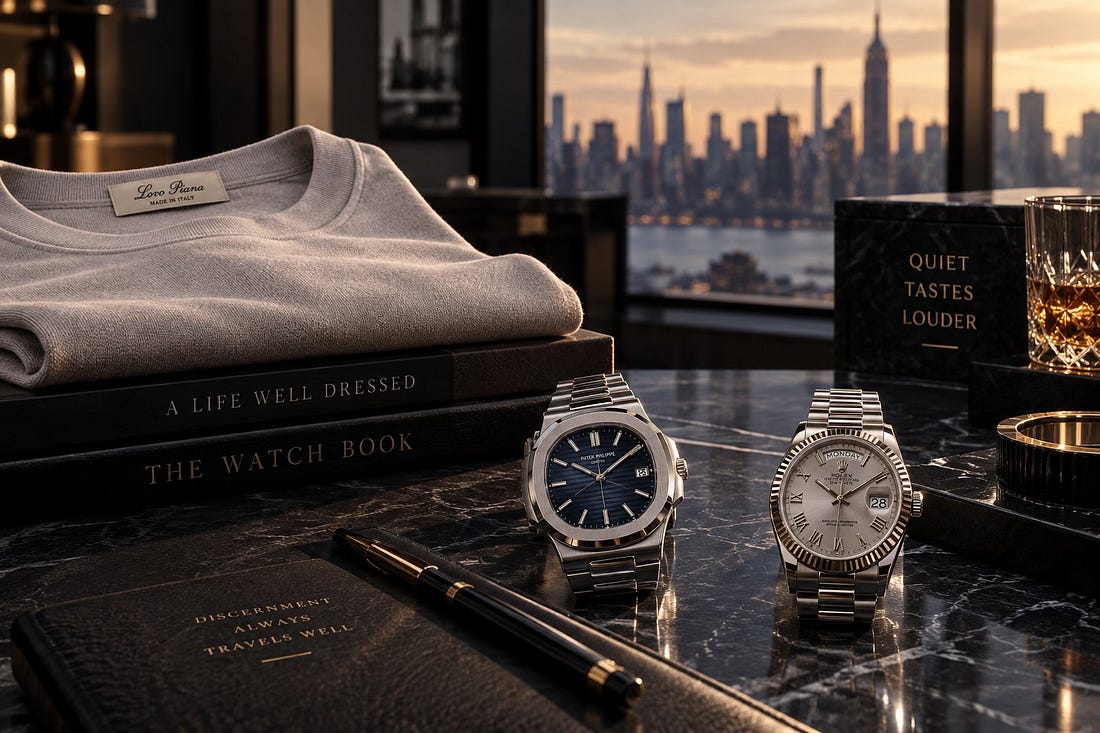
For a long time, luxury was supposed to be obvious. If you spent the money, people were supposed to know you spent the money. The car had to be recognizable. The logo had to be visible. The watch had to be gold. Preferably very gold. That idea of luxury isn’t disappearing. But among a certain kind of buyer, I think it’s becoming increasingly outdated. The new flex is much more interesting. It’s knowing that most people won’t know. And perhaps the best example isn’t a watch at all. It’s a T-shirt. The $2,000 T-ShirtWalk into Loro Piana and you can spend an extraordinary amount of money on what, from across the room, looks like a very nice T-shirt. No giant logo. No monogram covering your chest. Nothing announcing to the restaurant that your shirt costs more than some people’s monthly mortgage payment. Depending on the material and collection, some of these shirts can approach or exceed $2,000. And that’s precisely the point. You’re not paying $2,000 so everyone knows you’re wearing a $2,000 shirt. You’re paying $2,000 because you know what you’re wearing. And occasionally, someone else knows too. That’s the interaction. No announcement necessary. It’s a small nod between people who recognize the material, the cut, the construction or simply understand the uniform. If you know, you know. Luxury has increasingly moved in this direction. We’ve given it names like quiet luxury and stealth wealth, although both phrases have already been repeated so often that they’ve almost become clichés. I think it’s simpler than that. The ultimate flex is not needing to prove that you can flex. Which brings me to watches. The Precious Metal Nobody NoticesFor years, I’ve watched white-gold and platinum watches trade at fascinating discounts relative to their yellow- and rose-gold counterparts. And I understand why. Put a rose-gold watch on your wrist and nobody mistakes it for steel. Same with yellow gold. The precious metal is part of the visual experience. You’re paying for gold, and you’re getting the visual recognition that comes with wearing gold. White gold and platinum don’t give you that. To 99% of the population, your $100,000 white-gold watch may look like a stainless-steel watch. Historically, I think the market has treated that as a disadvantage. I’m beginning to wonder whether we’re entering an era when it becomes an advantage.
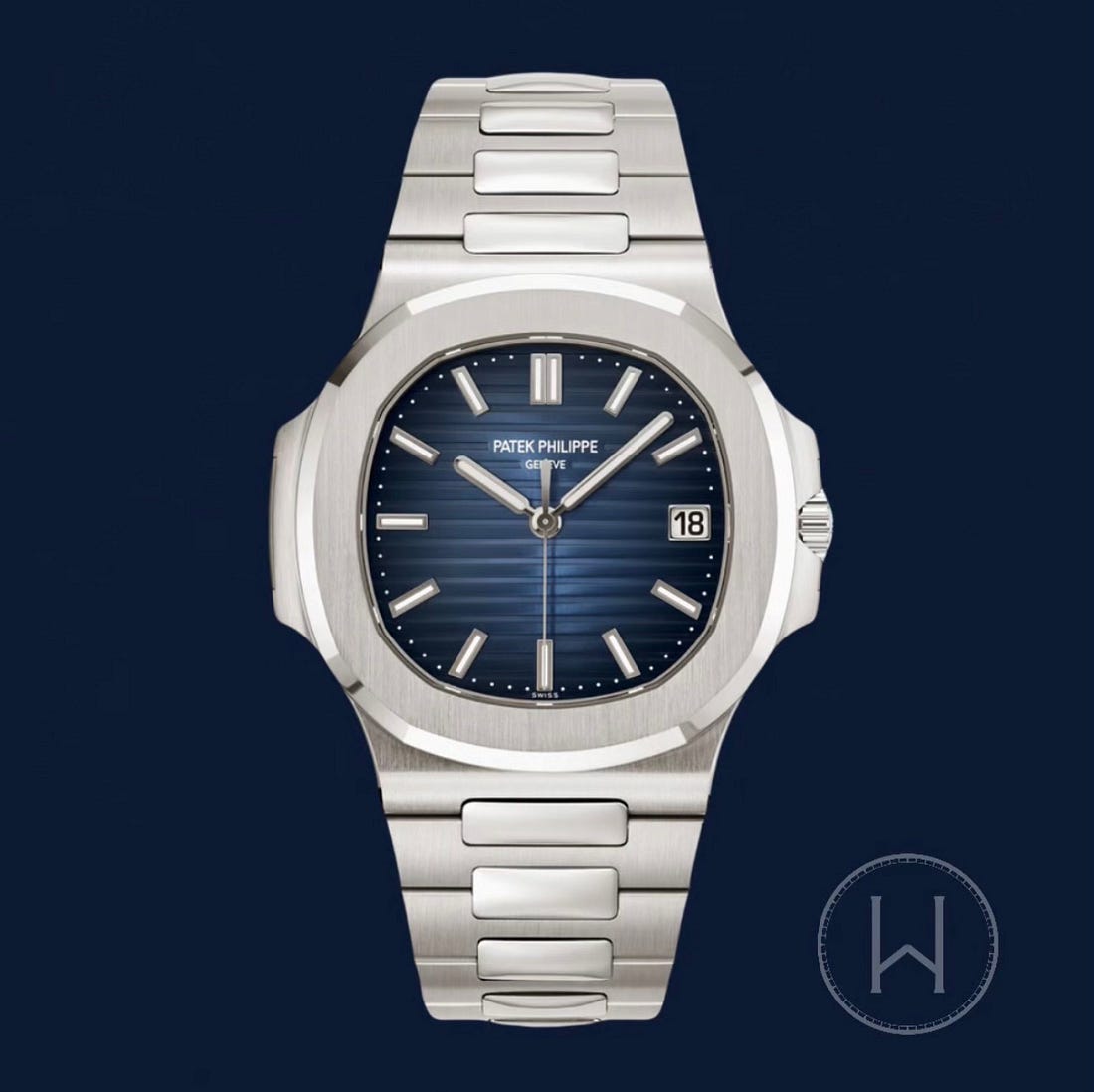
If You Know, You KnowConsider a Patek Philippe 5811/1G. To someone who doesn’t know watches, it’s a nice-looking silver-colored sports watch. To a collector? He knows. He knows there is no steel 5811. He knows what that blue dial means. He knows what that bracelet is made from. And he knows what is sitting on your wrist. You don’t have to explain it. That’s the watch equivalent of the Loro Piana T-shirt. And platinum takes this concept even further. Platinum has a density and presence that you understand the moment you handle it. Put a platinum watch in someone’s hand and there is usually an immediate reaction. Oh. There’s a weight to it. A seriousness. Yet from ten feet away? Nothing. No announcement. No screaming yellow case. No rose-gold bracelet catching the sunlight from across the room. The owner knows. The collector sitting two tables away might know. Everyone else sees a watch. I find that incredibly appealing. 
Rolex Cosmograph Daytona Ref. 126509 and Day-Date 40 Ref. 228239
We’ve Been Pricing the Wrong ThingMarkets don’t price materials alone. They price perception. That distinction matters. Two watches can contain comparable amounts of precious metal and have completely different secondary-market behavior because one looks more expensive. Yellow and rose gold provide immediate visual signaling. White gold doesn’t. And historically, the market has often rewarded that signaling. But markets change because tastes change. Think about fashion. For years, luxury brands competed to make sure everyone knew exactly which luxury brand you were wearing. Logos became larger. Monograms became louder. Sneakers became more recognizable. Then something changed. The people with the most money started dressing like they had absolutely nothing to prove. A beautifully cut jacket. Cashmere. Perfect trousers. A $2,000 T-shirt that looks like a $50 T-shirt until you touch it. That’s not less luxurious. In some ways, it’s more luxurious. Because conspicuous consumption requires an audience. Quiet consumption doesn’t. 
Audemars Piguet Royal Oak "Jumbo" Extra-Thin Ref. 16202BC.OO1240BC.02 and Rolex GMT Master II "Sprite" Ref. 126729VTNR
Watches May Be Heading in the Same DirectionThis is where I think collectors should pay attention. I’m not predicting that yellow gold or rose gold suddenly becomes undesirable. I love both, and there will always be a place for them. But I think white precious metals deserve another look. Especially when the secondary market gives you an attractive entry point. Don’t simply compare a white-gold watch to its rose-gold counterpart and conclude that the rose-gold version must be more desirable because the market currently assigns it a higher number. Ask another question: Which one would I rather wear? Because the characteristics that historically hurt certain white-metal watches may increasingly be the characteristics sophisticated collectors want. Discretion. Understatement. Weight without spectacle. Value without announcement. 
Rolex Platinum Day-Date 40 Ref. 228236 and Vacheron Constantin Overseas Perpetual Calendar Ref. 4300V/220G-B945
The Collector’s FlexThere comes a point in collecting when you stop needing strangers to recognize what’s on your wrist. In fact, you may begin preferring that they don’t. That’s when white gold and platinum start making a tremendous amount of sense. A stainless-steel sports watch says one thing. A yellow-gold sports watch says another. But a platinum or white-gold watch that could easily be mistaken for steel? That says something entirely different. It says: I didn’t buy this so you’d notice it. And ironically, among people who actually understand watches, that may be the biggest flex of all. So when you’re considering the next piece for your collection, don’t automatically skip over the white metals. Look at the white-gold version. Look at the platinum version. Look at the secondary-market spread. Then put it on your wrist. You might discover that the watch everyone else mistakes for steel is exactly the one you want. Because luxury is changing. The old flex was making sure everybody knew. The new flex is only caring that the right people do. Hudson Index explores the market, culture, and notable timepieces shaping the world of collectible watches. Written by Danny Vassallo, CEO of Hudson Watch Exchange, former commodity options and futures trader, and author of The Watch Dealer’s Playbook. If you appreciate thoughtful insights into the watch market, consider subscribing. And if you’re looking for guidance, sourcing, or just want to browse, you can explore more at Hudson Watch Exchange.
|


 Posts
Posts









0 Comments