

Chronicling a generational run which saw the Bavarian manufacturer turn cars that were already exceptional into timeless works of art

RELATED POSTS
RELATED POSTS
Alpina’s Greatest Decade
Chronicling a generational run which saw the Bavarian manufacturer turn cars that were already exceptional into timeless works of art
The corporatization of Alpina is complete. In 2022, BMW announced it was purchasing the manufacturer that had been founded by Burkard Bovensiepen in the 1960s. In 2025, the company was renamed “BMW Alpina,” further ensuring that the once family-owned marque would become yet another weapon in its parent’s shareholder-value-maximizing arsenal. While we can only hope BMW learned a lesson from Mercedes’ borderline criminal dilution of the AMG brand in favor of their bottom line (the state-sponsored equivalent of putting a fake performance badge on your base model), you can never trust modern car brands, especially when the Bavarians now require a car’s design specs to be controversial (read: ugly) in order to be greenlit. Alpina has always been unique from other performance specialists. Beginning in 1983, it was recognized by the German Ministry of Transport as an automobile manufacturer as opposed to an aftermarket tuner. This allowed Alpina-built cars to be branded and registered as Alpina instead of BMW, although they could be serviced at all BMW dealerships and were fully covered if a warranty issue arose.
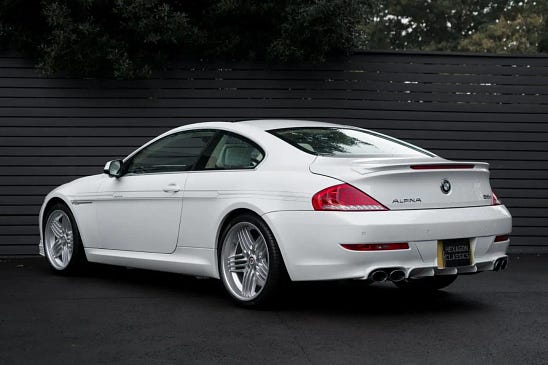
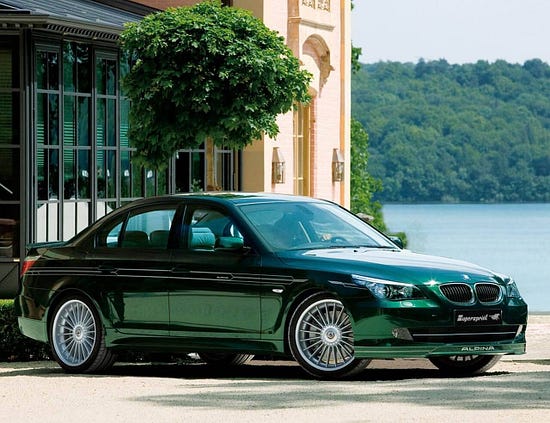
If the M divison builds sledgehammers, Alpina builds chisels. Both can be used to break down stone, but only one can carve David from it. Alpina emphasizes grand touring, with ZF torque-converter automatic transmissions and higher torque figures. The E60 5 series/E63 6 series are great examples of this. While the M5/M6 of this generation both had the legendary F1-inspired S85 5.0L V10, the equivalent Alpina B5/B6 S was powered by a modified N62 4.4L V8 from a 545i/645ci, respectively. Alpina even calls their big sedans limousines, in case you needed anymore evidence that their MO is plush, luxurious performance.
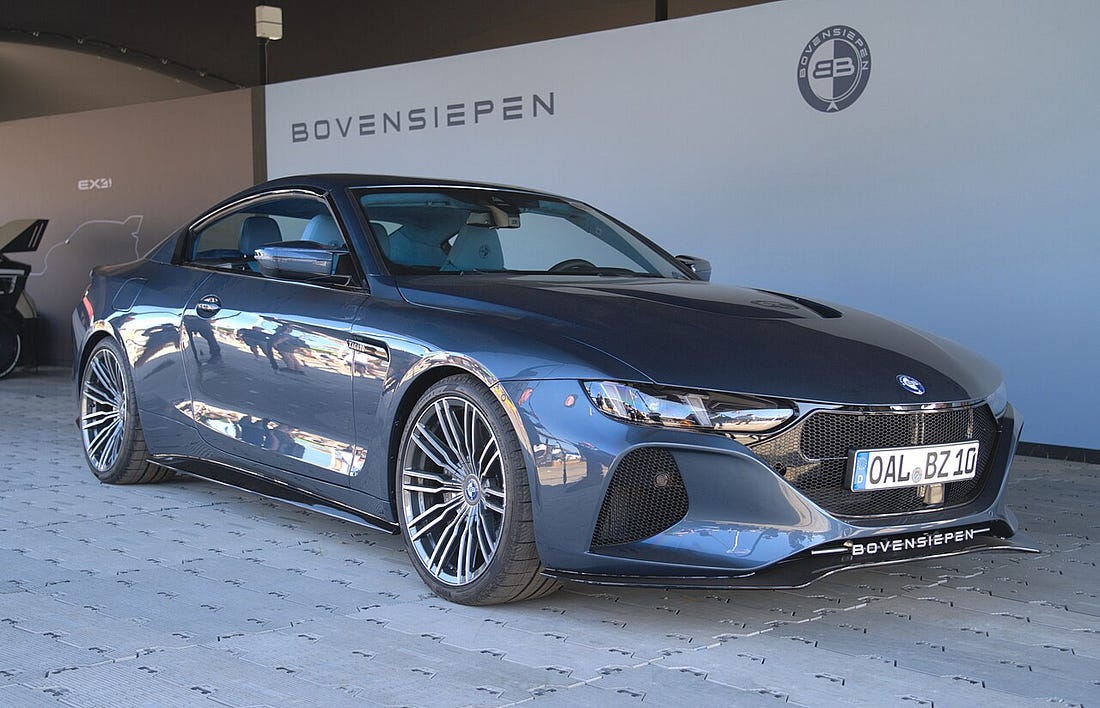
Oh, and maybe we should mention, Alpina makes all its modifications and additions to the cars by hand (literally manu-facture, “mains’ meaning hands in French). These days, the family behind Alpina is building cars under their own name. After over six decades in the business, it’s clear they have not lost their aesthetic taste, having partnered with coachbuilder Zagato for their most recent creation. The aptly-named Bovensiepen Zagato is based on an M4, but thankfully looks nothing like it.
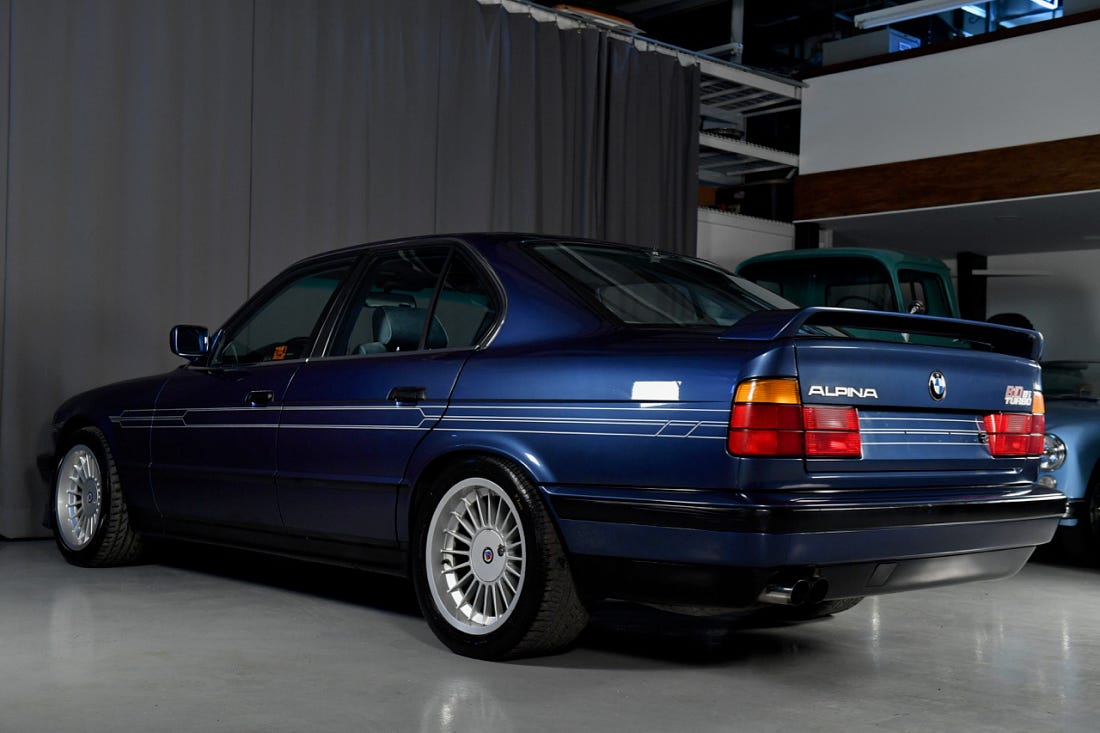
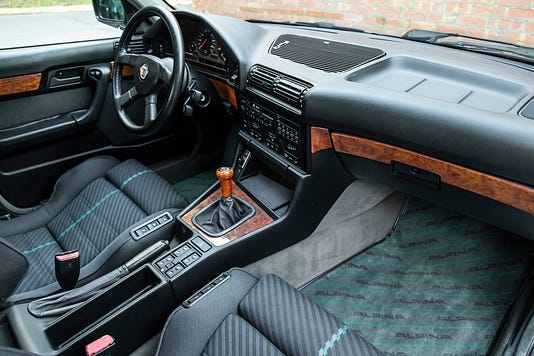
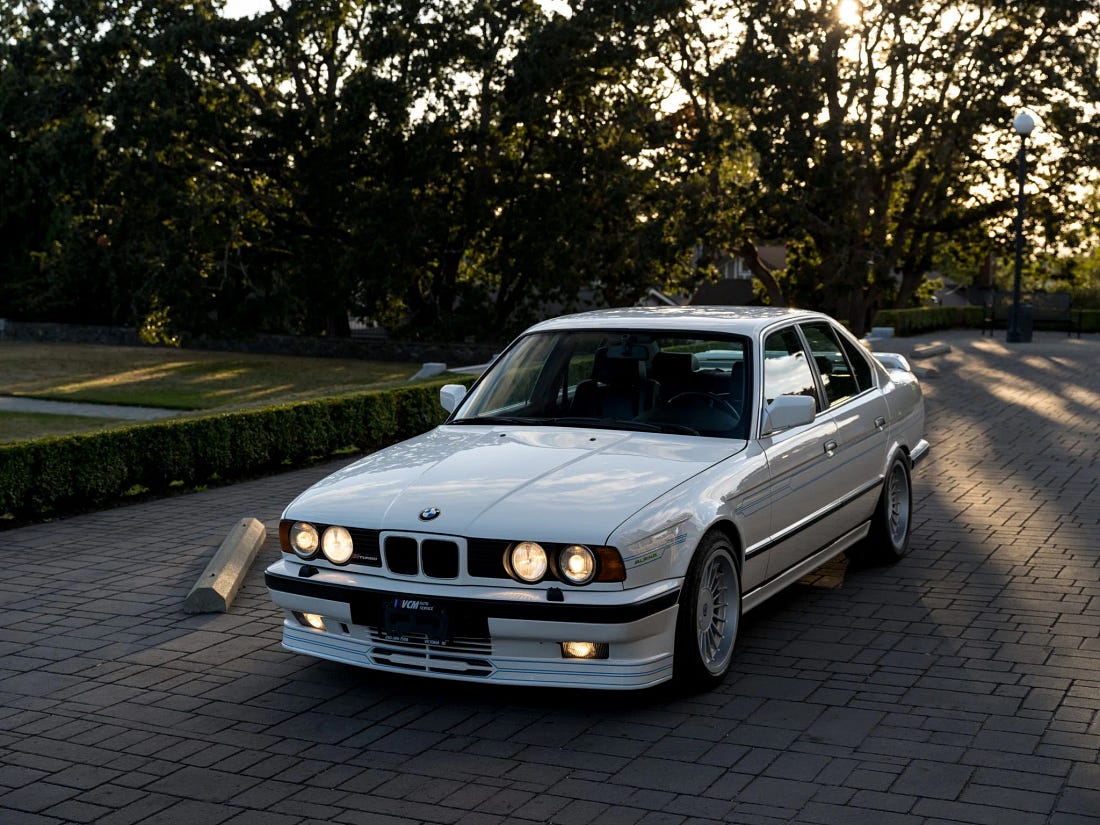
Enthusiasts (including present company) tend to agree that BMW M-Division was at its absolute peak between roughly 1998 and 2007, with cars like the E39 M5, E46 M3, E60 M5, E63 M6, Z8, the Clownshoe, and of course the E92 M3. However, in our eyes, the straight edges of BMWs from the late 1980s into the early 1990s lent themselves better to Alpina’s visual modifications. In fact, we reckon these were some of the best looking cars ever built, full stop. Here are our favorites: E34 Alpina B10 BiTurbo (1989 - 1994)When it came out in 1989, the BiTurbo was the fastest production sedan in the world, topping out at 180 miles per hour. The E34s restrained styling, with its straight lines and circular headlamps lent itself astonishingly well to the Alpina treatment. When the gents in Buchloe got their hands on it, well, you can see the results below for yourself.
It started out life as a six-cylinder 535i. Alpina dismantled the M30 3.4L I6, replaced the stock pistons with forged units, installed two water-cooled turbochargers, and added a Bosche variable boost control with range of 0.4 - 0.8 bar, adjustable from the driver’s seat. It made 360 horsepower, and was most at home on the autobahn doing 150mph in the right lane.
507 were made total, with only a handful known to be in the United States. Suffice to say, they’re hard to find. Nine total sold on Bring a Trailer between 2016 and 2021. There hasn’t been one listed since. We hope their owners are too busy enjoying them to ever want to part with them.
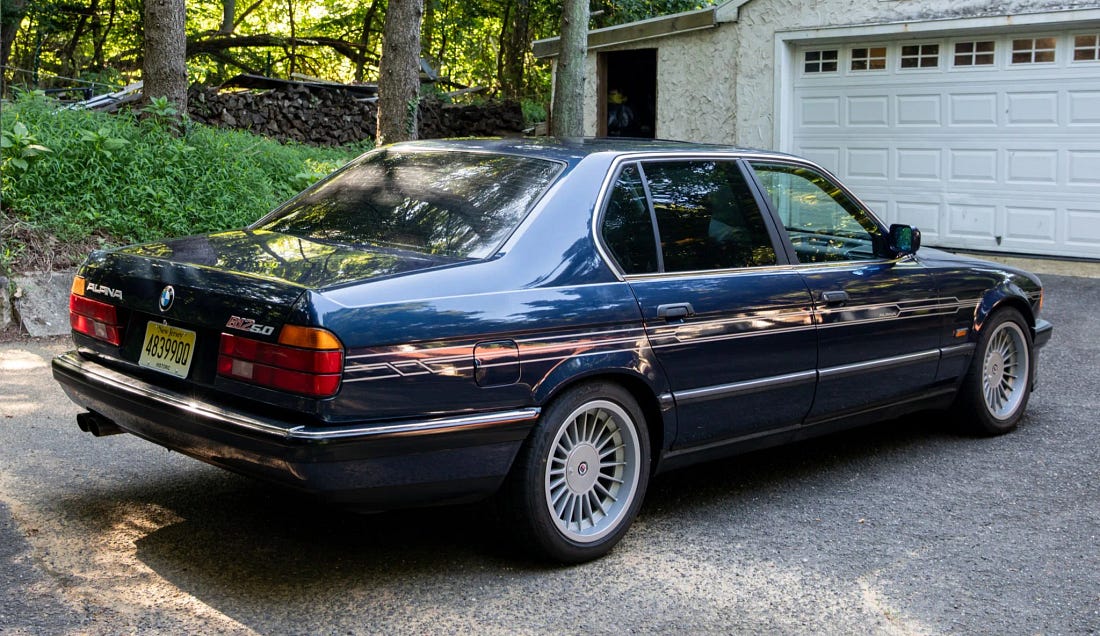
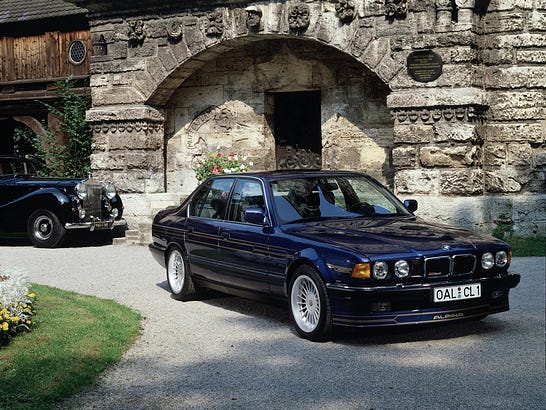
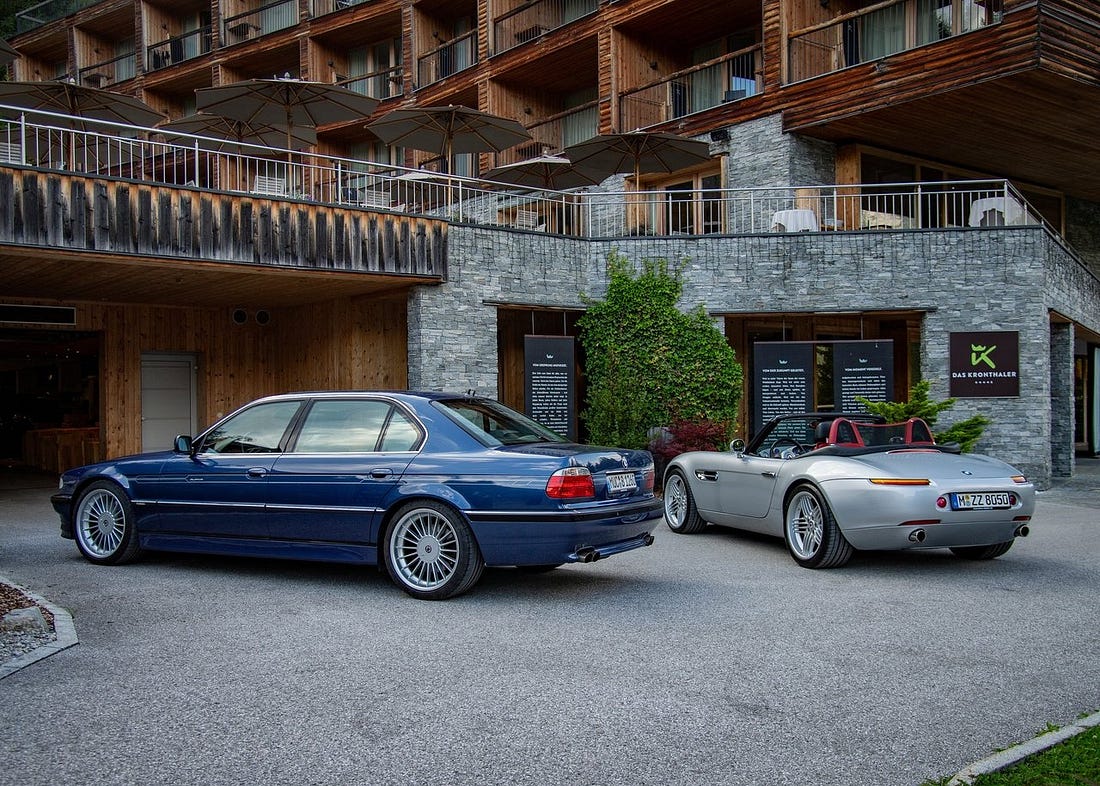
E32 Alpina B12 5.0 (1988 - 1994)The E32 often gets overshadowed by the W140 S-Class, which was launched for the 1992 model year, as well as its big-brother E38. But the E32 was the executive sedan that set the standard for BMW luxury 4-doors.
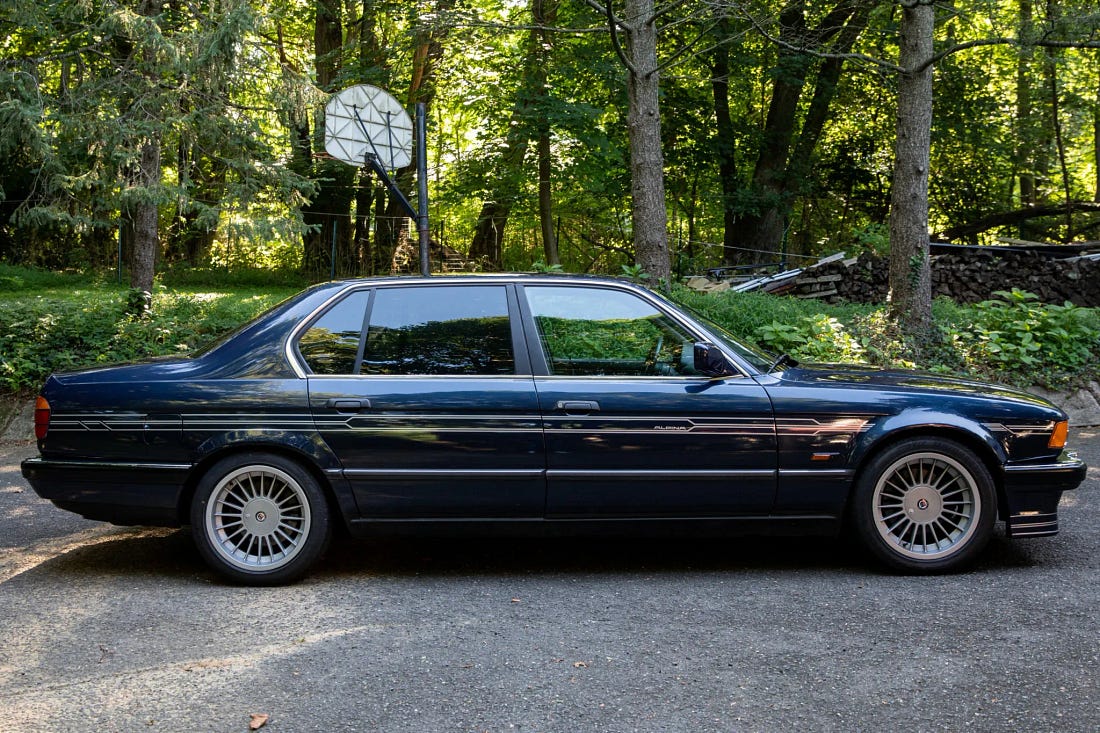
The B12 5.0 was Alpina’s first V12-powered production vehicle. Buyers had the option to choose between the short wheelbase 750i-based model or the longer 750iL. Alpina transformed what was already a comfortable autobahn cruiser into a 175+ mph high-speed missile. They also revised the suspension by fitting upgraded dampers and stiffened springs.
Alpina reworked BMW’s 5.0-liter M70 NA V12, upgrading the combustion chambers, installing higher-compression pistons and a custom exhaust, reprogramming the fuel injection system, and revising the 4-speed automatic to prioritize smoothness and properly handle the increased torque load. All of this meant the behemoth made 350hp (up from the standard 750’s 300hp) and could accelerate from 0-60 in 6.5 seconds, a remarkable figure for a sedan so large.
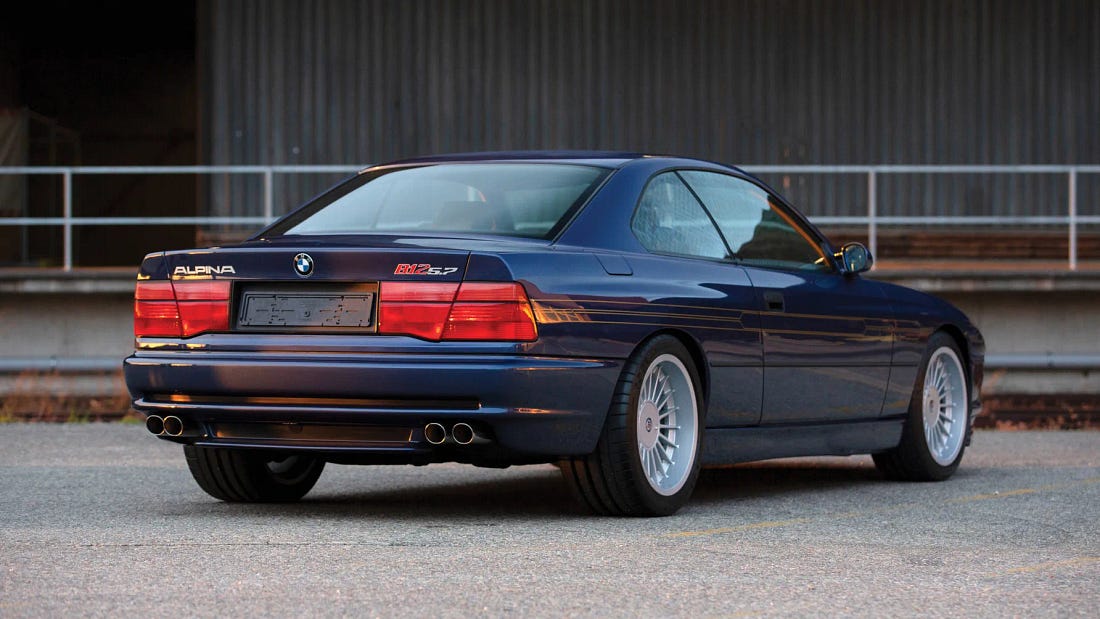
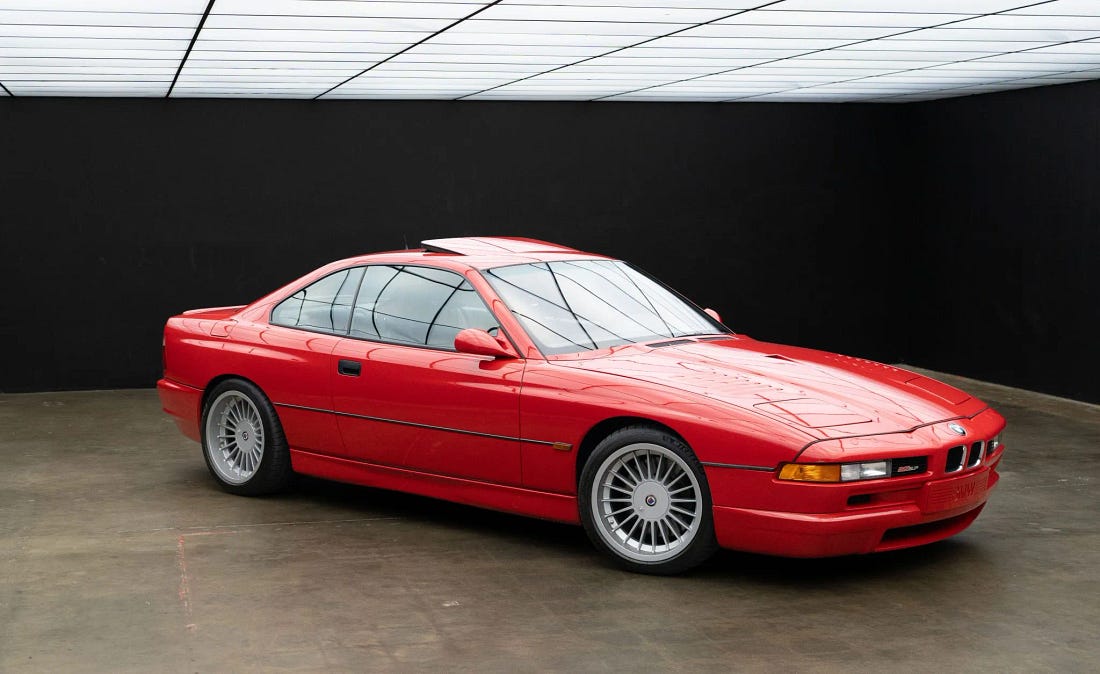
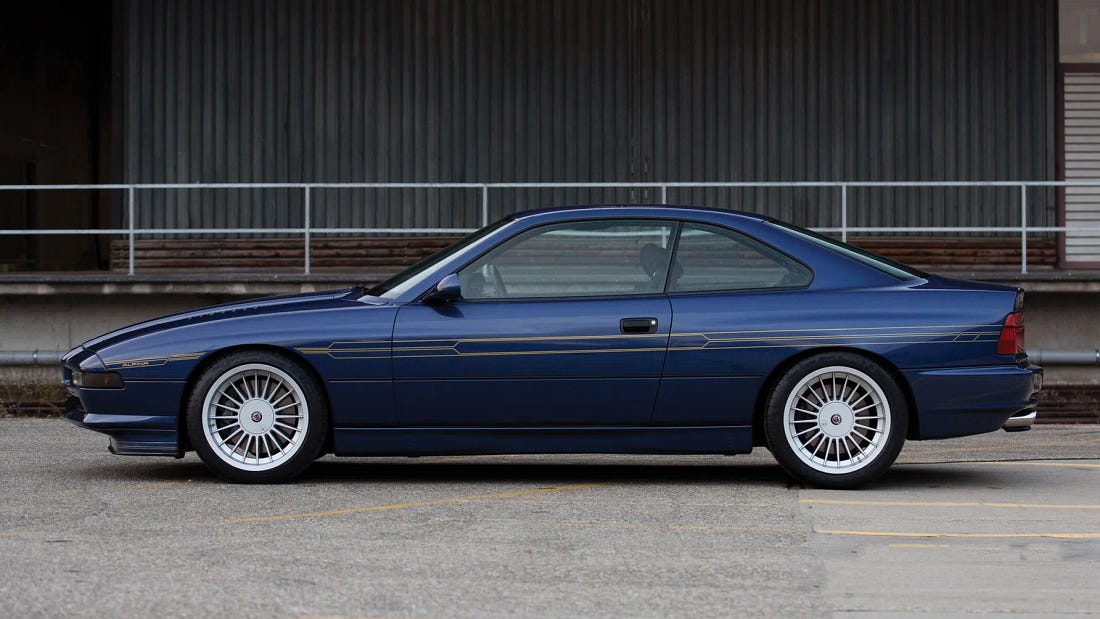
And of course, Alpina made its signature visual modifications which complemented the straight lines and jagged edges of the limousine like no other. The E32’s long-hood, quad-headlight silhouette was accentuated with Alpina’s functional front lip spoiler and signature silver or gold Dekorset body pinstriping. For shoes, the B12 rocked a set of custom 17-inch 20-spoke Alpina Classic alloy wheels wrapped in staggered performance rubber (235/45 R17 front, 265/40 R17 rear). Want to add it to your garage? With only 305 made worldwide, good luck finding one. E31 Alpina B12 5.7 Coupé (1992 - 1996)Now we’ve arrived at the crown jewel of Alpina’s 1990s roster—the B12 5.7, based on what was already one of the best production GTs in the world at the time: the E31 850CSi.
By now you’re probably gathering that Alpina are masters in subtle yet impactful design cues. The 5.7 was visually striking thanks to not only the trademark Alpina wheels and pinstriping, but also a functional front chin spoiler that reduced high-speed front axle lift, paired with lowered front springs that gave it an aggressive stance.
There was a B12 5.0 Coupé based on the 850i/Ci, which shared the same engine that went into the E32 B12 5.0. Because the 5.7 Coupé was based on the 850CSi, Alpina used its reworked 5.6 liter M70 as the starting point. Alpina further bored out the S70 block slightly to 5.7 liters, fitted a custom crankshaft, modified intake/exhaust headers, and tuned it to produce 416 hp and 420 lb-ft of torque. It could hit 60 in 5.5 seconds and was the first Alpina to reach a top speed of over 300kph (186mph).
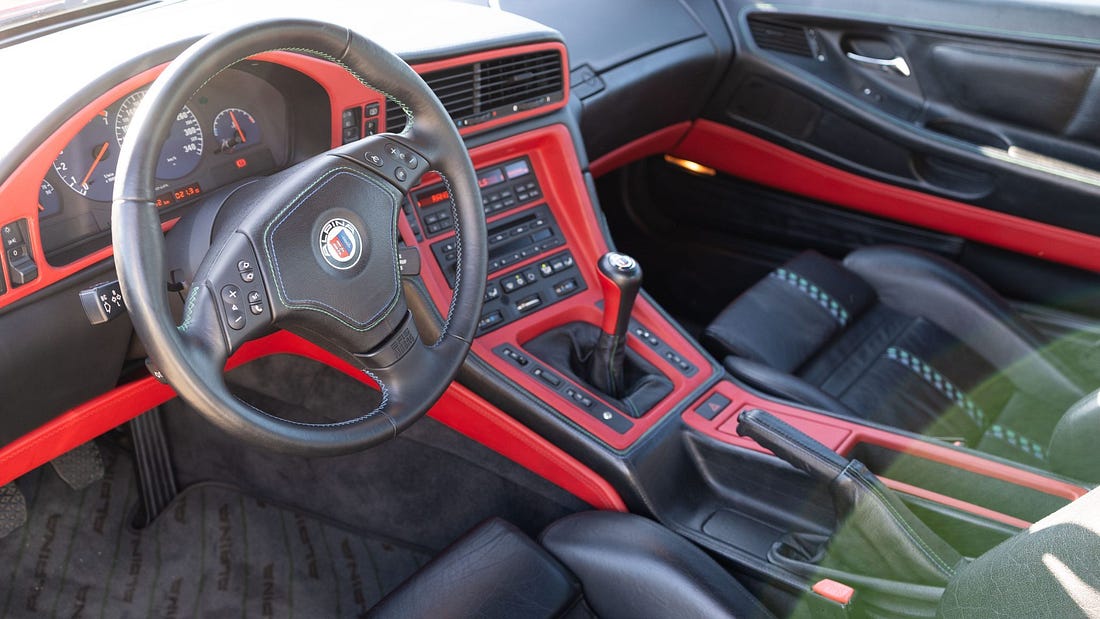
Buyers could select a standard Getrag 6-speed manual or opt for Alpina’s revolutionary Shift-Tronic system. Shift-Tronic wasn’t a torque-converter automatic or a torque-stealing early auto-shifter; it was a true 6-speed manual box paired with an electro-hydraulic, automated clutch. Drivers still moved a traditional manual stick through an H-pattern gate, but there was no clutch pedal. The driver would lift off the throttle, slot the lever into gear, and a computer actuated the clutch automatically.
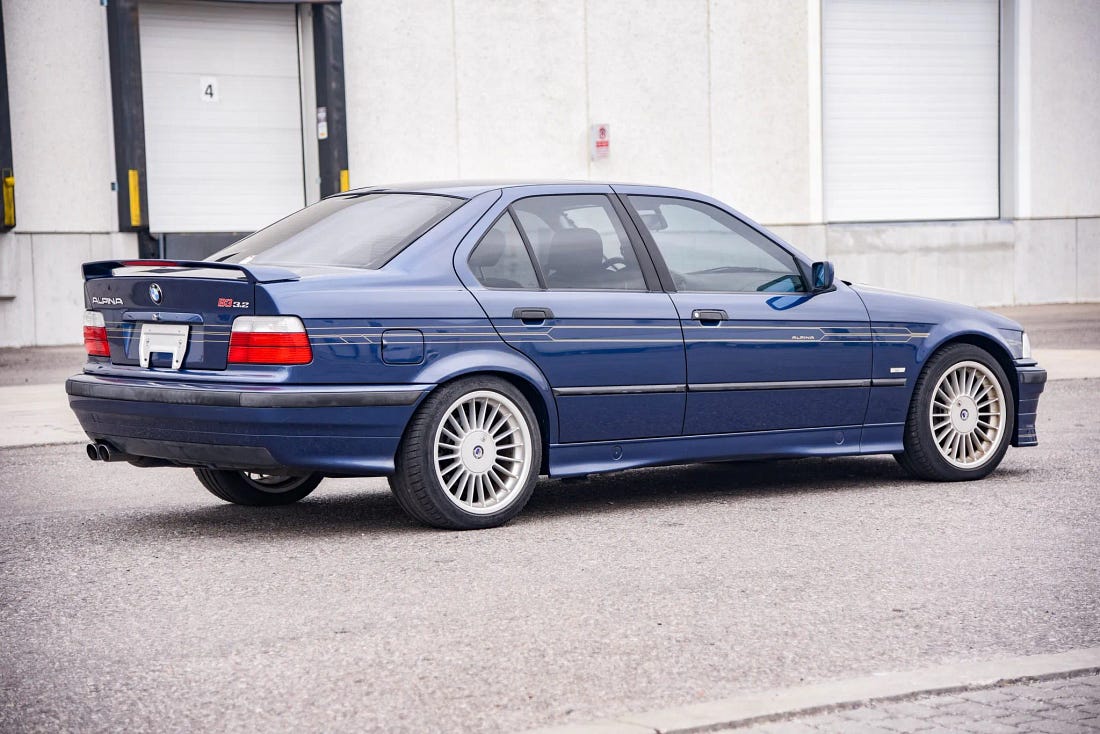
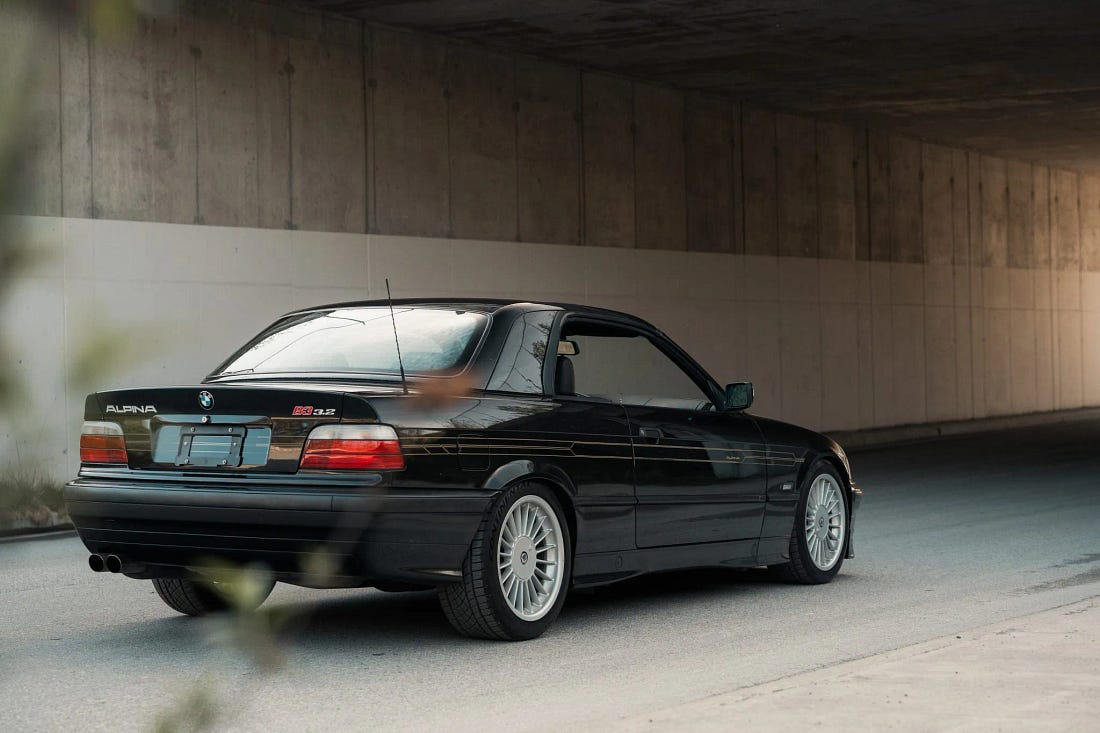
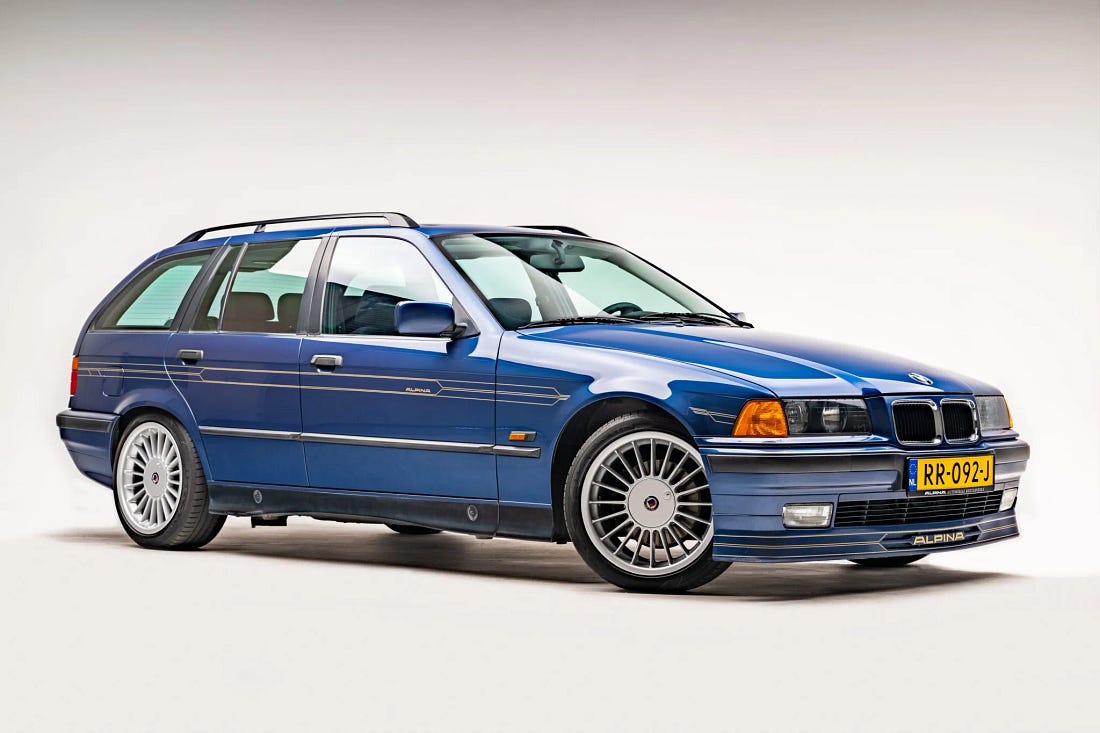
Out of all the cars here, the 5.7 Coupé is easily the most coveted. Only 57 units were made, and in the rare event that one comes on sale, they routinely trade for over $300k. We’re hard pressed to find a more perfect coupé from this decade (or any decade for that matter). E36 Alpina B3 3.2 (1996 - 1999)The B3 3.2 was Buchloe’s ultimate iteration of the E36 3-series. Its crisp, geometric lines and quad headlights encased in glass gave Alpina a lightweight, perfectly balanced canvas to go to work on.
Alpina didn’t use the high-revving S50 engine from the E36 M3. Instead, they took BMW’s cast iron M52 2.8-liter inline-six as their foundation and re-engineered it for fat, effortless mid-range torque.
While the European E36 M3 3.2 made more peak horsepower on paper (321 hp), the Alpina B3 3.2 delivered more usable, low-end torque lower down the rev range. It was engineered to pull hard in top gear without needing a downshift, making it a far superior Autobahn cruiser.
Alpina produced 342 units of the B3 3.2 across Coupe, Convertible, Saloon, and Touring (Wagon) body styles between 1996 and 1999. A majority of B3s were offered with Alpina’s 5-speed Shift-Tronic torque-converter transmission. With shift buttons built directly into the back of the steering wheel, it allowed manual gear control long before paddle shifters became standard industry practice. A traditional 5-speed manual was also available for purists. The B3 was the punchy and character-filled baby brother of the family, showing that great things can come in small packages, too. Alpina’s cosmetic and mechanical upgrades in the late 80s and early 90s flawlessly complemented BMWs model offerings, and created a highly memorable and distinctive looking lineup of cars that still look like works of art today. Alpina’s ethos is truly one of elegance and refined performance. The type of car that doesn’t need to be driven fast, but if you ever do have the need for speed, it won’t let you down. This is not meant to be a buyer’s guide, because to be honest, you’ll probably never find one of these in the local classifieds. They’re simply too rare. This is an appreciation piece for a
Thanks for reading! What’s your favorite Alpina? Share your thoughts below.
|



 Posts








0 Comments