


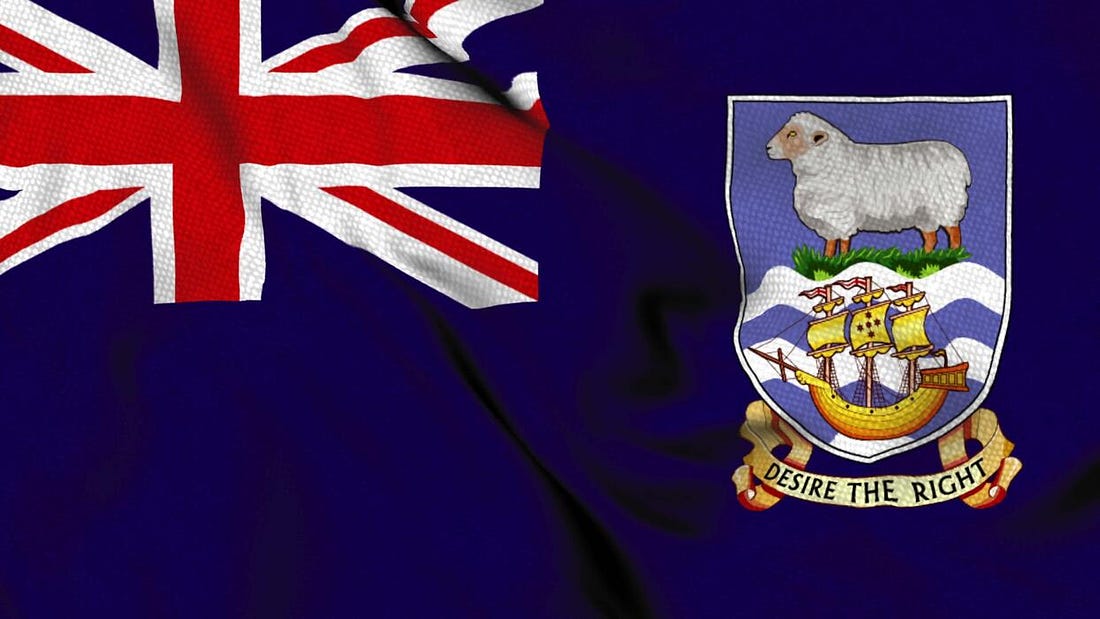
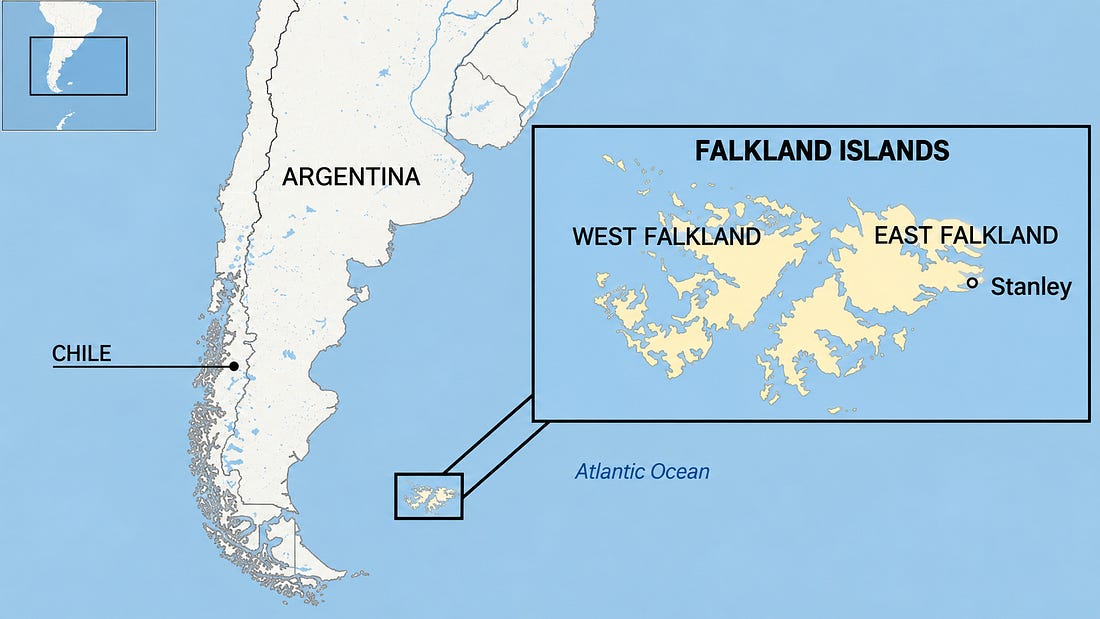
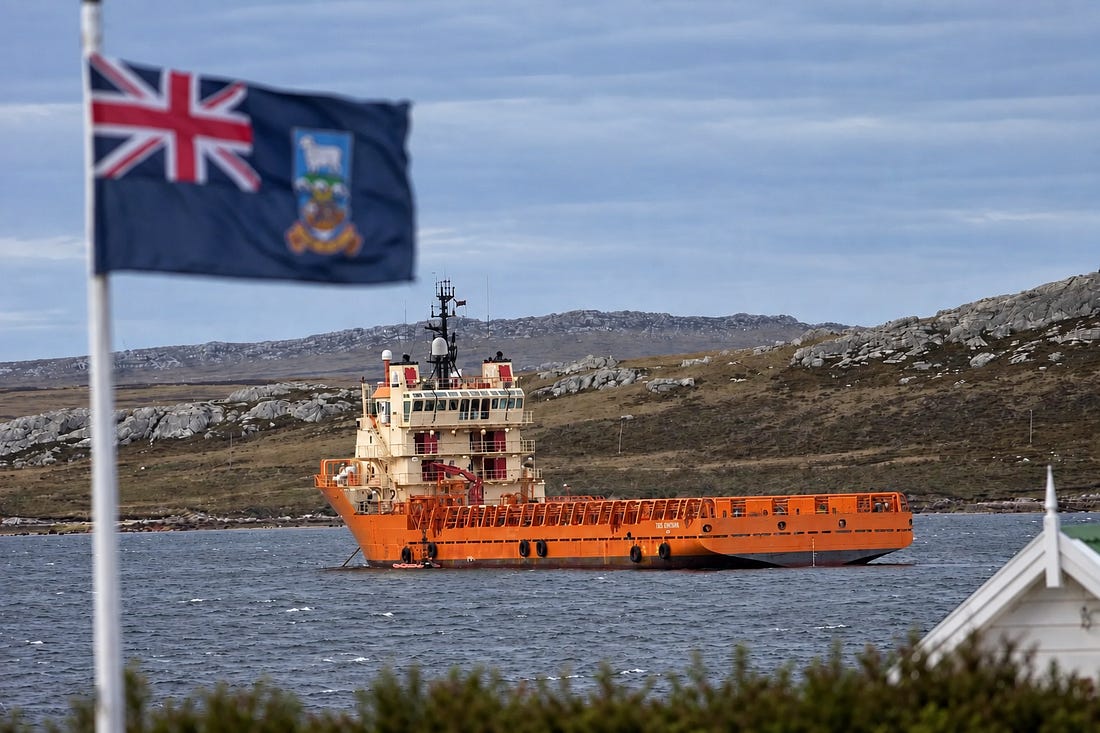
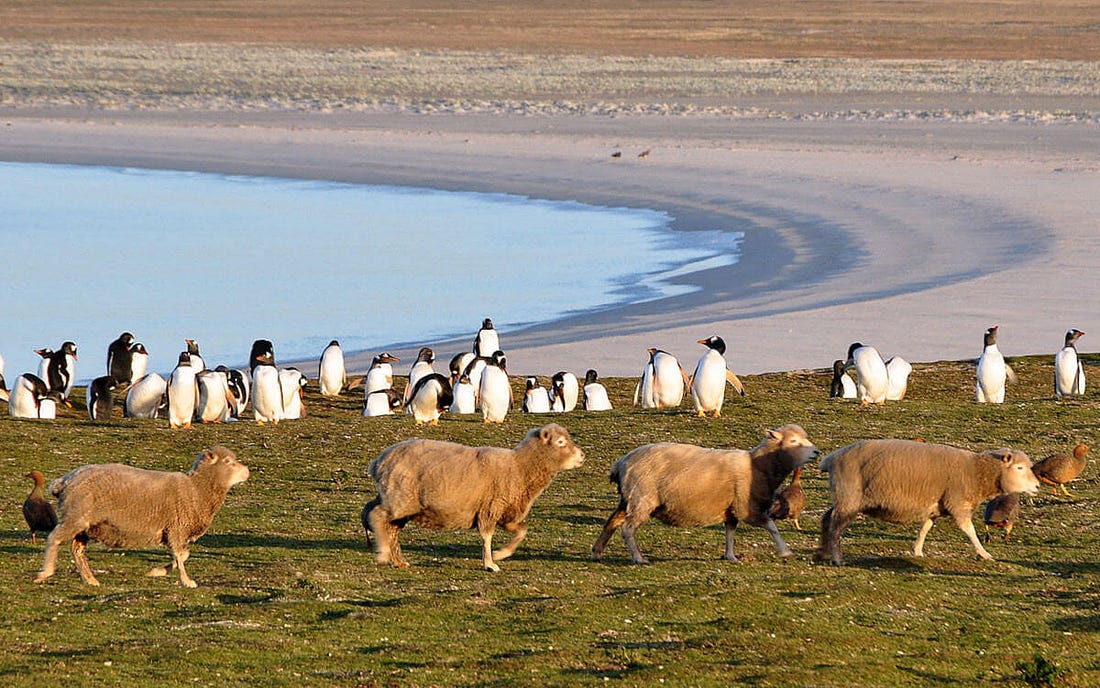
For much of the nineteenth century, life on a remote group of islands in the South Atlantic seemed to follow its own rhythm. The weather dictated the pace of life, with strong winds sweeping across the grasslands and rain arriving often enough to keep the landscape permanently green. And across those grasslands, the landscape belonged to sheep. They grazed across the hills in the thousands, their wool shorn and shipped abroad, and for decades the islands' prosperity was closely tied to the animals roaming their fields. By 1898, at the peak of the nineteenth-century wool boom, an astonishing 800,000 sheep roamed the landscape. With a human population of only about two thousand, that translated to roughly 400 sheep for every resident—the highest sheep-to-human ratio ever recorded. Wool was wealth, pasture was an asset, and sheep became so central to life that they eventually found their way onto the islands’ coat of arms, represented by a ram standing above a sailing ship, with the motto Desire the Right. The ship and motto refer to the Desire, the vessel associated with the first recorded sighting of the islands in 1592 by the English explorer John Davis. That place was the Falkland Islands.
Taken together, it paints a picture of a rather peculiar existence. Yet appearances can be deceiving. Behind the sheep-filled horizon lay a stubborn geopolitical tug-of-war. English privateer John Strong made the first recorded landing on the islands in 1690, naming the strait between them Falkland Sound—a title that eventually extended to the entire archipelago. Throughout the 18th century, French, Spanish, and British settlements vied for control, with Spain nearly going to war with Britain over it in 1770. When Argentina gained independence, it inherited and asserted Spain's claim, paving the way for Britain to re-establish control in 1833. Rather than disappearing, the sovereignty dispute merely simmered beneath the surface for decades, waiting to boil over.
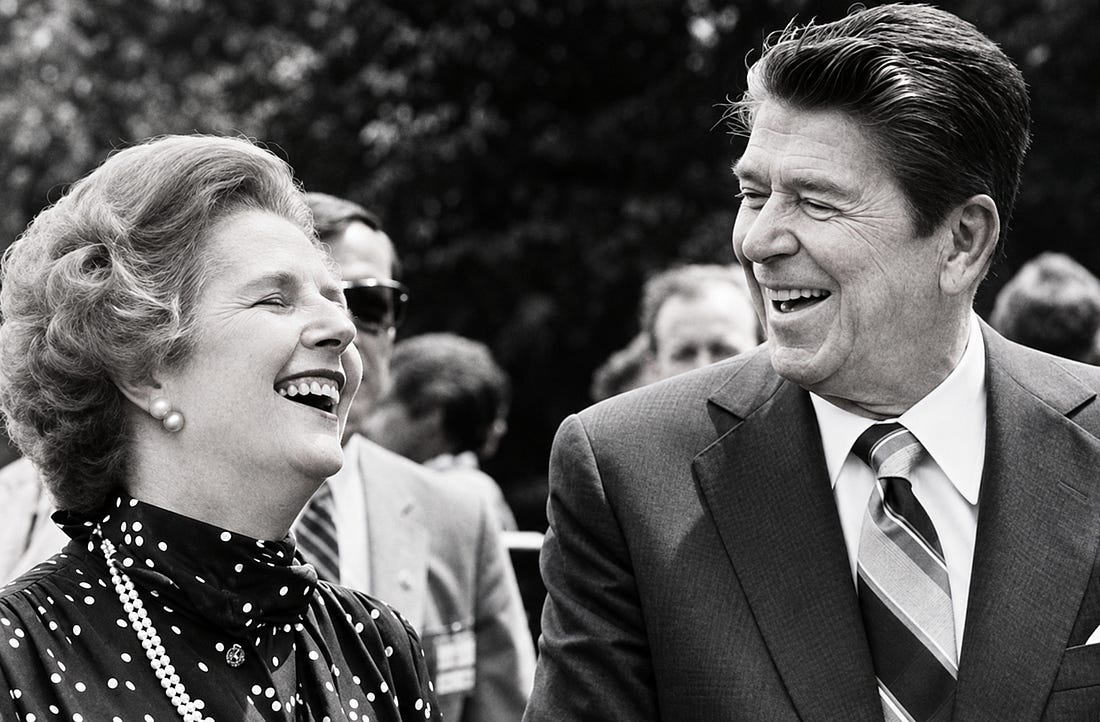
That old dispute finally reached its boiling point in 1982. Across the Atlantic, Argentina was ruled by a military junta facing skyrocketing inflation, civil unrest, and a crumbling economy. Desperate to distract a restless population, the generals invaded the islands in April 1982 during Operación Rosario, thrusting the quiet world of sheep and pasture into a brutal test of sovereignty. What followed was a staggering gamble, because the Britain that had to respond was coming out of one of the bleakest periods in its modern history. In 1976, the nation found itself pleading for a financial rescue from the International Monetary Fund (IMF), becoming the first major postwar advanced economy to require a bailout as inflation surged past 25% and sterling collapsed. The proud empire was suddenly subjected to the strict financial terms of overseas monitors. However, salvation had come almost providentially from the dark waters of the North Sea. First oil came ashore in 1975, and by 1981 Britain had transformed into a net exporter. Prime Minister James Callaghan called it “God’s gift to the British economy,” and the windfall gave Britain room to manoeuvre and handed a fierce new prime minister, Margaret Thatcher, a revenue stream large enough to transform the country’s trajectory. That newly found economic muscle changed everything, breathing fresh life into the Anglo-American special relationship—first popularized by Winston Churchill in the postwar era. Thatcher and Ronald Reagan forged an iconic 1980s partnership as political soulmates defined by shared conservative economics and a united front against the Soviet Union. Yet, it was still far easier to lean on that alliance when Britain was acting like a major global player rather than a nation asking to be rescued.
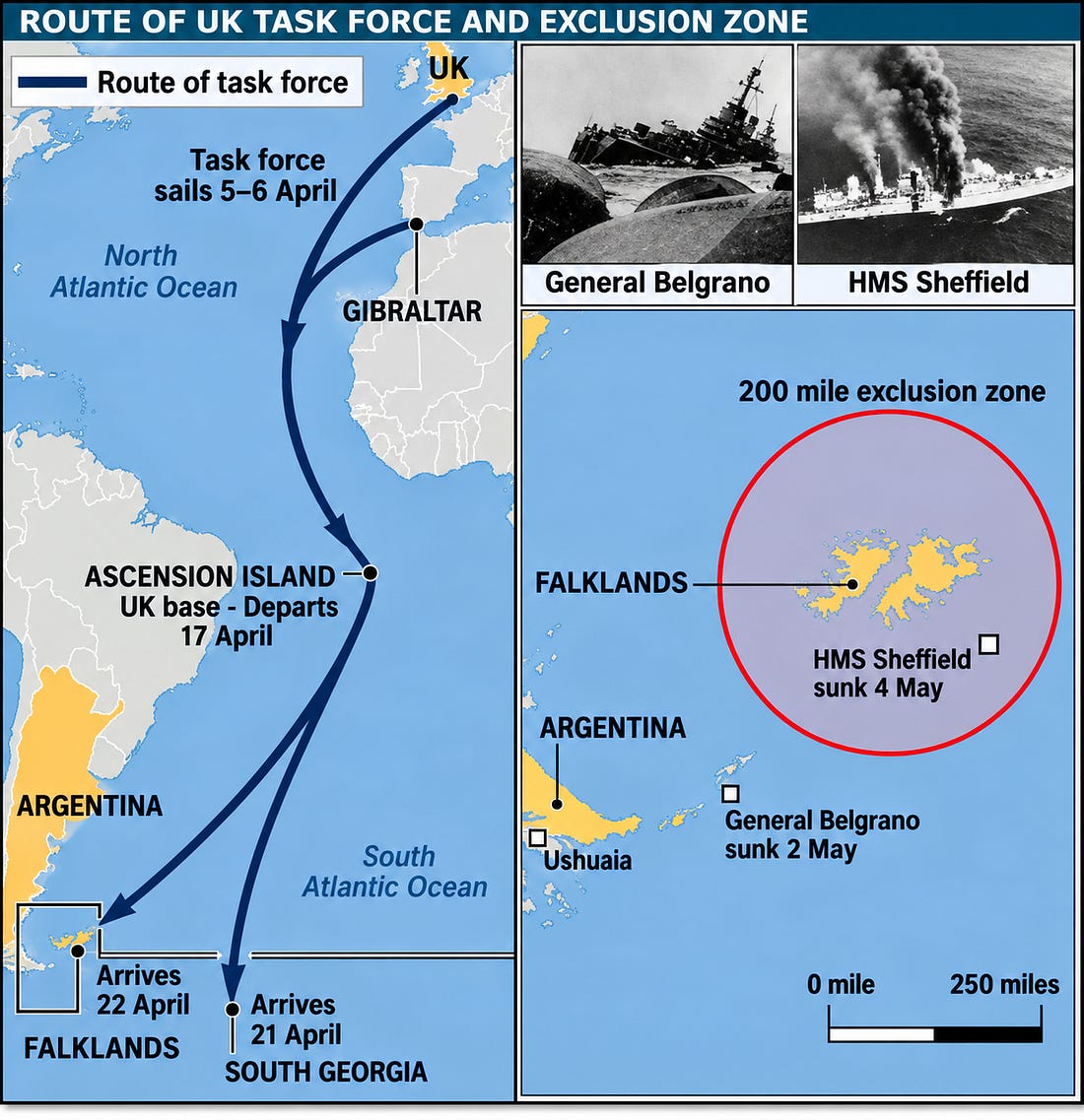
When the invasion hit, the nation that had gone begging to the IMF just six years earlier suddenly dispatched a naval task force over 8,000 miles south to reclaim the islands. Success depended on a critical realignment. Though Washington initially tried to mediate to protect its broader Latin American interests, neutrality quickly proved impossible. Reagan ultimately backed London, supplying the vital intelligence and logistics that turned British military power into a decisive force half a world away. The finale unfolded with stark symmetry: Britain supplied the ships, aircraft, and troops; Thatcher provided the uncompromising political will; and Washington delivered the margin for victory. On June 14, 1982, after 74 grueling days of fighting, Argentine forces surrendered. The human toll was heavy—255 British servicemen, 649 Argentine personnel, and three Falkland Islanders lost their lives—but British administration was fully restored.
For decades after the war, the Falklands receded into the quiet backdrop of international politics—anchored by the islanders' definitive 2013 choice to remain a British Overseas Territory with 99.8% voting in favor. Britain retained the islands, Argentina maintained its claim, and Washington carefully avoided taking a definitive stance. Until now. When asked on August 31 whether the United States was reconsidering its position on the archipelago, Donald Trump offered a strikingly casual dismissal:
Yet, the surrounding context makes the remark far more revealing. Months prior, a leaked Pentagon email already hinted that Washington might reconsider its stance on European “imperial possessions,” explicitly citing the Falklands. The proposal stemmed from punitive measures outlined by Elbridge Colby, the Pentagon’s top policy adviser, amid growing friction over NATO allies—and London in particular—reluctant to fully support U.S. military operations against Iran, such as granting access to bases and airspace.
While Britain did allow American aircraft to use its bases, it stopped short of joining the offensive—an omission that left Trump openly aggrieved. Four days after his initial remarks on the Falklands, when pressed on whether the U.S. would stand by Britain if Argentina attacked, Trump deflected back to his grievances over British conduct:
The Falklands, in essence, have been pulled into a much broader, transactional ledger. This represents a profound departure from the alliance of 1982, when Washington ultimately backed London when the stakes were highest. Under Trump, American loyalty increasingly carries an itemized price tag, and Argentina has arrived at precisely the right juncture to capitalize on it.
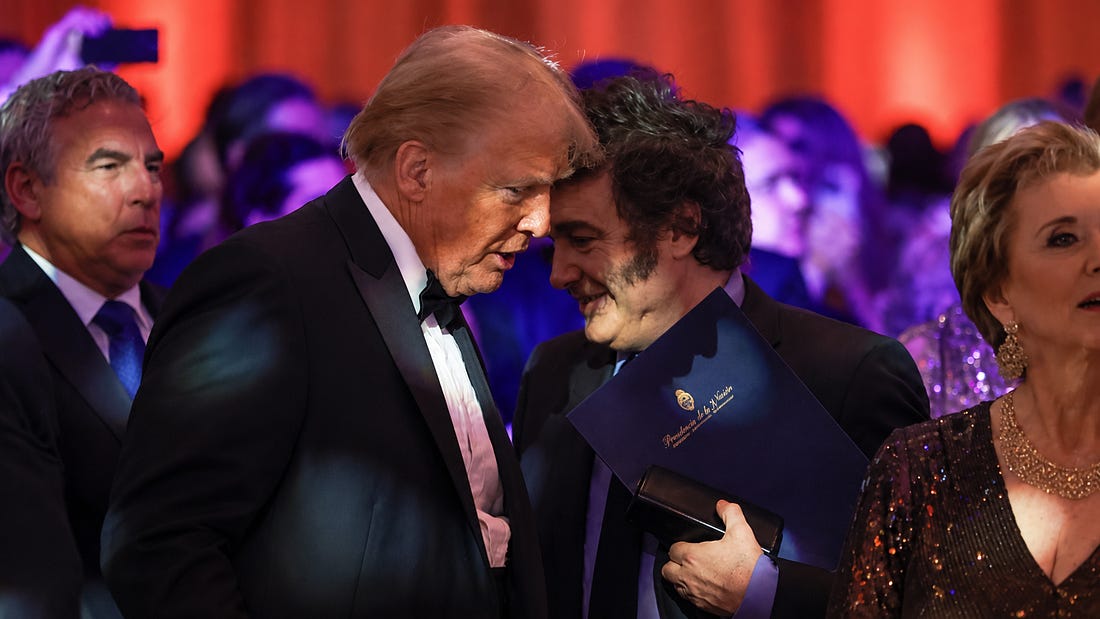
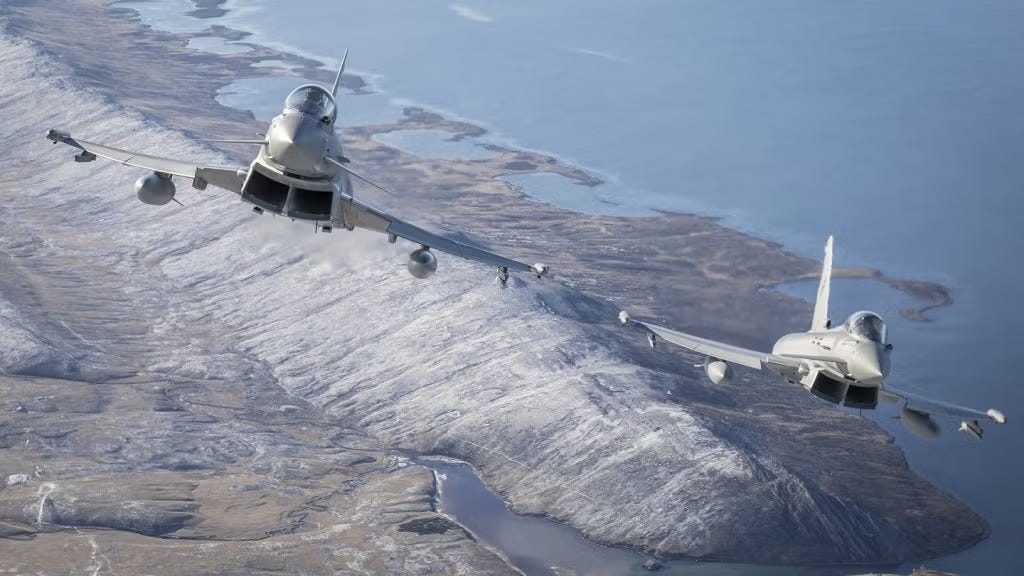
Ideologically aligned with Trump, President Javier Milei has drawn Argentina closer to Washington, positioning Buenos Aires as a regional counterweight to governments with strong Chinese and Russian ties. Until the U.S. capture of Nicolás Maduro, Venezuela was one of the clearest examples, alongside Cuba, Bolivia, and Nicaragua. Trump has made little secret of his affinity for Milei, calling him his "favorite president." In many ways, the two resemble the political soulmates of an earlier era. For Milei, this sudden diplomatic ambiguity from the U.S. has opened a window of opportunity to revive a bitter dispute that had largely faded from the political agenda. Having previously kept his rhetoric on the Falklands far more restrained than his predecessors, he has now seized on Trump’s comments, triumphantly declaring that “winds of change favorable to our claim are sweeping the world.” For Britain, however, it achieves the exact opposite. The timing could scarcely be worse, striking precisely as the economic reality of the islands begins to shift dramatically. Long before the promise of any new economic horizon emerged, Britain was already paying a heavy price to secure the Falklands. Every year, London pours roughly £100 million into defending the archipelago—maintaining a permanent garrison of 1,500 personnel, advanced Typhoon fighters, and the Royal Air Force station Mount Pleasant as an unshakeable bastion. Against the backdrop of a £68.3 billion defence budget, that sum is little more than a rounding error for the UK’s Ministry of Defence (MoD). Yet, for the Falklands themselves, it is monumental. That same £100 million accounts for roughly 35% of the islands' £288 million GDP. It is a striking echo of wartime Ukraine, where a nation locked in an existential fight for survival similarly pours roughly 35% to 40% of its economic output directly into its defense. For a community of barely 3,600 souls, it is a staggering, unyielding commitment.
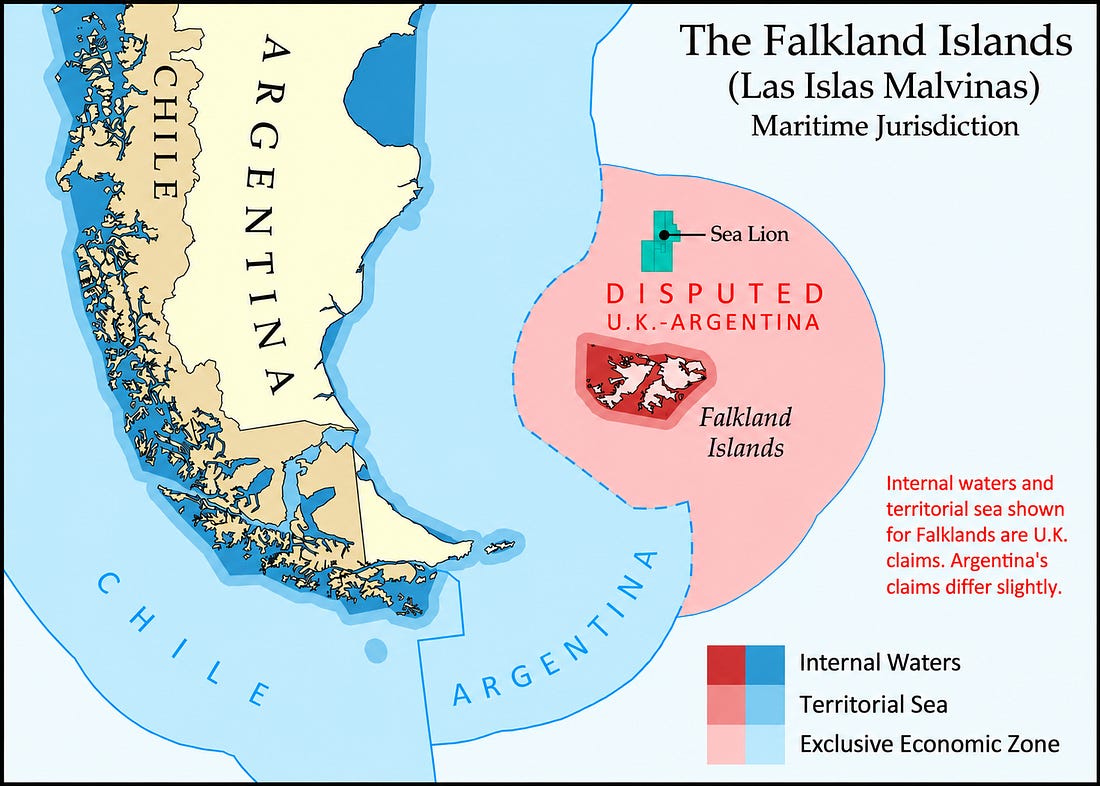
For decades, maintaining Britain’s foothold in the Falklands was sustained entirely by sovereignty, deterrence, and the solemn weight of the 255 servicemen lost in 1982, rendering abandonment politically unthinkable while serving as an expensive, remote form of insurance in the South Atlantic. Today, though, that enduring geopolitical calculus is giving way to stark economic transformation. Following the 2010 discovery of oil off the Falkland Islands by the British Rockhopper Exploration, the Sea Lion field—which holds an estimated 1.7 billion barrels of oil—is finally advancing toward production. Through a partnership between Rockhopper and Israeli operator Navitas Petroleum, first oil is targeted for 2028. An independent evaluation published last week by Rockhopper estimates up to 408 million barrels of recoverable reserves, with peak production anticipated at roughly 50,000 barrels a day over decades of operation.
For the islands themselves, the financial windfall could be profound: a 2025 economic impact assessment projects £3.6 billion in government revenues over three decades, with annual revenues peaking at around £280 million by 2034, coupled with the prospect of a Norway-style sovereign wealth fund. For Britain, however, Sea Lion represents more than just a new revenue stream—it gives the Falklands an economic stake in remaining British and strengthens the case for the enormous cost of defending them. For Milei, this is precisely why the timing matters. The further the project advances, the more deeply this economic reality becomes embedded in the islands. Investment, infrastructure, and a new government revenue source make the Falklands increasingly self-sustaining, while solidifying the long-term foundations of British control. Buenos Aires has therefore moved before that transformation can become irreversible. Milei has called Sea Lion a “clear and present danger” to Argentina’s claim and warned that, without swift action, the companies involved would acquire the “material capacity” to extract resources from waters Argentina considers its own. Yet Argentina faces a fundamental limitation: it does not exercise control over the Falklands or the authorities that issued the licences. It therefore cannot directly revoke licences granted by the Falkland Islands Government. Instead, Buenos Aires has turned to sanctions, targeting the companies involved, as well as their shareholders, directors, and suppliers, while raising the legal and commercial costs of developing Sea Lion.
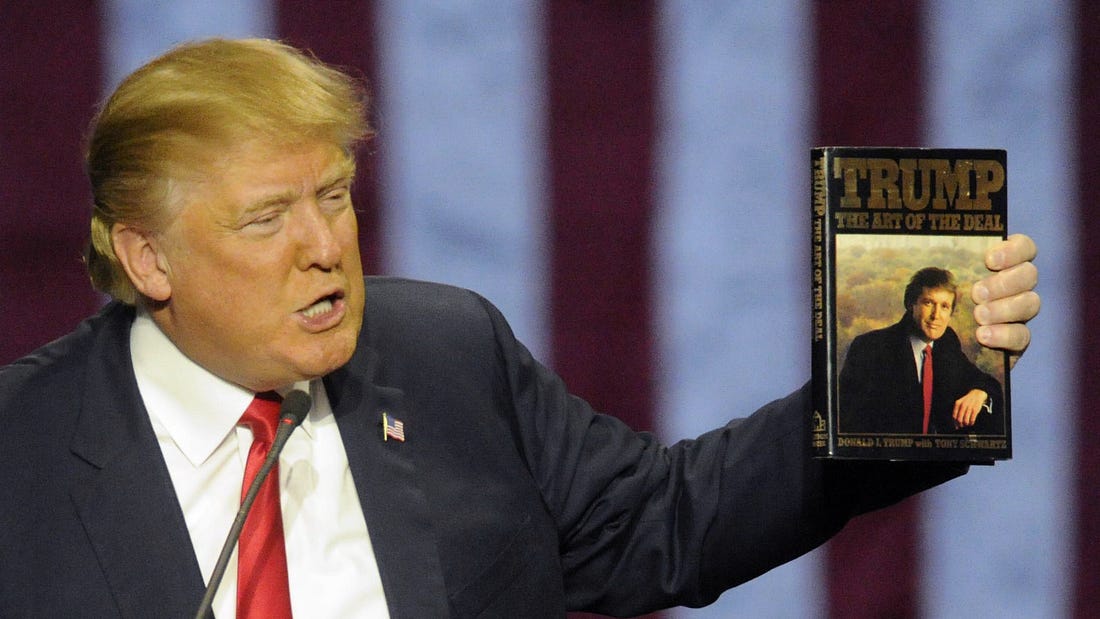
As a result, the Sea Lion project is no longer simply an oil venture. It has become a new front in the sovereignty dispute—one where Argentina is trying to act before the economic transformation of the Falklands strengthens the very position it has spent decades trying to overturn. At the same time, Argentina may be risking its own credibility. Milei has opened Vaca Muerta, Argentina’s largest unconventional oil and gas formation, to foreign investment, including British companies such as Shell, BP, and Harbour Energy. Escalating the Falklands dispute while courting those same investors could undermine Argentina’s image as a stable destination for foreign capital. Taken together, Trump’s position on the Falklands looks less like an offhand remark than leverage over Britain. Following a leaked Pentagon memo revisiting Washington's stance and Trump’s frustration over Britain skipping U.S. wars, this approach aligns with his philosophy in The Art of the Deal: that leverage is "the biggest strength you can have in a negotiation."
Yet, the Falklands are an awkward bargaining chip. Britain and Argentina have already gone to war over them, and the stakes are not abstract. A century-old sovereignty dispute is not easily reduced to a negotiating tactic, particularly when the issue has already cost hundreds of lives. Trump’s intervention has reopened that dispute at precisely the moment when Sea Lion is giving it a new economic dimension. The Falklands have spent centuries caught between competing claims, with sheep once at the heart of their economy. Now, as oil begins to reshape their future, this old territorial dispute has once again become a geopolitical flashpoint. If you found this piece insightful, consider sharing it. It’s one of the simplest ways to help this publication grow. 📩 Your support is truly invaluable!
Want to understand what’s happening behind the headlines? Subscribe and see the bigger picture.
|



 Posts
Posts









0 Comments
This story about sharing