

At least in Toronto, this icon of tactical urbanism is still going strong.

RELATED POSTS
It’s PARK(ing) Day because streets are for people
At least in Toronto, this icon of tactical urbanism is still going strong.
It’s PARK(ing) Day in Toronto and around the world- a day when we take back the streets and make space for people, not cars.
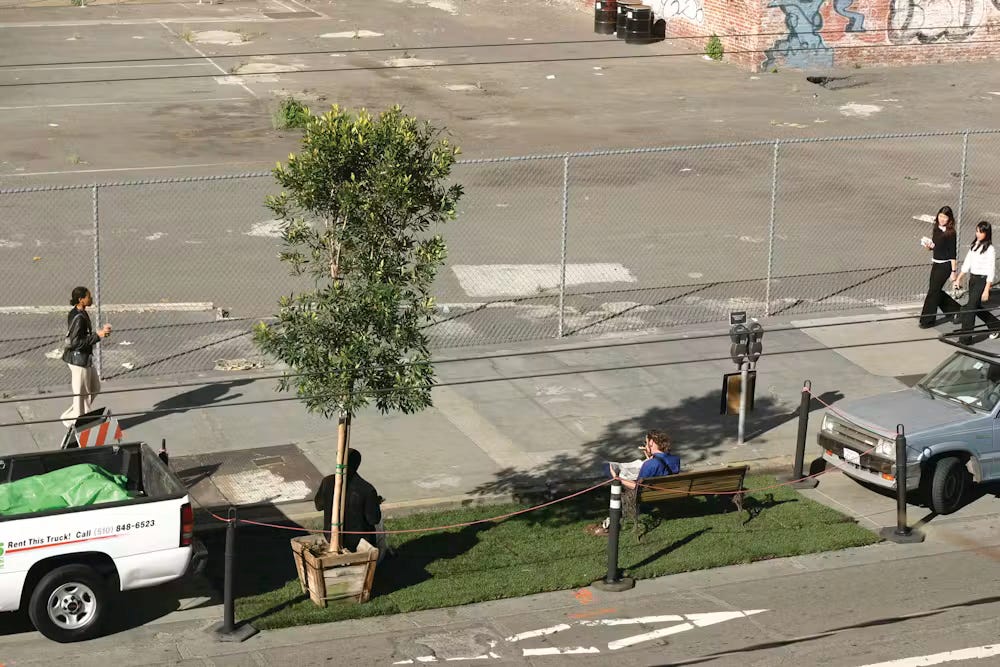
It started as a one-off in 2005 when Matt Passmore and his team at Rebar, a San Francisco design studio, bought two hours of time from a parking meter, rolled out some sod, installed a bench and a tree, and wrote:
The image went viral, as these things do, and Rebar got numerous requests for information from people in cities worldwide. Rebar produced an open-source manual, and in 2006, twenty years ago, there were PARK(ing) Day installations all over the world. As the U of T School of Cities notes,
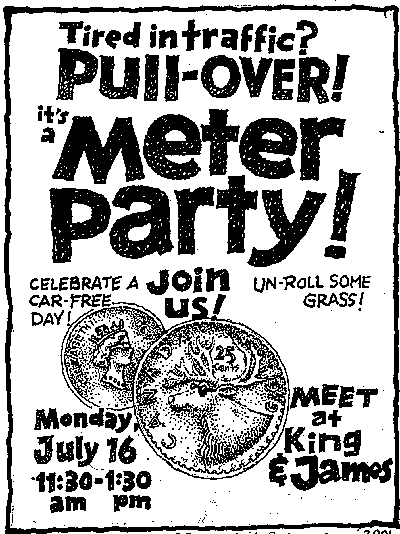
I should note a Canadian precedent from Hamilton, Ontario, in 2001, celebrated on Car-Free Day in July. The call to action:
Their goal was promoting “a breathable, liveable future of sustainable transportation.” But Hamilton isn’t San Francisco, and it didn’t catch on the way PARK(ing) Day did a few years later.
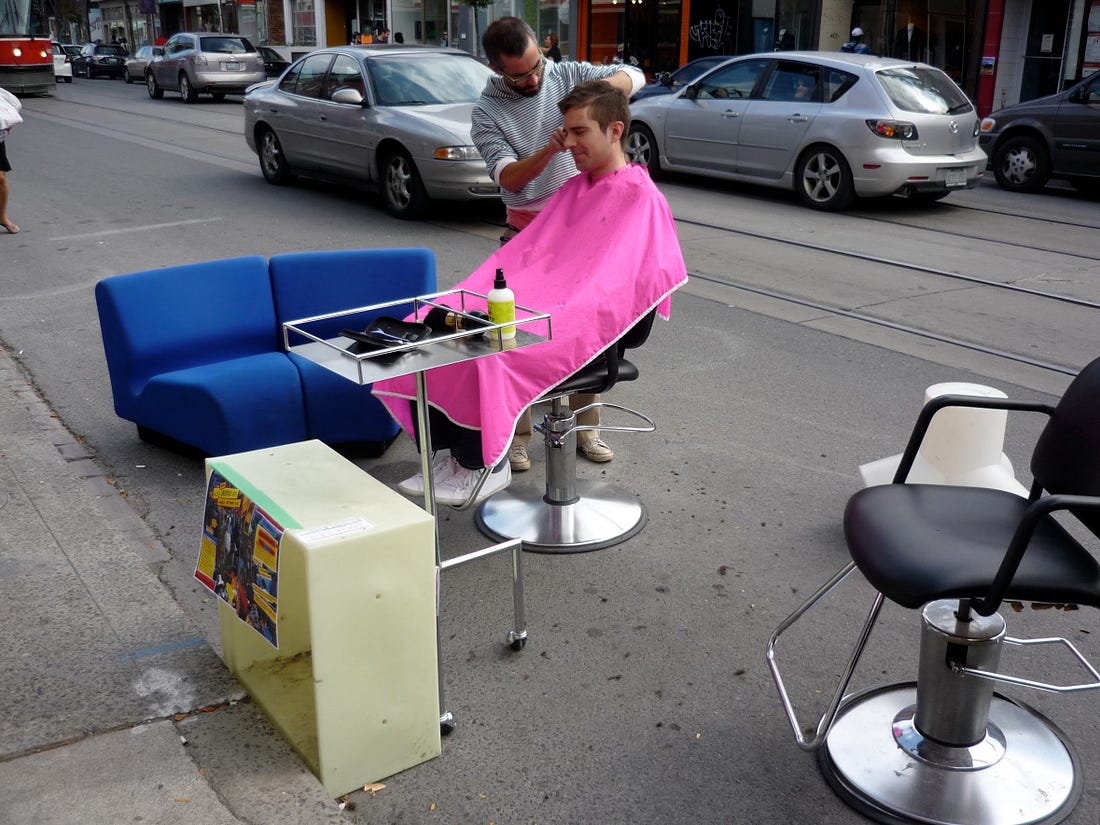
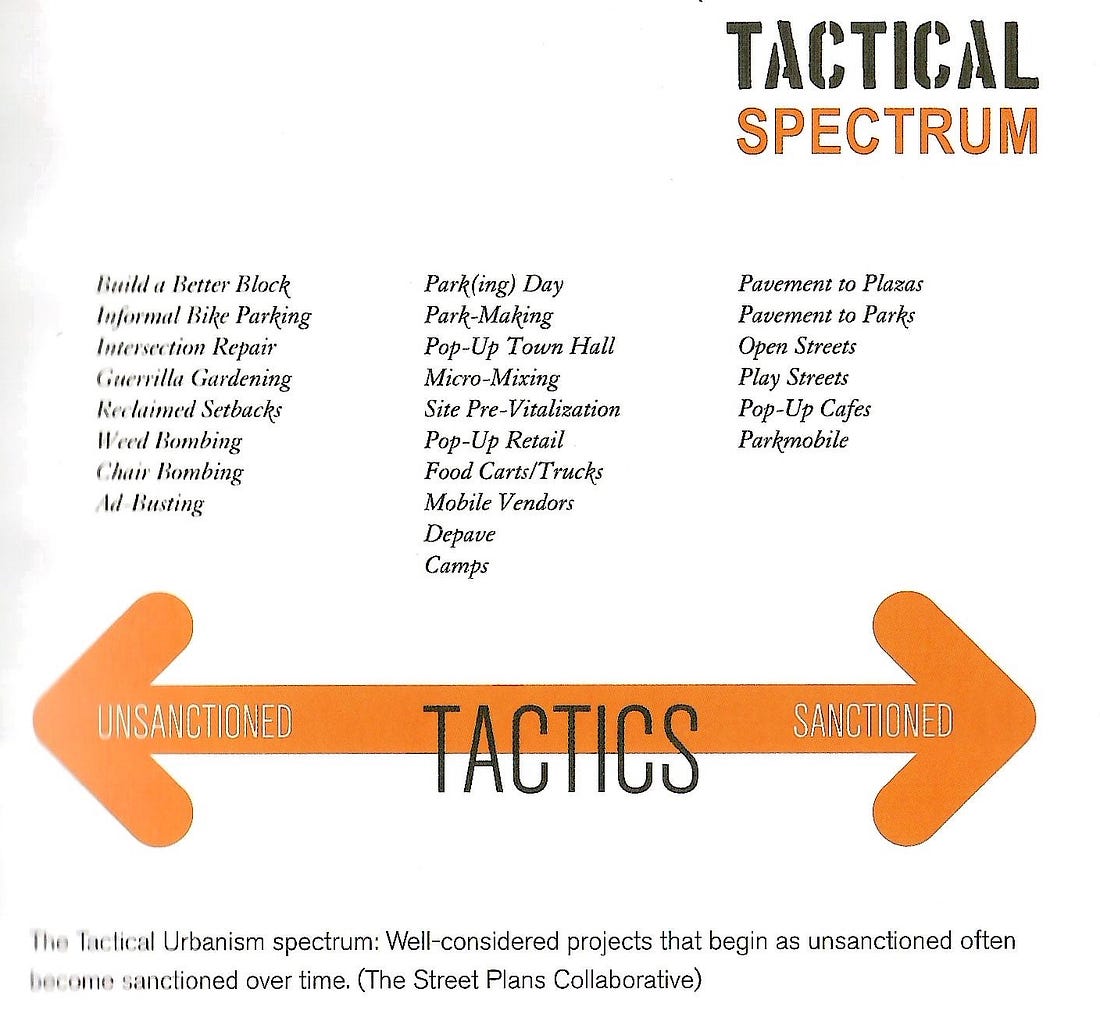
In some ways, PARK(ing) Day is a bit of a relic of an earlier time. Twenty years ago, it was an act of what Mike Lydon and Anthony Garcia described as “tactical urbanism, -an approach to neighbourhood building and activation using short-term, low-cost, scalable interventions and policies.” Over time, these activities that began as guerrilla interventions become sanctioned.
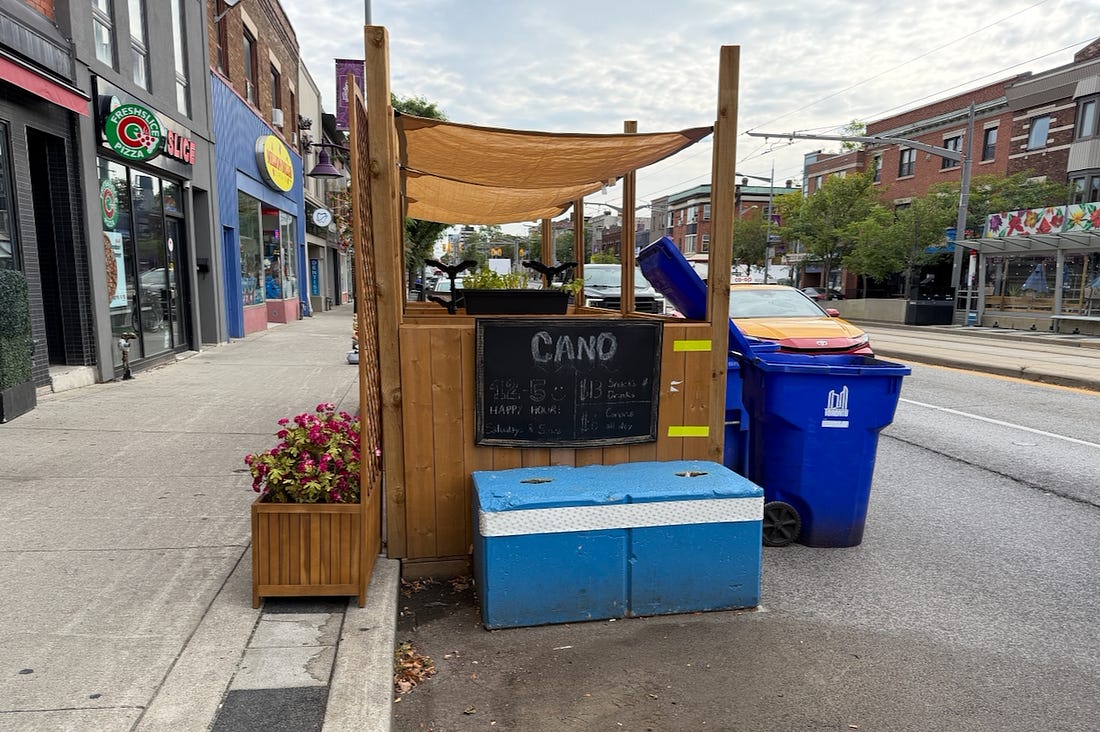
So what was once radical has become accepted, particularly since the Pandemic, when giving up parking spaces for people became common. What used to be considered tactical urbanism is now institutionalized, bureaucratized and commercialized, and now you have to pay to play.
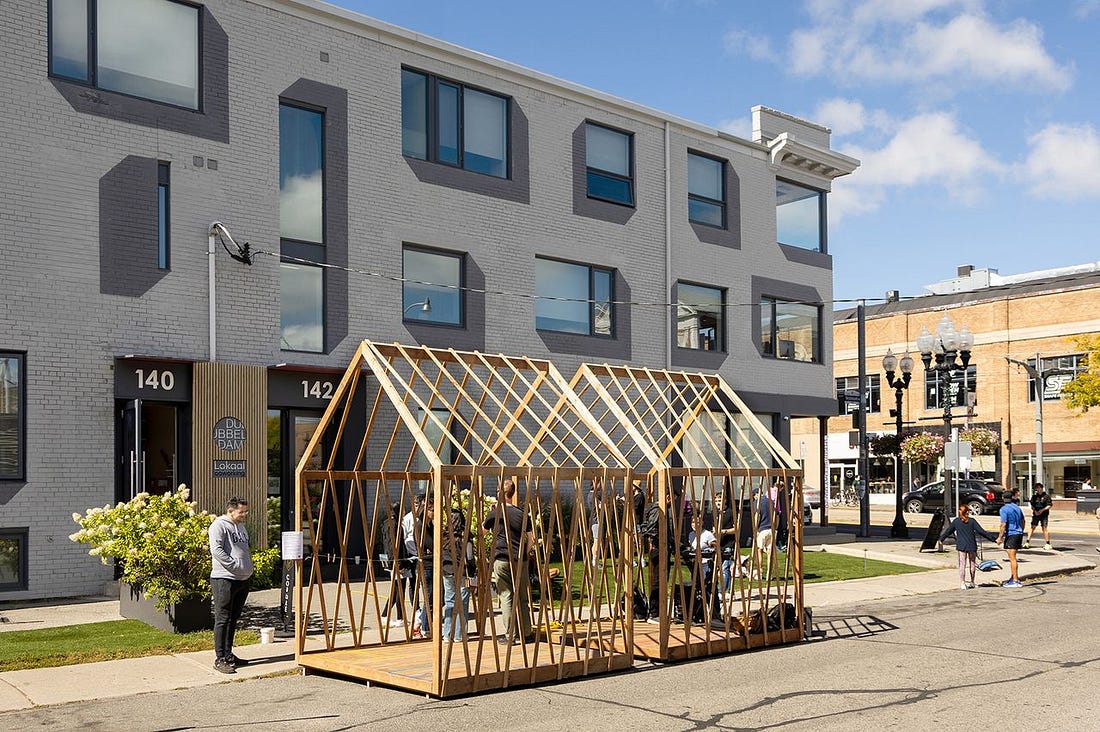
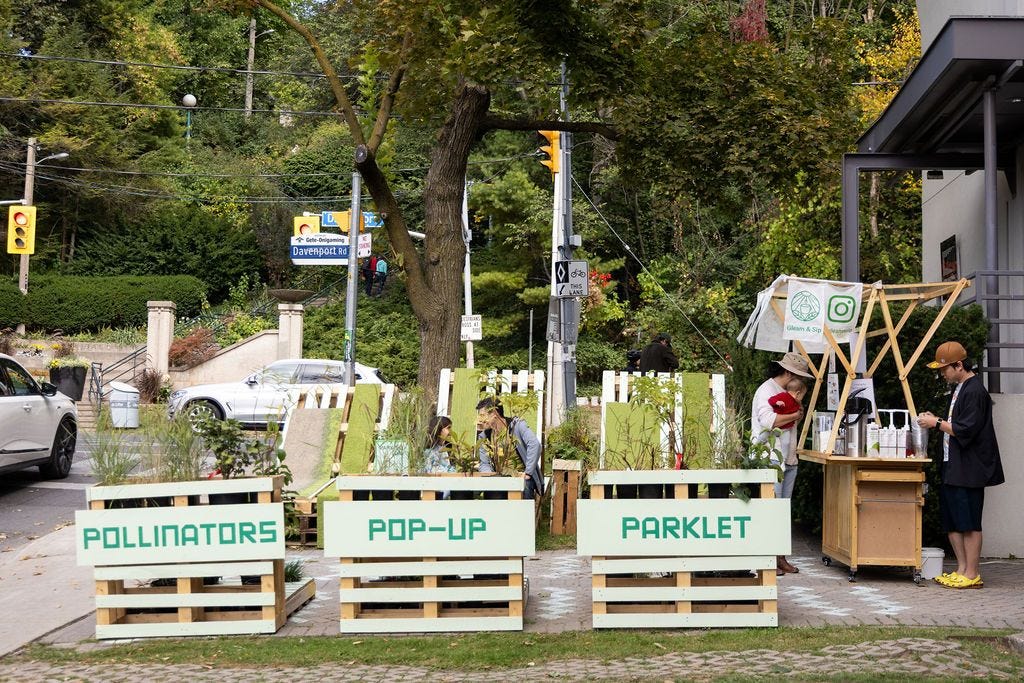
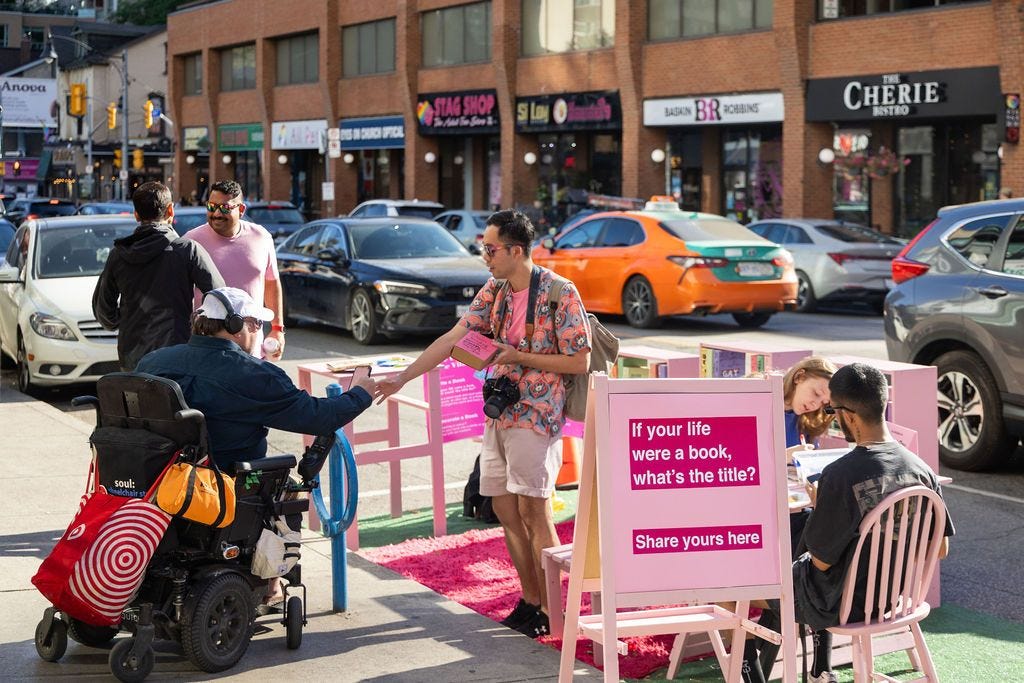
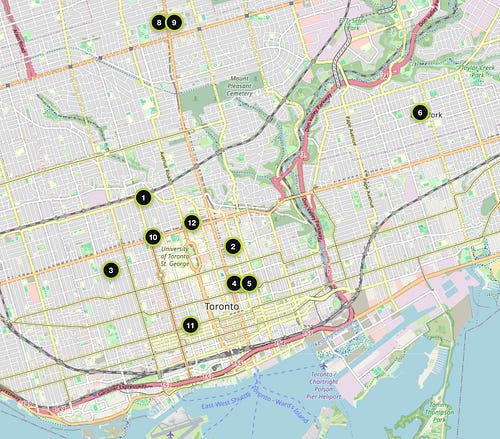
That’s why PARK(ing) Day is so wonderful; it is still free. It’s an exercise in creativity, not commerce. I thought it had almost disappeared, but in Toronto it is still going strong, coordinated by Dubbeldam Architecture + Design. With partners Arup, KPMB, Gow Hastings, and Fast+Epp, they have a grant programme to help activate PARK(ing) spaces. Kevin McIntosh and Heather Dubbeldam, co-founders of Park(ing) Day Toronto, have rustled up fifteen installations for this year’s event. That’s remarkable, given that the Global Parking Day map shows only ten sites in the entire United States.
Many of the installations offer much more than just seating- last year there were books, beaches, and art installations. This year I am looking forward to “Strangers Calling” with a “bright pink vintage telephone that rings intermittently. Passersby are invited to pick up the phone and discover who—or what—is on the other end.” I might pass on “Meter Rex” with “an inflatable dinosaur, a cardboard parking meter and a 30-second invitation to dance into one on-street parking space.” You don’t have to buy a coffee to use the space, because, as Enrique Peñalosa has noted,
You can see all of the Toronto locations at Parking Day Toronto. I am going to be on my bike doing the rounds today. Jan Gehl wrote: “A good city is like a good party — people stay longer than really necessary because they are enjoying themselves." Let’s all get out and party this PARK(ing) Day and weekend. Special offer! Now with your choice of book!
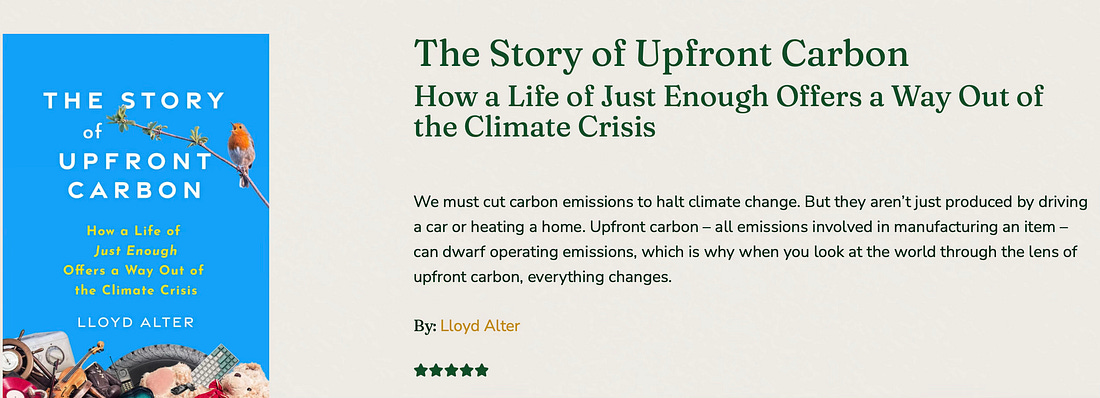
I do not want to put up a paywall on this site, but it provides a meaningful portion of my income. So here’s a limited-time offer: I will send a signed copy of the print edition of either “Living the 1.5 Lifestyle” or “The Story of Upfront Carbon” to anyone in the USA or Canada who signs up for a one-year subscription (C$50, cheap at about US$37 ).
|


 Posts
Posts


 Day because streets are for people | Edid ShortsCars)
0 Comments