

Ukraine is holding the front. The rear is figuring out who owns the law and funding.

RELATED POSTS
Two Wars, One Courtyard
Ukraine is holding the front. The rear is figuring out who owns the law and funding.
I love rules. I love boundaries. I love process. I love protocols. I love a roadmap with measurable milestones that have hard deliverables and a timeline. I love transparency and accountability. I love a boss who corrects my faults honestly and thoughtfully. All of this is simply so alien to the Russian-world that holding onto them is like voluntarily cutting my legs off and trying to run a marathon on the stumps that remain. Ukraine over the last four and a half years has taught me that there is no way to fight for survival against a much larger enemy by colouring within the lines. Ledeneva:
Ukraine has had to fight two wars. The first is the easier, if bloodier one. An enemy that comes at you with bullets, bombs, missiles and jet-powered thermobaric payloads designed to obliterate apartment blocks and petrol stations. The second is insidious. Often odourless, it chokes its victims in plain sight. I have had a ringside seat. This enemy is the inherited grammar we lazily call Corruption. Keep Hale in sight before you dive:
It did not start as a heist. The heist learned to live in the same grammar. It was the only way to stay alive and feed your family under the Russian imperial yoke. If you read the official Russian channels as I do, when I have the stomach for it, you will see the laws they claim. They are severe and robust, compensated by Russia’s non-observance of them. The name for that is the Potemkin village: the façade built for the inspection. The state under the Russian model can help you, hurt you, or look the other way. Food, an apartment, a hospital bed, a permit, safety from the next inspector: none of that arrived because a form was correct. It arrived if somebody knew your name. There is a word for the small version: blat. The large version, the one that runs ministries and factories in the open because it is the only way the state gets anything done, is sistema. It is both predation and glue. It distributes. People can hate it and still assume this is how you survive, or thrive, depending on whether you are operating in blat or sistema. Henry Hale’s word for the political form is patronal: you get things done through people you know, by reward and punishment aimed at a person, not a role. Parties and ministries exist. The real actors are networks. Ukraine, for most of its independent life, has been a patronal democracy: rival pyramids, real elections, uncertain outcomes, voters still able to throw a clan out. Ugly. Alive. Not Moscow’s single pyramid. This one still has competition, and an urgent desire to leave the old system. Magyar and Madlovics say the same thing another way: in this order the political, the economic and the communal are not separate rooms. A job is a loyalty. A licence is a relationship. A court file is a conversation. Colour revolutions changed the façade and the flag. They did not automatically separate the rooms. So the country cycled: opening, grabbing, opening again. One thing I have watched, and it explains a lot of what you are seeing in Kyiv: when a member of the circle falls, the circle catches him, or they all sink with him. Now look at what you have been watching with that in mind. Makes sense now, doesn’t it? The circle catching its own is not proof Ukraine is Russia. Moscow has one pyramid and no street. That is Hale’s difference. The second war is whether the circle ever stops being the state. My way of thinking used to call this corruption and stop. Accurate. Incomplete. Unhelpful. It ignores that this culture is a memory of scarcity and of a state that was never safe. You did not trust the statute. You trusted a person who owed you. I grew up where the people who were supposed to protect me were the ones who hurt me. That is why this country does not feel foreign. It is also why a courtyard in Kyiv put me on the floor for a week. Ukrainians often view me as naïve. Or stupid. Probably both. The distrust of the police still shocks me. It should not. Ukraine has been trying to climb out of that straitjacket since it had a name of its own. Maidan was not a seminar on public procurement. It was a refusal to be governed only as subjects of a bargain. The war made the refusal existential: a country that wants to remain a country cannot forever run the rear as a set of personal roofs. That is the second war. It is fought by people who still know, in their bones, why the roof existed. What we are seeing in the rear is that war. When it spills onto the street with guns pointed at comrades, it is bewildering if you have not taken in what I have just shared. It is never fair. It is always heartbreaking. It is one Ukraine must fight, and her allies must support without condescension. Two WarsLast week’s post was a lot. One takeaway matters. The long version is here: The Office офіс — Act I Was Not Carthage. An office is not a call centre. It is a protected factory. Script. Fake caller ID so the phone looks like the bank. A rented floor. A shared cash-out. Israel did not invent lying on the phone. It packaged it so a 19-year-old with no experience could be trained in days. That is how one thief becomes a floor. Georgia copied the kit around 2008. After 2014 it landed in Ukraine. Dnipro built it first and biggest. Kyiv was the other mill. Kyrylo Ohdanskyi, economist in Dnipro, to Suspilne, July 2026:
Stanislav Kuznetsov of Sberbank, Russian state bank, attribute him, called Dnipro the capital of telephone fraud. Borys Filatov, mayor of Dnipro, shrugged: I don’t get why he says that. Those call centres exist all over the country. Well, that’s alright then, isn’t it? If you only remember one thing from Act I: a thief is a person. A floor is a factory. The Flag and the TractorGI-TOC printed a Dnipro hire ad:
That is how you end up at a desk on a floor. The war did not build the factory. It gave the hire a flag. A later, separate product, documented by Mediazona, not by that poster, talked emptied accounts into arson: military offices, banks, cars, sold as helping “the organs.” Do not glue the hire to the firebomb. They are not the same script. We in the West are not innocent. While the victims were Russian, Kyiv and partners looked away. A raid risked looking unpatriotic. Kuznetsov told TASS in 2024 that about 40 percent of what Ukrainian offices stole from Russians went to the AFU, 20 percent to “the state,” 20 percent to the owner, 20 percent to the ofisnyk. He is a Russian state banker. Take it with a large shovel of scepticism. No unit receipt. No United24 jar. The line that is sourced, and funny: GI-TOC, Kyiv Calling, April 2026. A former ofisnyk, a Russian who drove his tractor to an ATM at 3 a.m. to wire the transfer. He did not think Dnipro. He thought the state was on the line. That is the product. Confession: When I Lost YouAct I was Israel, Georgia, Ukraine. Act II was the flag and the tractor. Act III glitched the Western stack. The Prosecutor General is where partners send warrants, extraditions, investigation requests. It is also the shop that ran a subscription roof on the small pile of offices, including offices that had moved on from Russian victims to allied citizens. Pay the desk. Stay “white.” Refuse, get raided so the neighbours learn. That is the corporatisation of the tail. It is not the whole market. The whisperer’s map, one map, says the two big pyramids never sat on that till. The name on Carthage is Serhii Kropyva, “Chancellor,” the PGO’s international-cooperation deputy. The man who received the partners’ paper was the man on the till. You cannot make that up. Ninety-four floors in August. Two bills to the Rada on 2 September. Carthage kicked in the till. The edifice is larger than the flea. NABU is not a blindfolded white knight. It is not a simple right/wrong instrument. In this country the bond that holds is not ideology. It is necessity. A circle that protects its own, because not to do so is how all of them go down. Their Words, Not MineNew York Times, Andrew E. Kramer, 3 September 2026:
Zelensky, 2 September 2026:
He called it an “absolutely shameful event.” bne IntelliNews, Ben Aris, 3 September 2026:
Guardian briefing, 3 September 2026:
Kyiv Independent / bne: Zelensky dismissed Oleg Khramov, head of the SBU department for the protection of state secrets. If that is not enough: charges, closed hearings, personal recognizance. Chiefs still in post. If there are other consequences, they will not be a press conference. 2 September 2026Two things happened. A gunfight in a Kyiv courtyard. Two bills sent to the Rada on the offices. Are they related? Only that they are exposing significant legal-process risk. The elite conflict in 2026 is partly who spends the official money and partly who taxes the unofficial floor. An investor in defence-tech is standing next to both fights whether they like it or not. A NABU Charge = a Gap YearHave you noticed that a NABU charge is more often than not a gap year, not a career-ending event? On 16 July 2026 the Rada restored a standalone agriculture ministry and put a name on the door. Kyiv Independent, Oleg Sukhov, that afternoon:
Ekonomichna Pravda, 17 July 2026:
Transparency International Ukraine, High Anti-Corruption Court docket, 8 April 2026, three months before the appointment, recorded that NABU and SAPO had sent the case to court. Their account: at the start of the full-scale invasion, food for people near the front bought at inflated prices through controlled and intermediary firms; two episodes; losses put at about 28.8 million and more than 35 million hryvnia. No verdict. Euractiv, 22 July, covering the restored ministry for an EU audience, did not mention the file. It quoted an agricultural association calling him “a top-class professional” and placed the appointment inside the accession talks. That silence is also a fact. In some countries the charge sheet ends the job. Here the job sometimes starts after the charge sheet. The WatchdogNABU was created as a condition for international aid. bne IntelliNews, Ben Aris, 25 July 2025:
Same paper, 31 July 2025:
ZMINA, carrying the Anti-Corruption Action Centre the night the first bill passed:
Human Rights Watch, 24 July 2025:
POLITICO Europe, Veronika Melkozerova, 31 July 2025:
The street took the lead off. Brussels was the wallet. The veto was Ukrainian. The Insider / Ekonomichna Pravda:
Atlantic Council, August 2026:
bne, November 2025:
OSW, 31 July 2025:
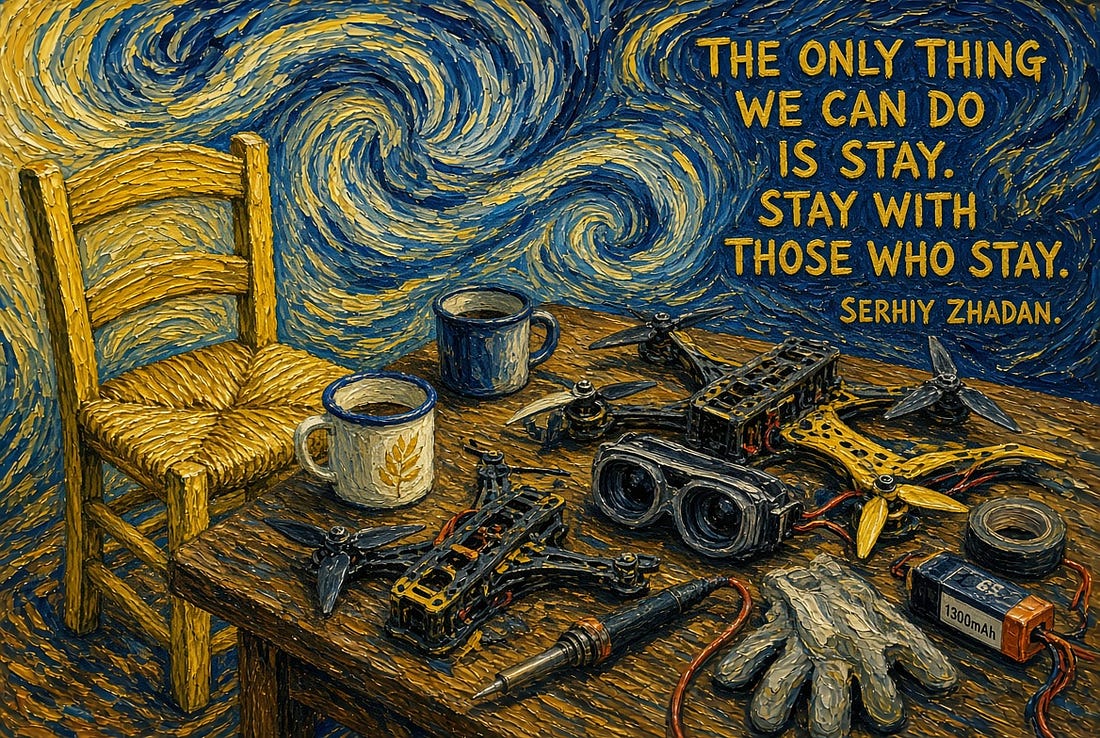
The bureau exists because donors required an investigator the president does not own. When that investigator closed on the circle, Bankova pushed back. The street and the Commission stopped that. Then: Mindich, energy, the PGO window called Carthage. NABU is not the CIA and it is not a fire brigade. It is a file that can be aimed at a Kyiv power vertical, built to a specification Brussels and Washington wrote into the accession and the loan. You do not have to like that architecture to price it. You do have to see it. The chairs did not change on 2 September. The file did. That is what the frown lines are for. What Winning Looks Like From HereThe front remains a war of attrition. Ukraine continues to hold. That is the one certainty I will give you. The first war is being held. The second is now priced into the loan. That is the bald fact. NABU is doing NABU things: painful, probably necessary, in any event not stopping. That fact ought to bother the Kremlin. A democracy-facing investigator that is the antithesis of their system is still filing. It is not governing. It is filing. Country risk is taking a hit. That is unlikely to improve in the near term. It is not a death blow. It means more expensive money, a pullback from the serious cheques, and a lot of the same grammar well into 2027. They hold the line today. They eat when they can. They sleep when the sky allows it. They do not get a gap year. Or an office subscription. “The only thing we can do is stay. Stay with those who stay.” Serhiy Zhadan
Why this graphic? I am an artist, taught art as a language to Kindergarten-Grade 7. Sometimes when the world is incomprehensible, I retreat to art to make sense of it. Van Gogh painted that chair, remembering the one who sat in it many times while the brothers explored the inner workings of man. Today I think about the empty chairs, the sacrifices that I feel Kyiv sometimes mocks with their less than stellar choices. He did not draw within the traditional salon trained lines. He simply could not do it. In the same way I feel Ukraine can’t meet our Western trained lines. He slopped on paint so thickly you can feel its impact. It’s messy and disturbing. He painted fields that feel like they can swallow a man whole - today, that is literally what the East does to the bodies of those who once messaged me with inappropriate memes and instagram shorts. I think of their bodies today becoming one with the field they died in. He painted iris when trapped in an asylum, desperately holding on to something that kept him alive. Seeking that warm embrace of goodness, a light in a darkness that often feels like it has no end. Van Gogh speaks to me today as I watch two wars that cannot be made elegant. I have placed it on that table, that unvarnished, splinter gifting wooden top that I refuse to sand down. The chair is empty on purpose. The point is not the emptiness. The point is that someone is expected back. When he comes back we had better have fixed the rear or there will be all hell to pay. You're currently a free subscriber to Kate McKenna. For the full experience, upgrade your subscription.
|


 Posts








0 Comments